
Published: Aug 27, 2026
Un guide pratique pour maintenir la chaleur, le gonflant et la durabilité à long terme.
Why Does a Down Jacket Need Washing?
Many people hesitate to wash a down jacket because they worry that water will damage the insulation or permanently reduce its warmth. In reality, down garments are designed to be washed, and proper cleaning can help restore their performance.
Down keeps you warm by trapping still air within thousands of tiny clusters. For this to work effectively, the down needs to expand and maintain its loft. Over time, sweat, body oils, sunscreen and dirt can accumulate in the insulation and prevent the clusters from lofting as fully as they should.
A jacket may gradually begin to feel flatter and less insulating as a result. This does not necessarily mean that the down is worn out. Washing removes accumulated contamination, while thorough drying allows the down clusters to separate and regain their loft.
What Actually Damages Down?
Down is a resilient insulation material, but its performance can be affected by how a garment is used, dried and stored over time.
Moisture is not necessarily a problem in itself. Down can get wet during washing, or during an unexpected rain shower, and recover its loft when dried properly. If a down jacket becomes soaked, avoid leaving it wet and compressed for longer than necessary. Allow it to dry as soon as conditions permit, and make sure the insulation is completely dry and has regained its loft before storing it.
Dirt, sweat and body oils can also accumulate in the down and gradually reduce its ability to loft, while repeated abrasion and physical wear can damage the fabric and construction that keep the insulation in place.
Long-term compression is another reason to think about how a down jacket is stored. Down jackets are made to be compressed when space matters, but they should be stored dry and uncompressed when they are not in use for longer periods.
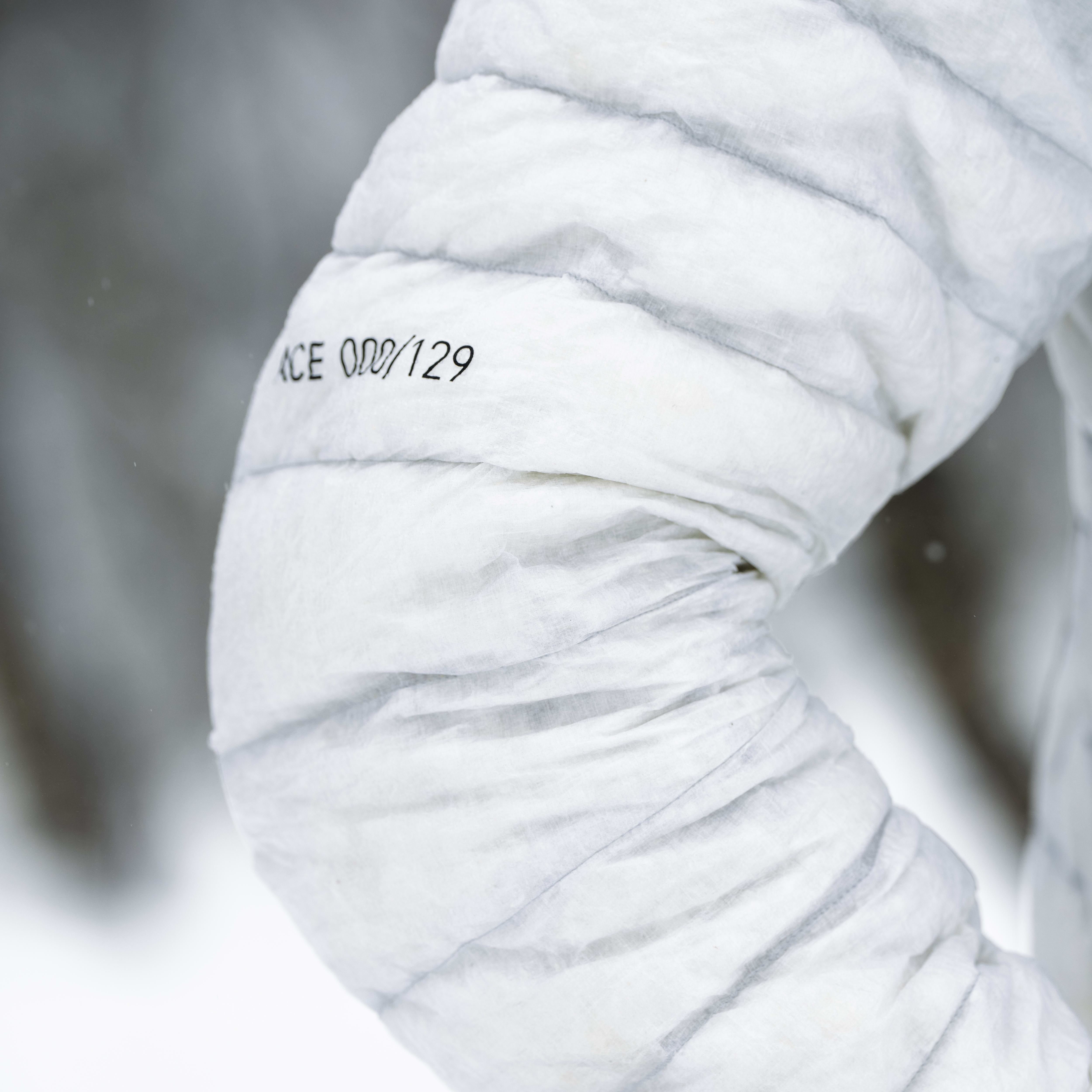
Down garments are designed to be washed. Proper cleaning helps down clusters regain their loft and maintain insulating performance.
How Often Should You Wash a Down Jacket?
How often a down jacket needs washing depends largely on how it is used. A jacket worn frequently as an outer layer will be exposed to more dirt, sweat and body oils than one that spends most of its time protected underneath a shell.
Look for signs that washing may be needed:
- The down has noticeably lost loft.
- The jacket feels flatter or less insulating than before.
- Body oils or sweat have accumulated around the collar, cuffs or other high-contact areas.
- The jacket no longer feels fresh after repeated use.
- Dirt has visibly accumulated on the garment.
Rather than counting days or seasons between washes, pay attention to the condition of the jacket. Changes in loft, cleanliness and comfort are more useful indicators of when it needs washing.
How to Wash a Down Jacket
Once your down jacket shows signs that it needs washing, there are a few things to consider before putting it in the washing machine. The washing itself is relatively straightforward, but using the right detergent, rinsing thoroughly and allowing enough time for complete drying all matter.
The instructions below reflect how we recommend washing Norrøna down clothing. Always check the care label first, as individual garments may have specific requirements.
Before Washing
- Empty all pockets.
- Close all zippers and pockets.
- Loosen drawcords where appropriate.
- Prepare a small amount of gentle liquid detergent.
- Make sure the washing machine is free from fabric softener or other detergent residues.
During Washing
- Machine wash on a gentle cycle at 40°C.
- Use a small amount of gentle liquid detergent.
- Do not use bleach or fabric softener.
- Rinse the jacket twice to help remove detergent completely.
Drying
Drying is a critical part of washing a down jacket. When the jacket comes out of the washing machine, the down will be wet, compressed and may have formed clumps. This is normal and does not mean that the insulation has been damaged.
- Tumble dry on low heat.
- Add two clean tennis balls to help separate the down and distribute it evenly as it dries.
- Remove the jacket occasionally during drying and gently redistribute persistent clumps by hand.
- Continue tumble drying until the down is completely dry and has regained its loft throughout the jacket.
Drying can take considerably longer than expected. The outer fabric may feel dry while moisture remains inside the insulation, so do not use the surface of the jacket as the only indication that it is finished. The down should feel dry, evenly distributed and fully lofted before the jacket is stored or compressed.
Do not dry clean a Norrøna down jacket.
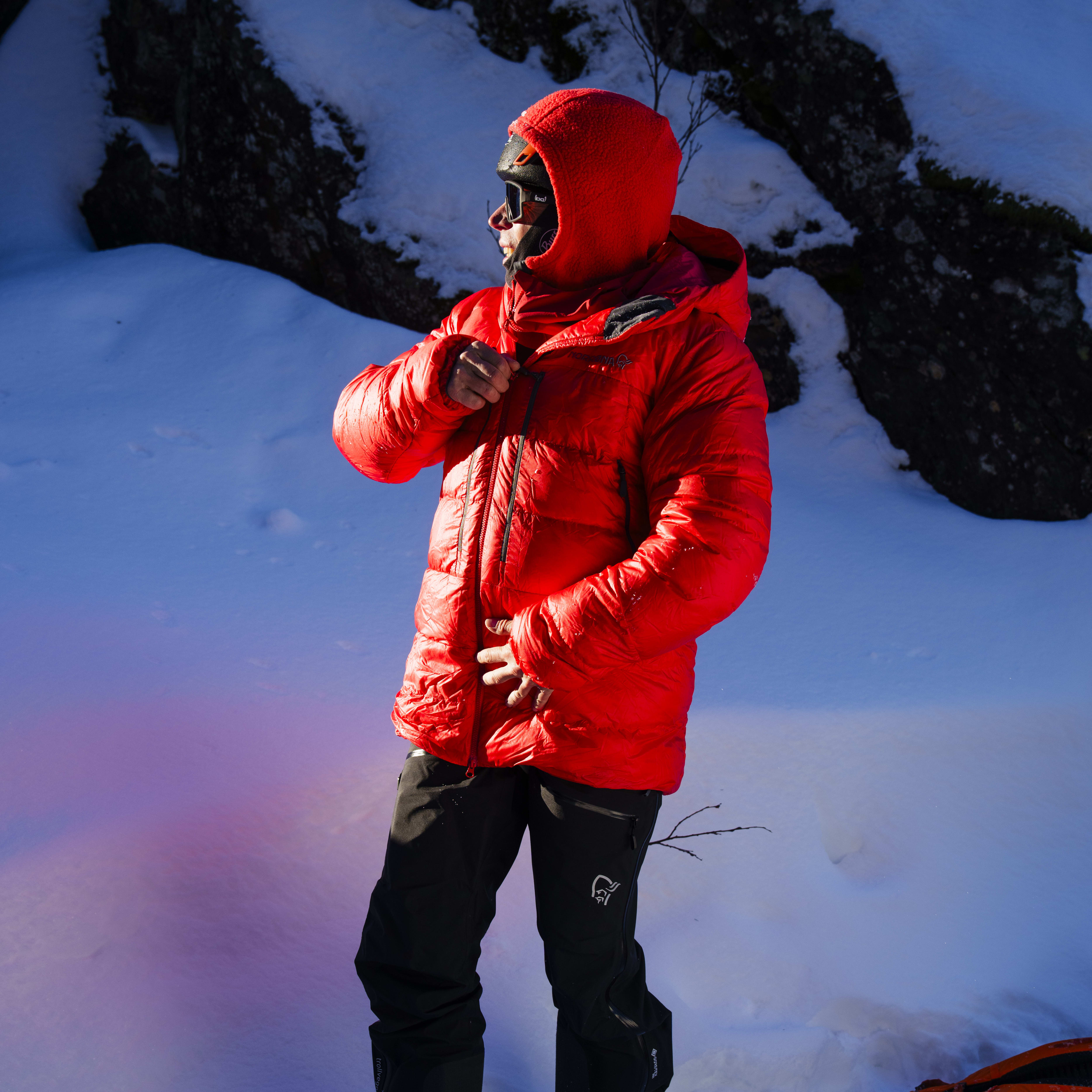
Rather than counting days or seasons between washes, pay attention to the condition of the jacket. Changes in loft, cleanliness and comfort are more useful indicators of when it needs washing.
Common Mistakes
Caring for down is relatively straightforward, but a few common mistakes can reduce loft and shorten the useful life of the garment.
- Waiting too long between washes. Dirt, sweat and body oils can gradually accumulate in the insulation and reduce the ability of the down to loft fully.
- Using fabric softener or unsuitable detergent. The wrong products can leave residues in the down and affect its performance.
- Using too much detergent. Excess detergent can be difficult to rinse completely from the insulation.
- Ending the drying process too early. A jacket can feel dry on the outside while moisture remains inside the down. Continue drying until the insulation is completely dry and fully lofted.
- Storing the jacket while damp. Down should be completely dry before the garment is put away, particularly for longer periods.
- Compressing wet or damp down. Give the insulation room to dry and recover its loft before packing or compressing the jacket.
- Assuming flat or clumped down has been damaged after washing. Wet down naturally collapses and forms clumps. With thorough drying and redistribution, the clusters should separate and regain their loft.
Proper drying is just as important as washing correctly. Many problems that appear after washing are simply signs that the down needs more time to dry.
Does Washing Improve the Lifespan of a Down Jacket?
Yes. Washing a down jacket when it needs cleaning helps remove the dirt, sweat and body oils that gradually interfere with the ability of the down to loft.
Good care extends beyond washing. Drying the jacket completely, repairing small areas of damage before they become larger and storing the garment dry and uncompressed all help preserve both the insulation and the garment around it.
A well-made down jacket can remain an effective insulation piece for many years. Proper care helps it retain the loft and warmth that made it useful in the first place.

A well-made down jacket can remain an effective insulation piece for many years.
In Short
Down jackets are designed to be washed. Dirt, sweat and body oils can gradually reduce loft, while proper washing and drying can help the down clusters expand fully again.
Wash on a gentle cycle at 40°C with a small amount of gentle liquid detergent and rinse twice. Tumble dry on low heat with two clean tennis balls until the down is completely dry, evenly distributed and fully lofted.
Wet down is not ruined down. The important part is drying it thoroughly.