
Published: Feb 17, 2026
The daredevils of the ’90s left a lasting mark on the Hurrungane massif. Steep skiing arrived in Norway in earnest.
Text: Anders Waage Nilsen, Photo: Jørgen Aamodt, Tor Olav Naalsund, Vegard Aasen and Turtagrø private
Snow patches cling to black rock cliffs. The Skagastøl ridge dips in and out of the fog. It is spring in the lowlands, but winter hangs on at the top of the Hurrungane mountain range. Two young men, Tor Olav Naalsund and Jørgen Aamodt, work their way up the glacier. The friends are driven by a strange dream, the dream of skiing steep lines. The east side of Vesle Skagastølstind peak is a no-go place for most people. The face gets steeper and steeper; it feels as if gravity gains power on the plunge from the cracked Styggebreen and pulls puny humans down into the abyss. Has anyone ever been here with skis on their feet in the winter? Is it possible to ski this at all? The first-timers absorb the brutal surroundings with all their senses. Naalsund can still recall the feeling of doubt. “I will never forget that first run. We were skiing in this type of terrain for the first time: large snow flanks, glacial terrain, cornices. The conditions were not optimal at all; this was foreign territory to us. We did almost everything wrong on that trip,” he says today – 25 years or so later.
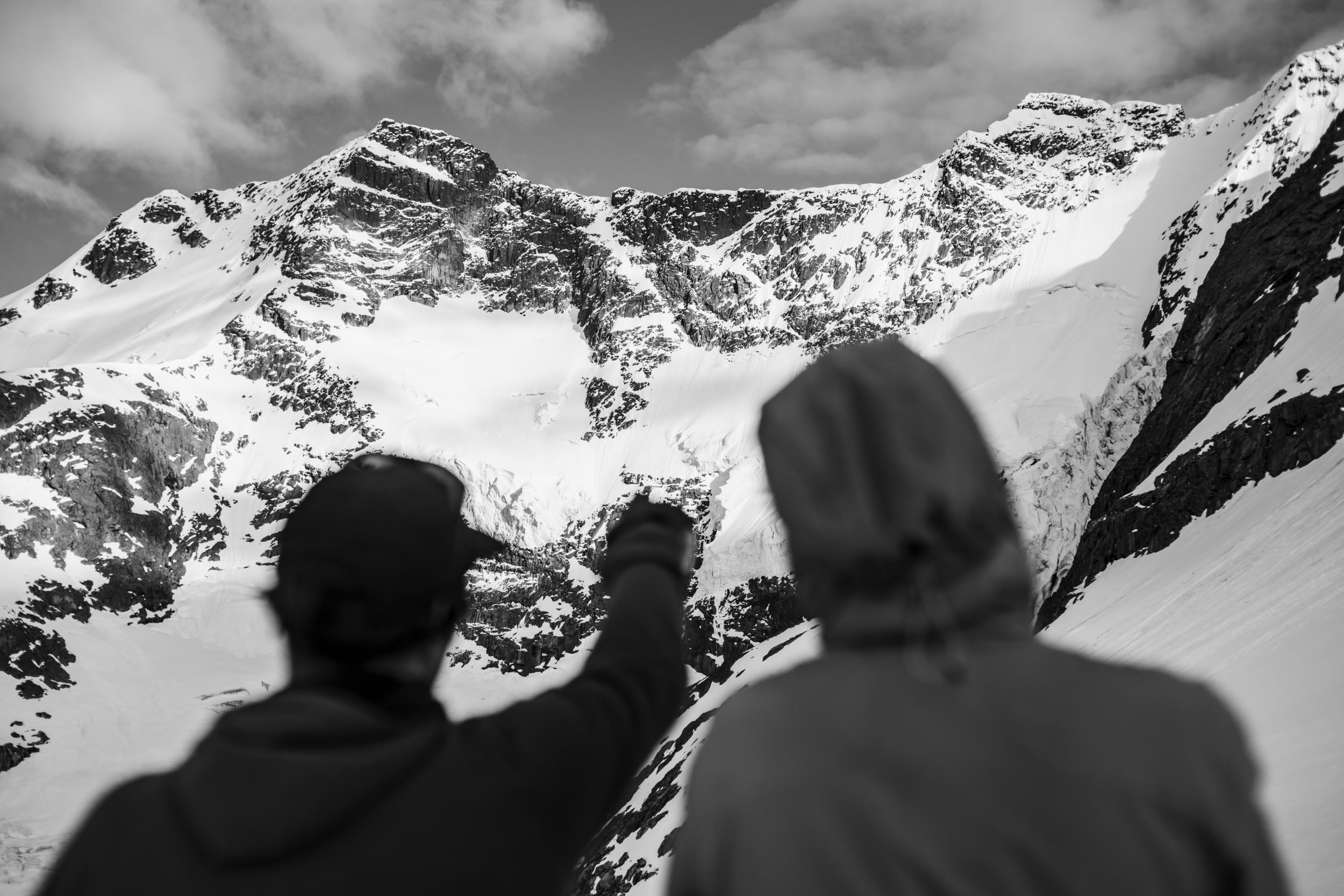
The Hurrungane range is as much a feeling as a mountain massif. The voracious and jagged teeth-like peaks and glaciers west of Jotunheimen have always evoked fear and fascination. A crescendo of spectacular geology, it is the final chord before Jotunheimen crashes down in the waters of Sognefjord. At first glance, a sibling group of unruly mountains in perpetual topographic youth revolt. But as you get to know them, the peaks take on unique personalities. Dyrhaugstind. Nordre Skagastølstind and Soleiebotntind are at the forefront and demand the attention of passers-by. Store Skagastølstind stands in the background with unassailable confidence. Behind them, the darker, more bloodthirsty Gjertvasstind, Styggedalstind and Sentraltind are in hiding. Ringstind is the most picturesque, Lauvnostind, the kind little brother greeting you at the gate. The area is an iconic part of Norwegian landscape history. Here, glaciers have gnawed at the remains of gabbro stone from the Caledonian mountain range for millions of years. The result is a star-shaped series of sharp ridges that reach more than 2,000 meters into the sky in some places. Every winter, the entire complex structure is plastered with ice and snow, the glaciers replenished and cornices form spectacular overhangs. The labyrinth of valleys’ sharp edges, gullies, and icefalls is hard to grasp. The terrain constantly reveals new secrets.
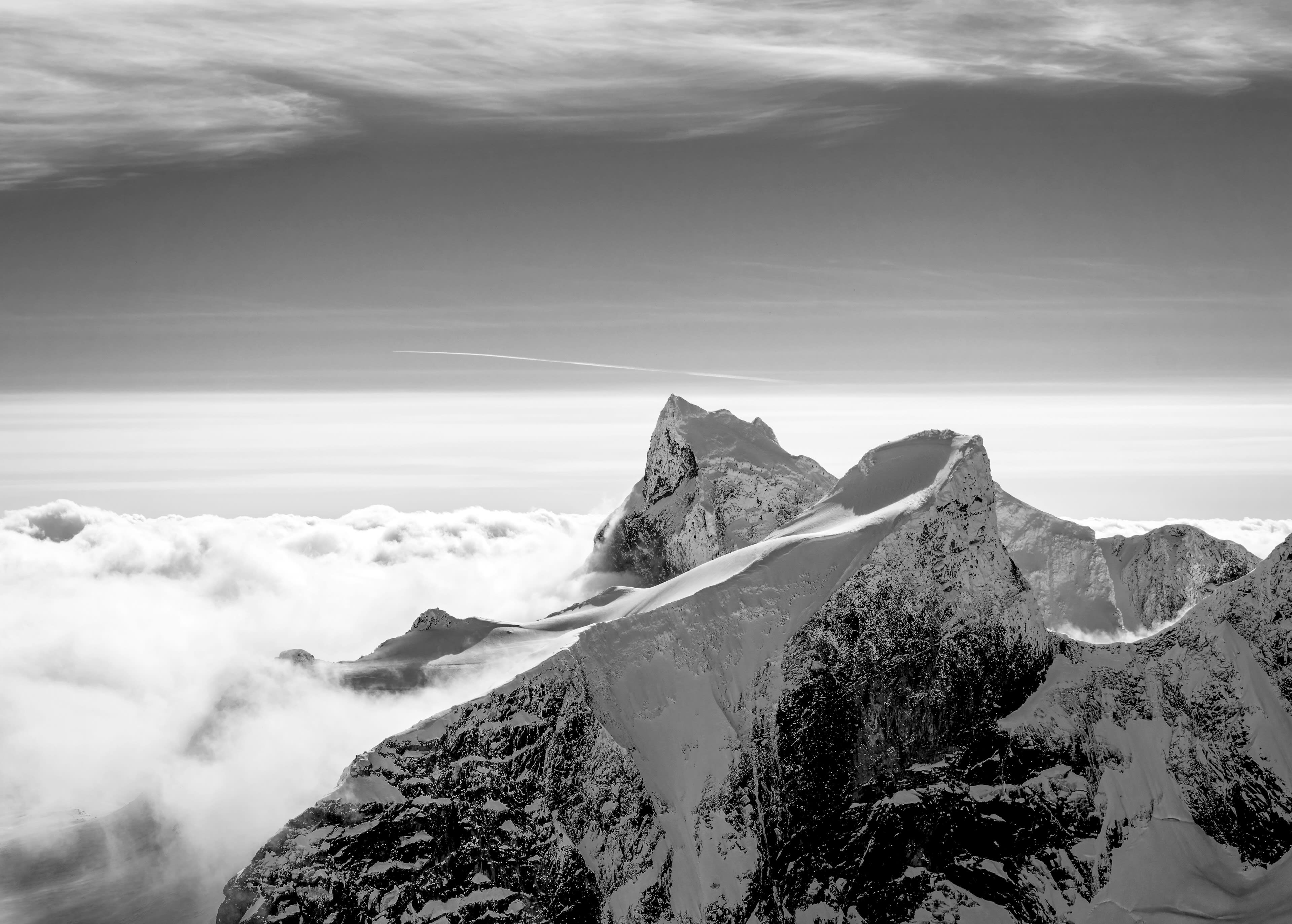
Above: The profiles of the Ringstind and Austanbotntind summits in Hurrungane. Before the skiing renaissance in Hurrungane in the
1990s, these remarkable mountains were almost forgotten.
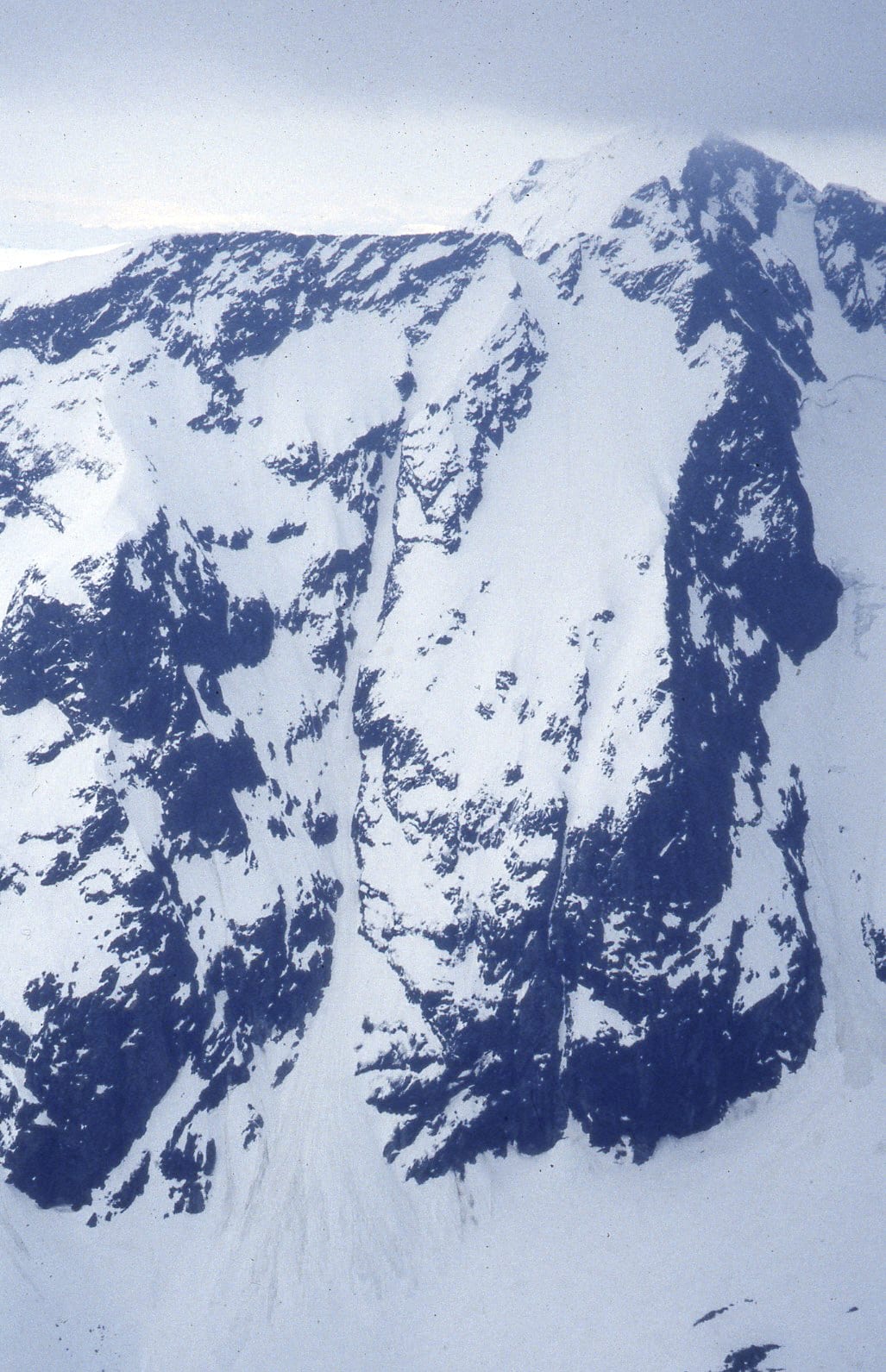
Above: Most skiers prefer the regular routes in the Hurrungane Mountains,but if the conditions are safe there are plenty of couloirs and flanks to choose from.
“Thousands of travellers of all social classes have passed through here over the years, but the Horungtinder waved to them in vain; not a single one has felt the urge to pay them a closer visit,” wrote Norwegian geologist Balthazar Keilhau when he first described the mountain area in 1870. Keilhau’s words worked like reverse psychology. The story of the impregnable peaks aroused curiosity rather than disdain. In the budding industrial society, adventurers, others with delusions of grandeur and nature-romantic souls took part in an ascent race in the decades leading up to the turn of the century.
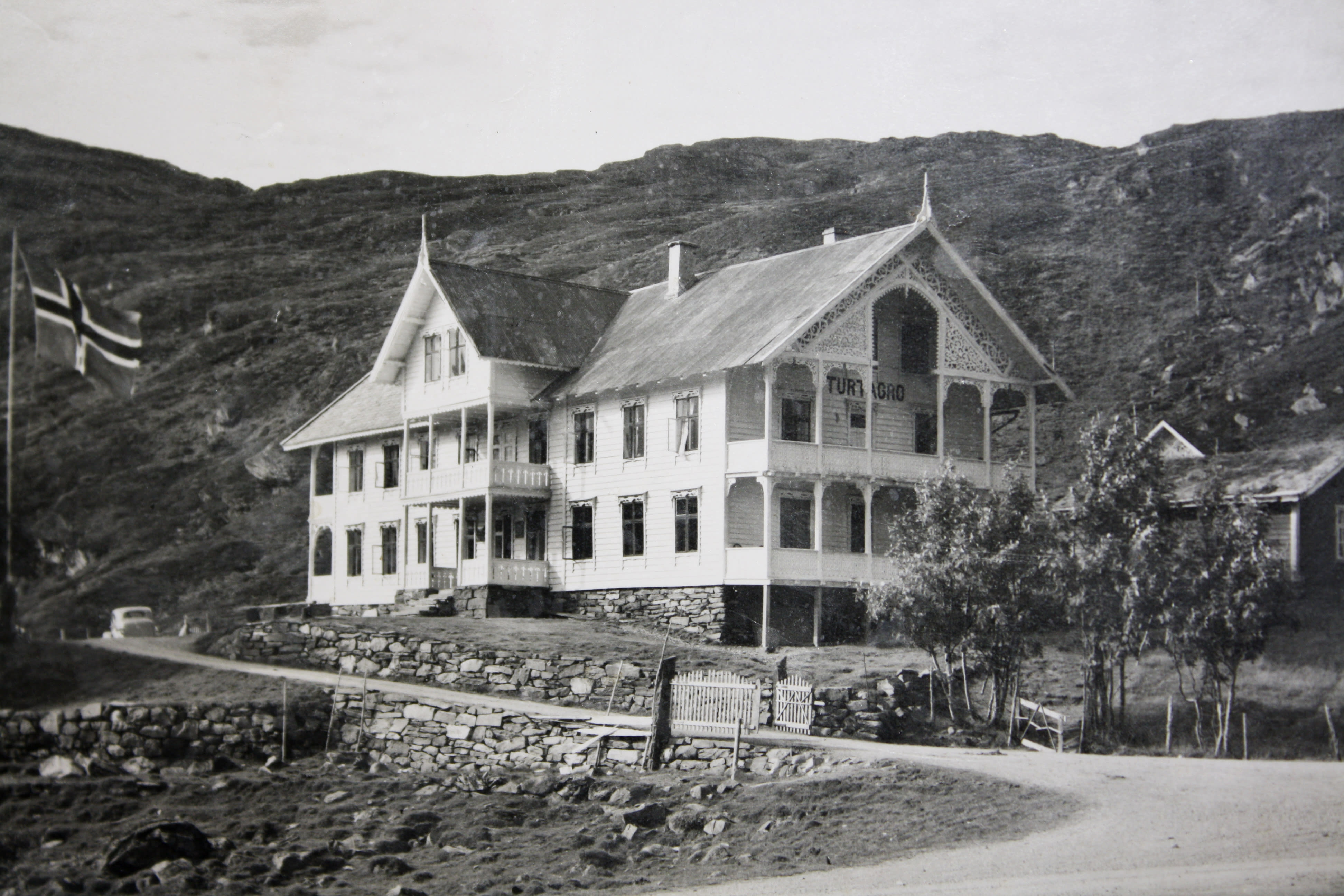
In Hurrungane, British noble boys have become men; delicate artists have been shaken to the soul, silent mountain farmers have left their unmistakable mark on national history. Many wanted to be the first, beginning with the attractive summits, eventually up the most spectacular routes. The number of visitors formed the basis for the first accommodation in the area: the Turtagrø Hotel, officially opened in 1888. Every summer and autumn, sightseers, hikers, and climbers from Norway and abroad came to explore the area. In a period marked by nation-building leading up to Norway’s independence from Sweden in 1905, the hotel became a meeting place for leading politics, art and business figures. Then it gradually quieted down. Slowly, almost imperceptibly, the mist of oblivion rose and veiled the peaks. Throughout the 20th century, the place was once again pushed to the periphery. In the 1970s, the sport of climbing changed: spandex trousers and bolt lines replaced leather boots and hemp ropes.
A hundred years after the heyday, both the hotel and the surrounding mountains were mainly visited by nostalgic, elderly climbers. Except for some infrequent visits by bearded mountaineers on winter climbs, the mountains stood in solitude during the cold season.Then Ole Drægni came into the picture. He took over the operation of Turtagrø Hotel in the mid-‘90s as the fourth generation in the Drægni family. Ole was an entrepreneurial and adventurous personality. As early as 1991, he contributed to the establishment of Tinderittet, a mountain Telemarking competition down from Store Dyrhaugstind. His hopes for the hotel’s future were as high as the mountains surrounding him. Ole had travelled a lot and had gained new impulses; the young and visionary hotel manager steered by an inner compass was not afraid to break new ground. He was convinced that skiing could bring new life to Vest Jotunheimen and that spring would represent the future key season. The only question was how he was going to make it happen.
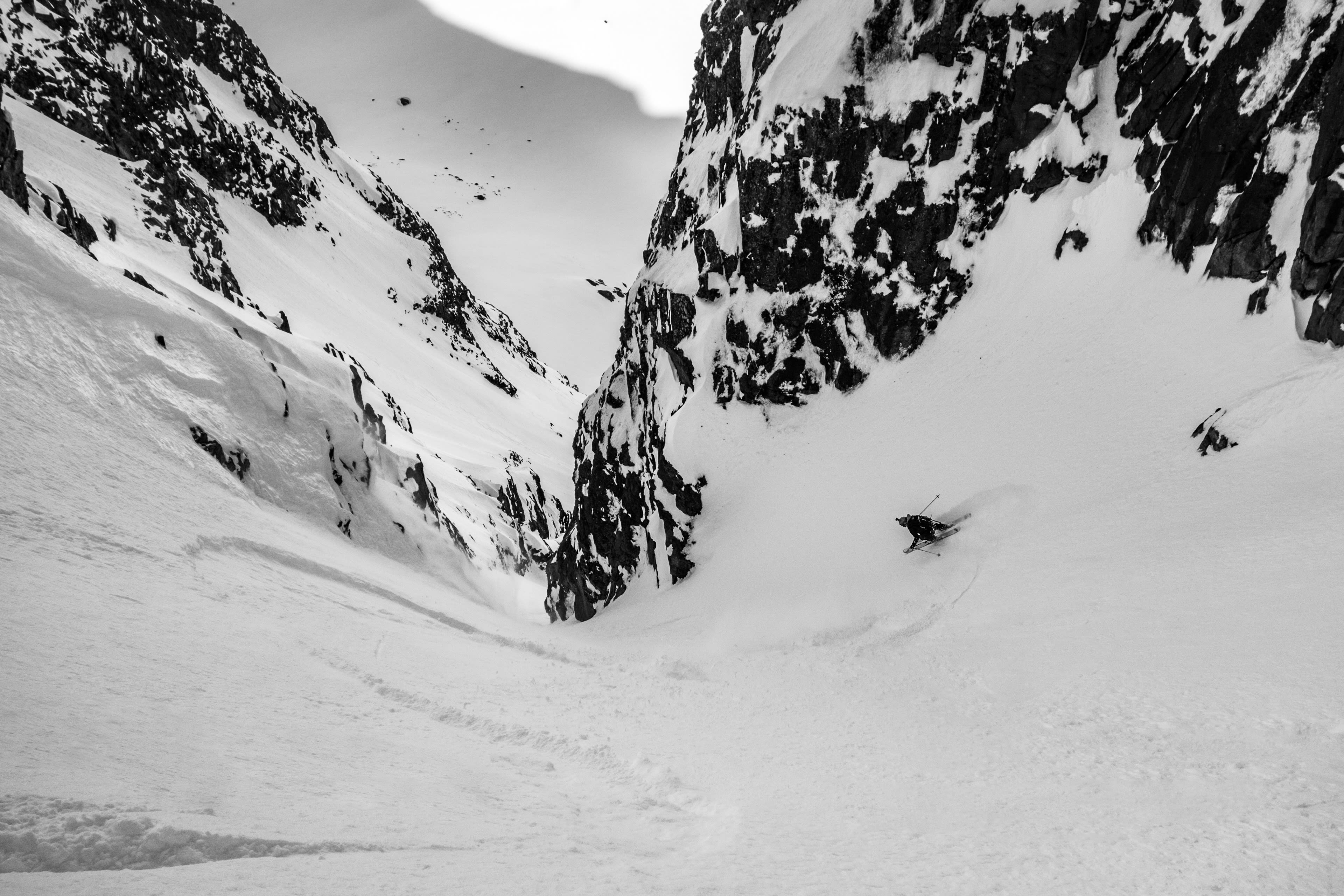
As he wondered these questions Jørgen Aamodt and Tor Olav Naalsund came tumbling through the hotel entrance. They had made the first descent from Vesle Skagastølstind. Ole’s hotel door was wide open, and the two skiers
received both lodging and fine brandy. “We can thank Ole Drægni for inspiring us to be so eager to continue exploring the area during winter. He saw the
potential, probably much more than we did. He spent his childhood here. He knew the climbing history very well and understood better than anyone that ski touring adventures could bring new life to Turtagrø,” says Tor Olav. Tor Olav and Jørgen are now among Norway’s most experienced UIAGM-certified mountain guides. Both found their way out into steep mountains through a passion for downhill skiing, both on and off groomed slopes. After a period as Telemark skiers (Tor Olav was on the national team), they discovered that alpine hiking equipment provided more opportunities. The drive to explore Hurrungane on skis came when they both took a glacier course on Smørstabbreen glacier a year earlier. From the peaks further east, they could see white-clad mountainsides that plunged into Styggedalen valley. Both felt the same inexplicable attraction.
How would it feel to make ski tracks down such dramatic mountains? Ole understood early on that they represented precisely the kind of mountain people Turtagrø should attract. They were explorers, seeing possibilities with fresh eyes. Their similarity to the first climbers a hundred years earlier was unmistakable. He wanted to recreate the story. A selection of highly skilled skiers got special treatment at his hotel in the seasons to come. Ole called them occasionally to discuss options or tip them about opportunities. Arne Litlere was among those who regularly joined such trips, and at one point, did the long drive from the city of Stavanger to Turtagrø several weekends in a row. Another profile was now deceased Fredrik Ericsson, who brought french steep skiing experience after several seasons in Chamonix. “Some of the runs we did were challenging and risky. They required good planning and we had to pick days carefully. I especially remember skiing down the run from Gjertvasstind to Maradalen, which I did with Fredrik Ericsson. We saw this route on an aerial photo, I think it was a picture in the old climbing guide for Jotunheimen. It seemed to us like a very inaccessible line.


Above: Kodak moments. The skiers Tor Olav Naalsund, Jørgen Aamot and Arne Litlere captured in different trips in the Hurrungane mountain range, including first descents from both Skagastølsryggen and Dyrhaugsryggen.
“We were in the area for several weeks before conditions finally improved,” says Jørgen
For Ericsson and him, the joint trips into the heart of Sogn became the start of a lasting friendship and eventually a common desire to explore downhill skiing on even more giant mountains. Together they skied from Laila Peak and Gasherbrum 2 (Elevation: 8,034 meters) in Pakistan and Kangchenjunga in Nepal. Fredrik later died in an attempt to climb K2. Jørgen Aamot does not deny that the decision to put climbing skins on his skis in the western part of Jotunheimen left its mark on his life.
“The experiences in Hurrungane ignited a glow that has not yet gone out. I saw that what we did in Hurrungane we could also do in other countries,” he says. For Jørgen, the motivation was never about making history, which he did anyway.
Back at Turtagrø, the first descents in the area were meticulously documented, in the same way as climbing trips were logged a hundred years earlier. Many of these records were lost when the main building at the hotel burned to the ground in 2001, but the legends live on as inspiring tales. The pioneer period created bonds of friendship and attention. Articles and pictures from the trips made people curious about the area. The locals’ favourite mountains won a national audience. In 2001, High Camp, the annual Norwegian summit hike gathering, was held for the first time, next to the fire ruins. Every year since the number of ski trails in the area has increased. Mountains that were once untracked during much of the winter are now crowded with ski touring enthusiasts. Sadly, Ole Drægni never got to experience this, as he died in the tsunami in the Indian Ocean in 2004. Spring has become the new high season and some of the trips that were previously only known to those with an especially keen interest are now described in tour guides and are popular slopes for expert skiers. But his daughter Sofie is now running the hotel. Tor Olav thinks with ambivalence back on some of the steepest trips. As a mountain guide, he has devoted much of his life to skiing, but he prefers less risky runs today.
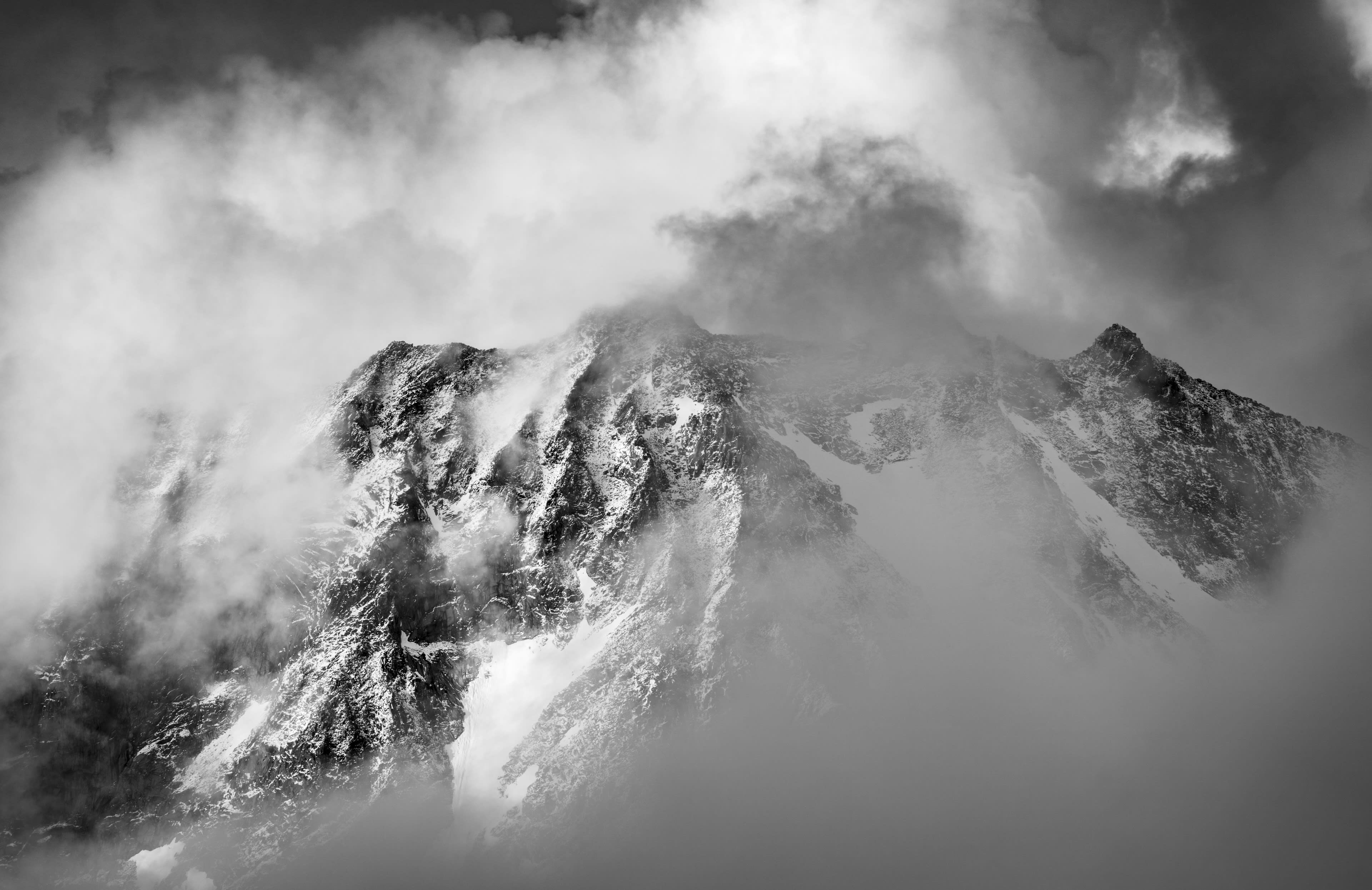
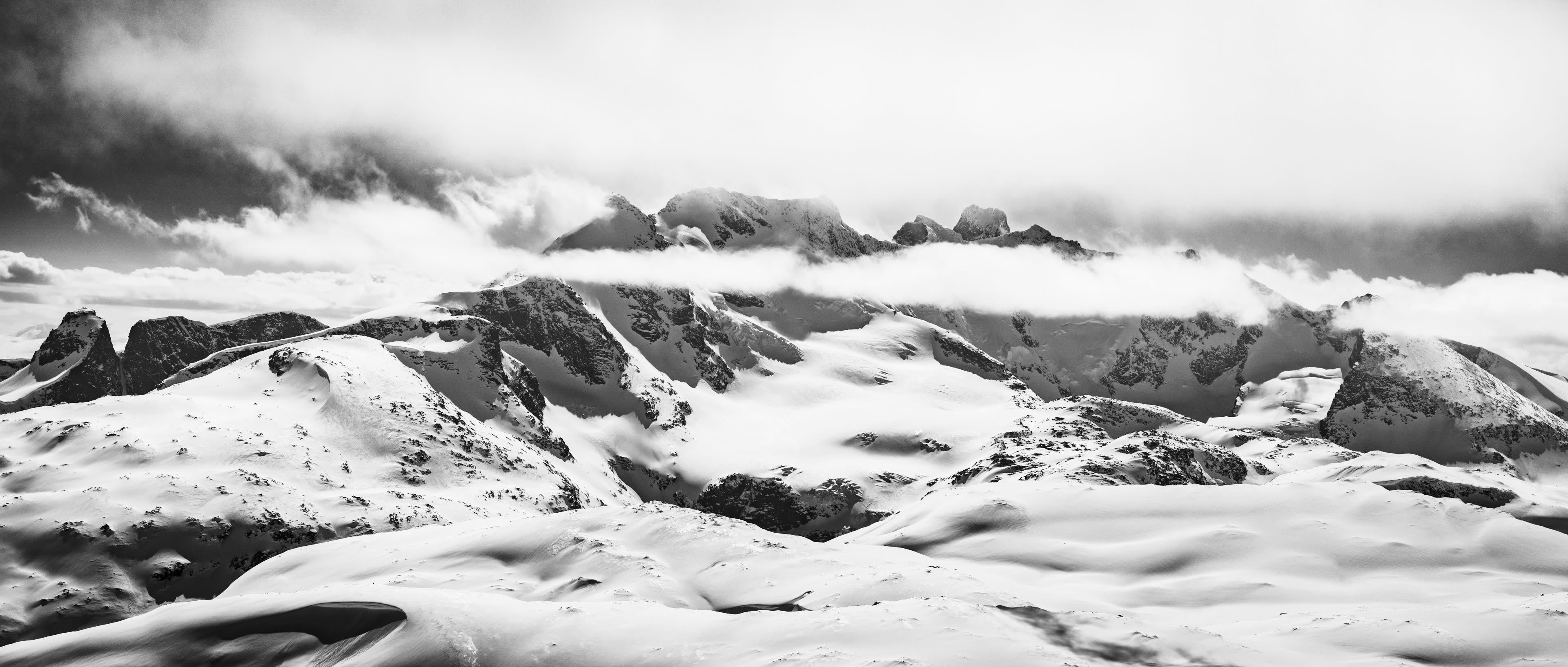
Above: The Hurrungane mountain massif in Western Norway started to attract steep skiers in the late ‘90s.
“The experiences in Hurrungane ignited a glow that has not yet gone out. I saw that what we did in Hurrungane we could also do in other countries.”
He has been close to people who died seeking the best ski lines. He fears that people without the necessary experience might be driven by prestige. “I must admit that there was an element of wanting to make history in the very beginning. The way I looked at it back then, steep skiing was akin to climbing. Being the first to run a line created an element of exploration – you get to know both the mountains and your inner limits. At a certain stage of life, putting yourself in difficult and dangerous situations can be fascinating. Today I see that they involve an element of risk that is very difficult to eliminate,” he says. He still feels the joy of great ski lines but found his way back to telemark skis, which means seeking challenges in somewhat gentler and less dangerous terrain. For Jørgen, the attraction of new, steep lines in the mountains has never completely let go. “I have become more and more familiar with the mountains in Hurrungane. It is a compact mountain area, with lots of opportunities. I am usually there at work as a guide, but occasionally I have the chance to explore things I haven’t done before, first and foremost to find out if it is possible. Many lines are dependent on specific conditions in glaciers and snowpack. A few years ago, I skied a line that I noticed 15 years earlier. I made three attempts on that route before it was finally possible,” says Aamot, that feels no need to repeat his lines. “After a first descent, I’m done with it. The adventure is over as soon as I’m back down in the valley. The challenge of moving into the unknown is the very essence of this for me,” he says.
The two skiers are essential characters in this fairy tale of modern skiing in Hurrungane, but they are not alone. In 1998, Petter Bolstad and Kristoffer Borgenhov skied one of the most brutal lines in the area, from the top of Styggedalstind down to the glacier – a line that can have an up to 60-degree incline. Helge Stokstad is another name that appears in the archives. He is a climber who explored several lines in the area, both in Skagadalen and Ringsdalen. Other enthusiasts also contributed to the exploration of Hurrungane in the ’90s. One of them is Pelle Gangeskar, known as the initiator of the Røldal Freeride Challenge. From 1995 and the years that followed, he explored several of the lines in the area with good friends.
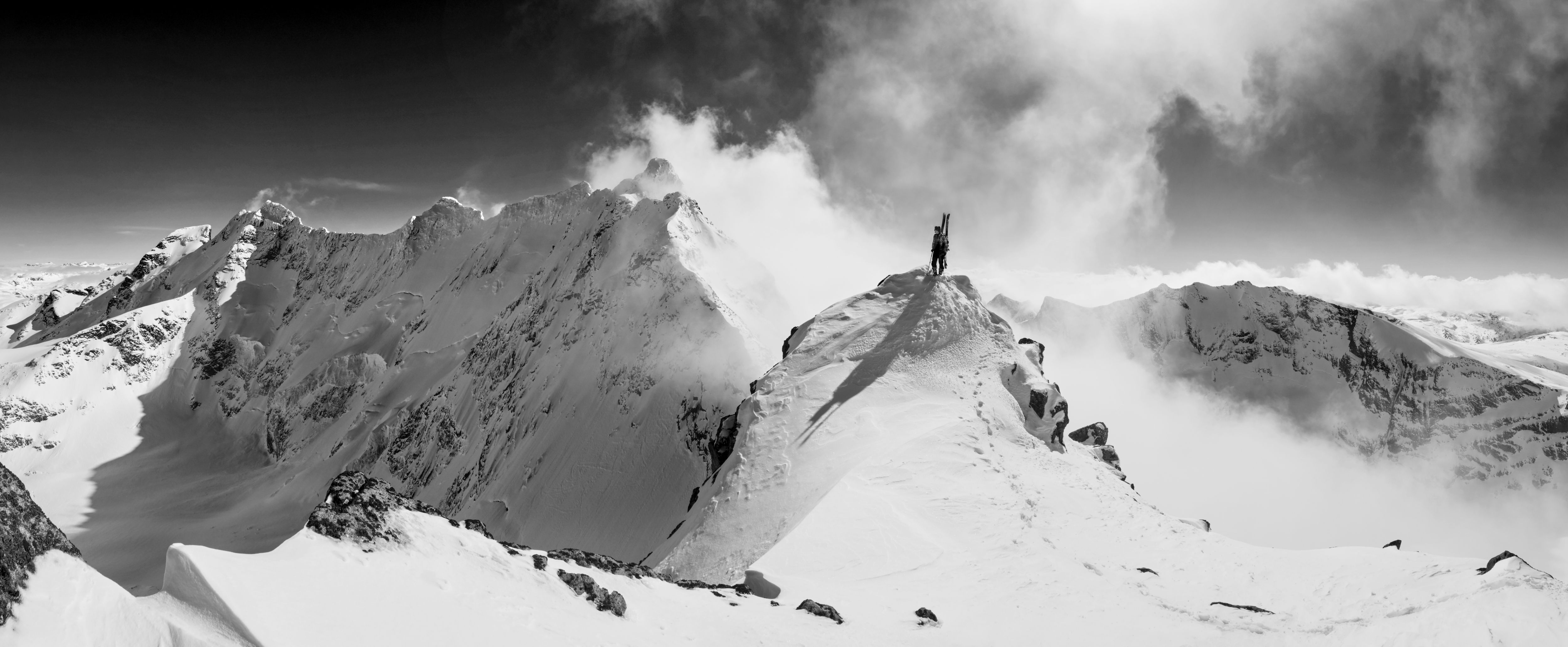
“I grew up skiing at a cabin at Eidsbugarden. We skied many steep mountain slopes further east and south in Jotunheimen. From peaks like Urdanostinden and Falketind, we always looked longingly in the direction of Hurrungene,” Gangeskar says.
Finding a climbing guide for Jotunheimen in 1994 added to his curiosity. When he got the guidebook, he quickly realized that a shortcut via the Tindevegen mountain road could extend his playpen. “We were not systematic. We carried the skis with us on a wing and a prayer. We searched for nice, steep lines – including up the gully at Austabotntind, at Solleiebotntind, and as far as we could make it up Nordvestrenna at Storen,” says Gangeskar.
But were they first? Several skiers and climbers claim to have left their mark in the area. In the ’90s, a rumour circulated that a group of visiting daredevils from abroad did the lines in the 1980s. Maybe that isn’t so important. A cultural shift happened in the ’90s, a new set of aspirations defined a generation of skiers, a similar dream evolved in several heads at once. Many of the first descents of the pioneer era are now classics.
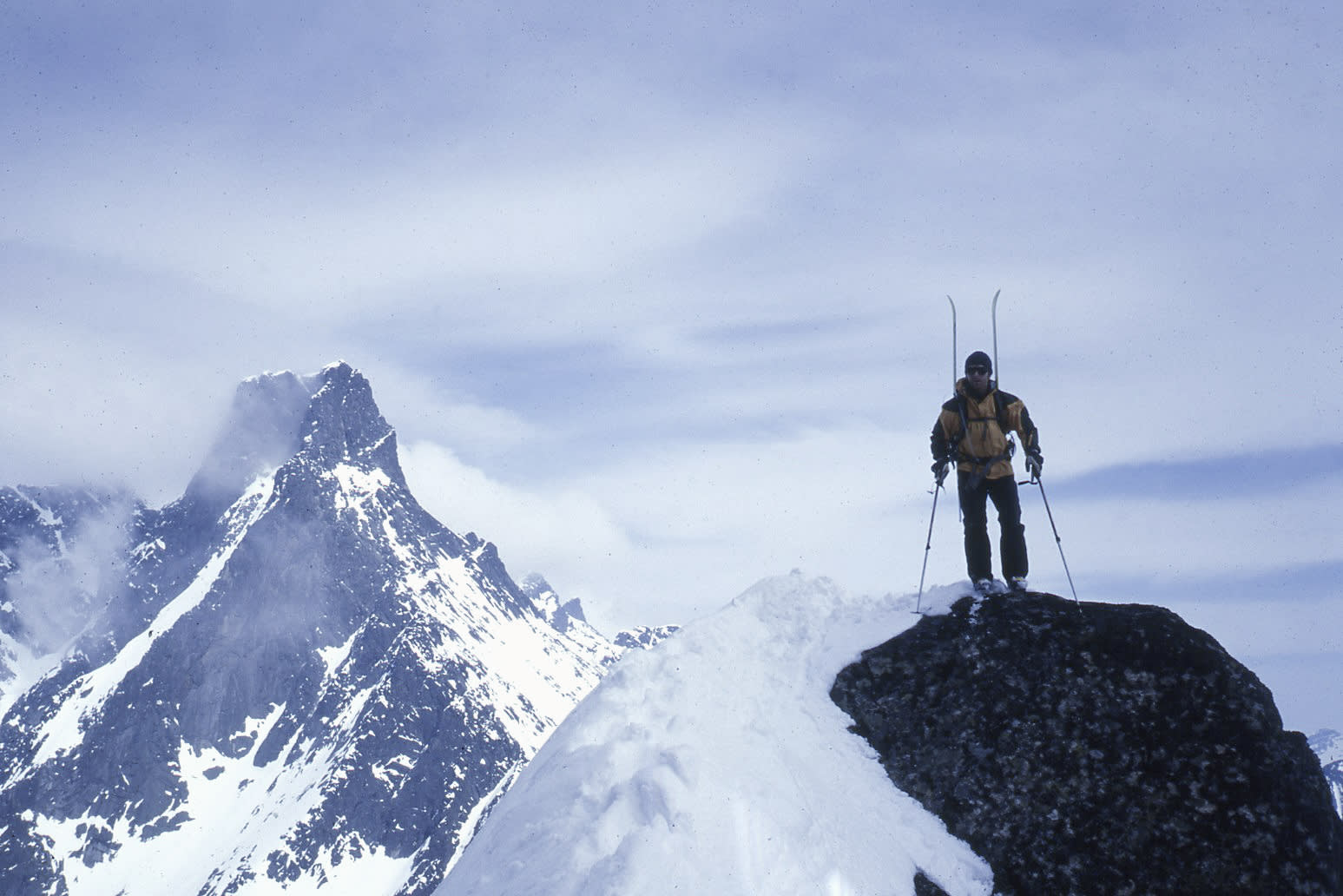

“Today, the terrain in Hurrungane is used in a completely different way than in the early ’90s. One of the causes is, of course, development of better equipment. There was a limit to how steep we could ski with low boots and narrow mountain skis,” says Steinar Bruheim, who had his first summit hikes in the area in the 1980s and knows the area well.
The combination of a fixed heel and inspiration from Europe can explain why the Hurrungene made it back onto the map. In the ’90s, more Norwegians went ski bumming in the Alps. They were exposed to ski touring, steep lines and tall tales from crazy French couloirs. During this time, European steep-skiers – such as Patrick Vallençant, Jean-Marc Boivin and Swiss Sylvain Saudan – also began to gain legendary status in some circles. Through the Internet, information spread faster, and new inspiration became available to a wider audience. Arne Litlere is a name often mentioned on several of the claimed first descents in the area. The family man now lives in Molde and is still an avid skier. Occasionally he misses the feeling of skiing in steep surroundings.
To this day, he can feel the time he went down from the gorge behind Vesle Skagastølstind to Styggedalen. The powder swings down the glacier, the mountain pillar that towered over them, the narrow passage they suddenly discovered, which was the key down into safer terrain.
“The first time I saw the white-clad flanks that plunged into Styggedalen, I was a young boy. I stood on Fanaråken with my brothers. ‘One day, those lines will be skied by a crazy Frenchman,’ I said at the time. Some 15 years later,I did the run myself.”

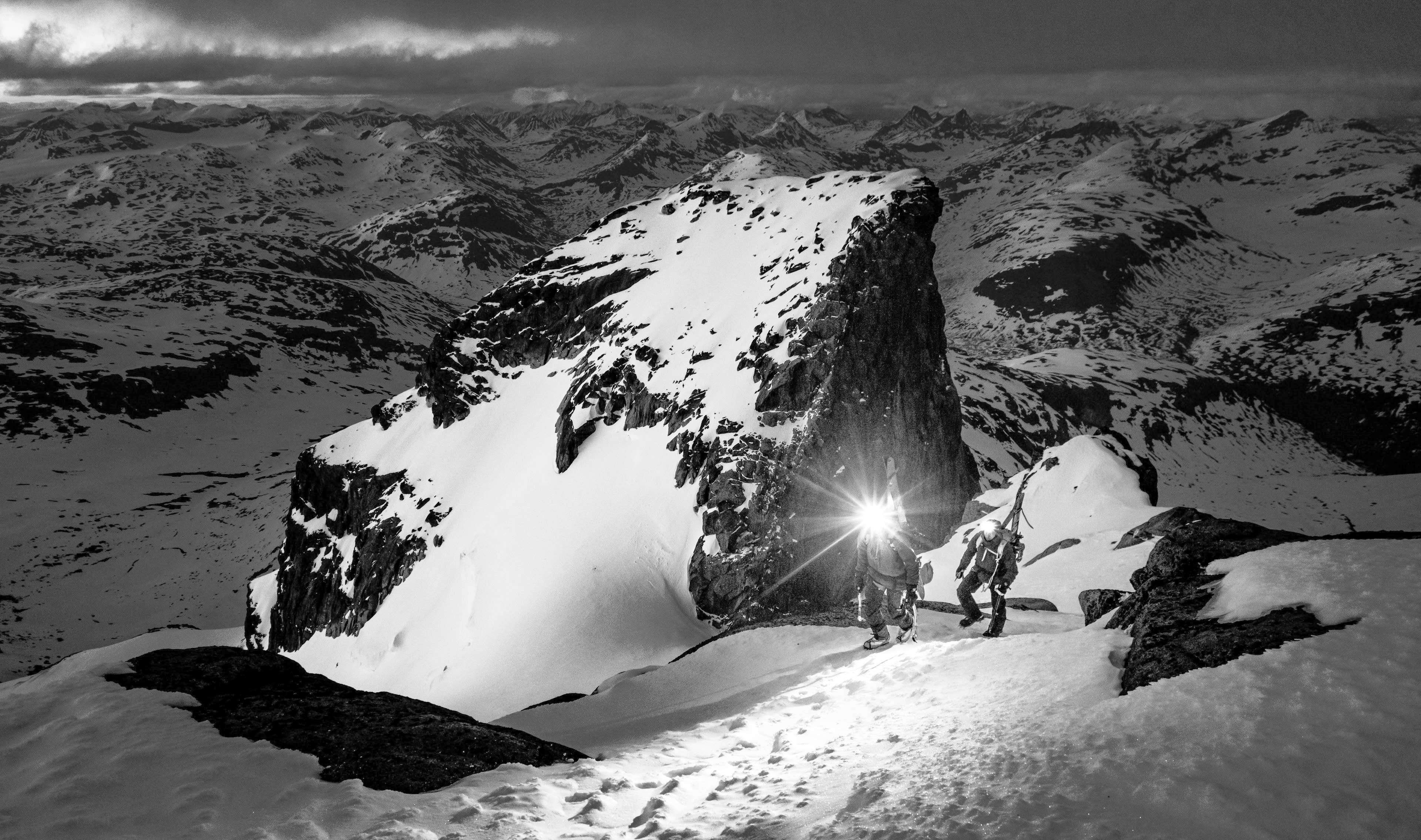
“‘One day those mountainsides will be skied by a crazy Frenchman,’ I said at the time. Some 15 years later, I did the run myself.” –Arne Litlere
General tips on ski touring in Hurrungane
1. Walk up what you plan to ski
If you have a steep skiing project, you should familiarize yourself with the terrain you want to descend. Remember also that moving in gullies and exposed mountainsides involves a real risk, with regard to avalanches, fractures and rock falls.
2. Be equipped for demanding situations
If you are going to move in steep terrain, you should bring equipment to deal with demanding situations. In addition to avalanche equipment, this includes first aid equipment, crampons, ice axes and equipment for rope rescue. On many trips it can also be a good idea to have equipment for rappelling. Remember that many of the trips take place on glaciers, and that such safety equipment as anchors may be recommended.
3. Wait until after the snow settles
Hiking in steep terrain on layered winter snow is very risky, even for experts. You should wait until well into the spring to ensure that the snow cover has melted or stabilized. Remember that snow conditions will be very different at different heights.
4. Always have margins
Steep skiing places great demands on judgment, safety techniques and skiing skills. It also requires the ability to read terrain and move safely in groups. In other words: Avoid taking on major challenges until you have gained experience and acquired the skills to handle demanding situations.
5. Beware of drifts
Traveling in alpine terrain often means following mountain formations. Many have died as a result of incorrectly assessing the danger of drifts. Drifts often break at a 45-degree angle inward, and sometimes drifts can be overhanging.
6. Wait until the conditions are right
If you have a project that is demanding – do not let yourself be pressured to start if the conditions are suboptimal. Several of the routes are very steep, with potential fatal consequences in the event of an avalanche.