
Published: Sep 28, 2026
A day that feels warm and calm in the forest can feel very different above the tree line. Wind increases. Rain or snow moves in. As exposure increases, protection from the environment becomes increasingly important.
Shell garments provide a protective barrier against wind, rain and snow while allowing the rest of the layering system to function as intended. Unlike insulation layers, their primary purpose is not to retain warmth, but to protect the wearer and the layers underneath from external conditions.
A trail runner in Senja, a mountaineer in Lyngen and a climber in Lofoten face very different combinations of weather, terrain and exposure. Shell garments therefore exist in different forms, from lightweight and highly breathable constructions to more protective shells designed for prolonged exposure.
The fundamental purpose of a shell garment remains the same: to provide weather protection when the environment demands it.
How Do Shell Garments Balance Protection and Breathability?
Shell garments need to balance two competing demands: protection from the environment and the ability to manage excess heat and moisture during movement. Hardshell and softshell garments approach this balance differently.
Hardshell garments prioritise weather protection. Waterproof constructions typically combine a durable outer fabric with a waterproof membrane and an inner layer that protects the membrane. This construction provides dependable protection against wind and precipitation, but can make heat and moisture management more challenging during sustained movement.
Softshell garments shift the balance towards breathability, mobility and comfort during activity. Rather than providing complete waterproof protection, they typically use breathable, weather-resistant fabrics that offer protection from wind and light precipitation while allowing heat and moisture to escape more easily.
Hardshell and softshell garments are not inherently better or worse than one another. The right shell depends on how much weather protection the conditions demand and how much heat and moisture the activity generates.
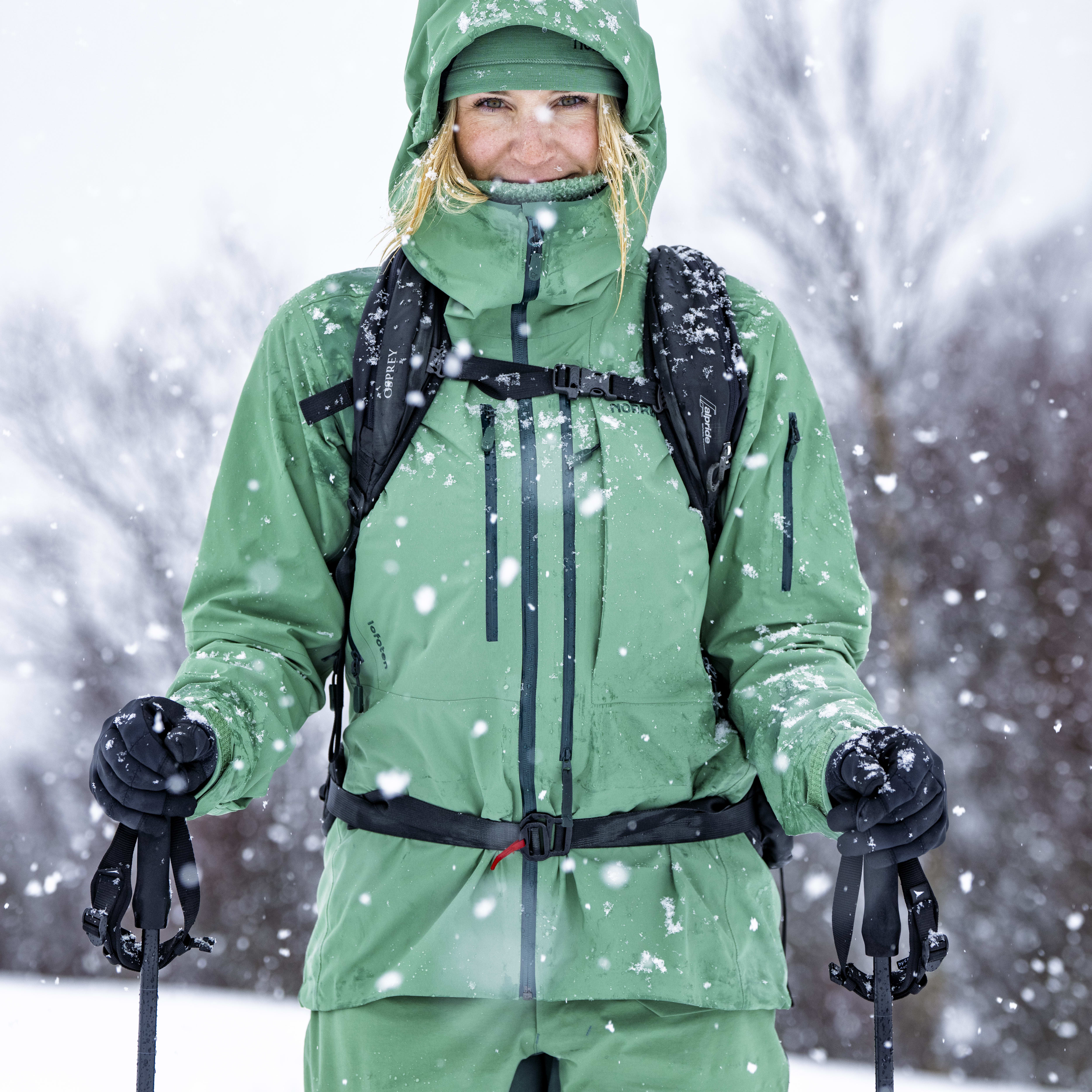
Hardshell garments prioritise weather protection. Waterproof constructions typically combine a durable outer fabric with a waterproof membrane and an inner layer that protects the membrane.
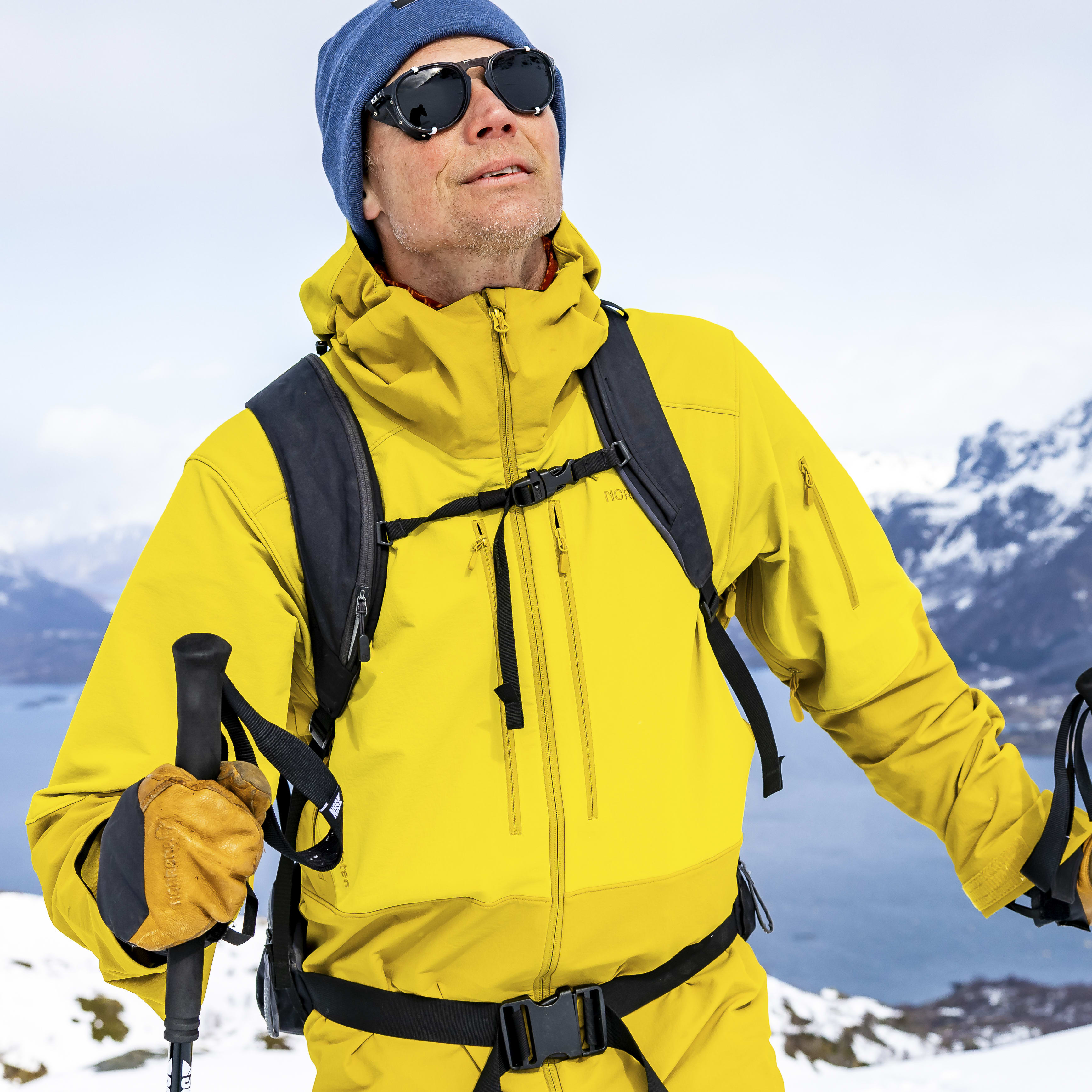
Softshell garments shift the balance towards breathability, mobility and comfort during activity.
Different Shells for Different Problems
Different mountain activities place different demands on shell garments. A ski tourer climbing for several hours needs a different balance of protection and breathability than an alpine climber spending the day on exposed rock or a skier facing repeated wind and snowfall.
Shell constructions respond to these demands by shifting the balance between weather protection, breathability, durability and mobility. The differences between shell garments, however, are not determined by fabric alone. Fit, ventilation, pocket placement, reinforcement and other functional details also determine how a shell performs for a particular activity.
Softshell: Prioritising Movement and Breathability
Softshell garments use breathable, flexible fabrics to provide freedom of movement and protection from wind and light precipitation without the complete waterproofing of a hardshell. This makes softshell particularly useful for high-output activities such as ski touring, trail running and hiking, where managing excess heat and moisture is a priority.
The senja flex1 Jacket, lyngen flex1 Pants and falketind flex1 Pants are examples of this approach.
Lightweight Hardshell: Protection at Low Weight
Lightweight hardshells provide waterproof protection while keeping weight and pack volume relatively low. This balance makes them useful for hiking, climbing and ski touring, where a shell may spend part of the day in a backpack before becoming essential when conditions change.
The falketind Gore-Tex Jacket and lyngen Gore-Tex Jacket illustrate different approaches to lightweight waterproof protection.
Robust Hardshell: Protection for Prolonged Exposure
More robust hardshell constructions prioritise durability and dependable weather protection when exposure and wear increase. They are particularly useful in demanding mountain environments where contact with rock, equipment and repeated severe weather places greater demands on the garment.
The lofoten Gore-Tex Pro Jacket and trollveggen Gore-Tex Pro Jacket both use highly protective shell constructions, but are designed around different activities. Features such as fit, ventilation, pocket placement and other functional details help adapt each garment to freeride skiing or mountaineering.
No single shell construction is ideal for every mountain activity. Choosing the right shell means considering both the protection provided by the material and how the complete garment is designed for the activity ahead.
Understanding Shell Technology
Shell performance cannot be explained by a single specification. Waterproofness, breathability, fabric construction, ventilation and garment design all influence how a shell performs in the mountains. Understanding the individual specifications is useful. Understanding how they work together is more important.
How Does a Waterproof Membrane Work?
A waterproof membrane forms a barrier that prevents liquid water from passing through the shell while allowing water vapour generated by the body to move outward through the clothing system.
The membrane does not work alone. In a waterproof shell, it is combined with an outer face fabric and a protective inner construction to create a laminate. The complete garment then adds features such as ventilation, seam sealing, fit and weather protection around openings.
Two jackets using the same waterproof membrane can perform very differently because face fabric, construction, ventilation, fit and garment design all influence the performance of the complete shell.
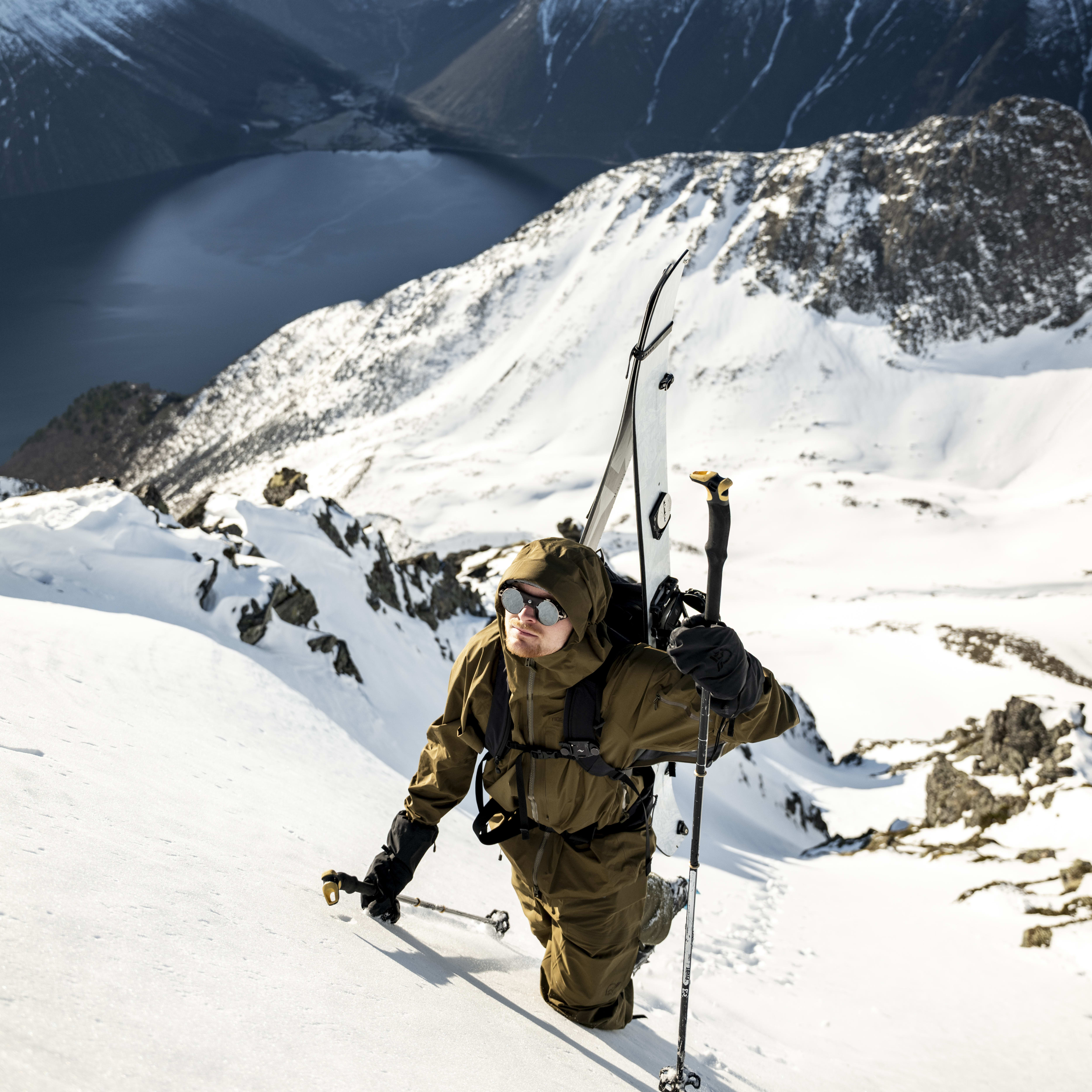
Waterproofness, breathability, fabric construction, ventilation and garment design all influence how a shell performs in the mountains.
What Does a Waterproof Rating Mean?
Waterproofness is commonly expressed in millimetres of water column, or mm. The number describes the amount of water pressure a fabric can withstand in a laboratory test before water penetrates through it.
A rating of 20,000 mm, for example, means the material can withstand the pressure created by a 20-metre column of water under the specified test conditions. Higher numbers indicate greater resistance to water pressure.
Technical GORE-TEX fabrics used in many Norrøna mountain shells are rated at approximately 28,000 mm. That provides a high level of waterproof protection, but the number does not tell you everything about how comfortable or appropriate a shell will be for a particular activity.
Once a shell provides sufficient waterproof protection for the conditions, breathability, ventilation, durability, weight and fit can become equally important considerations.
What Does Breathability Mean?
Breathability describes the ability of a shell system to allow water vapour generated by the body to move outward. This becomes particularly important during sustained movement, when heat and moisture can accumulate inside even a fully waterproof garment.
Some technical shells use RET values to describe breathability. RET stands for resistance to evaporative heat transfer and measures how much resistance a material creates as heat and moisture move through it. With RET, lower numbers indicate greater breathability. A shell with an RET below 9, for example, offers less resistance to moisture vapour transfer than one with an RET below 13.
Laboratory ratings are useful for comparing fabrics, but they do not determine comfort on their own. Activity level, temperature, humidity, layering, fit and mechanical ventilation all influence how effectively heat and moisture can be managed in the mountains.
What Is the Difference Between 2-Layer, 2.5-Layer and 3-Layer Shells?
The number of layers describes how the outer fabric, waterproof membrane and inner protection are assembled. The difference primarily lies in how the membrane is protected from the inside.
In a 2-layer construction, the outer fabric and membrane are bonded together, while a separate lining protects the membrane from the inside. This construction can provide a softer feel and allows insulation or other internal components to be incorporated independently of the waterproof laminate.
In a 2.5-layer construction, the outer fabric and membrane are bonded together, while a thin printed or applied protective layer is added directly to the inside of the membrane instead of using a separate lining or full textile backing. The “half layer” is therefore not a separate layer of fabric. This construction can reduce weight and pack volume, making it particularly useful for lightweight shells that may spend much of the day in a backpack.
In a 3-layer construction, the outer fabric, membrane and protective inner backing are bonded together into a single laminate. This creates a compact construction that is particularly well suited to technical shells where durability, low bulk and long-term performance are important.
No construction is inherently better. A 2.5-layer shell may be particularly useful when low weight and packability are priorities, while a robust 3-layer shell may be better suited to repeated use and prolonged mountain exposure. The right construction depends on what the garment is designed to do.
Where Does GORE-TEX Fit In?
GORE-TEX is one of the membrane technologies used to create waterproof and breathable shell garments. Different GORE-TEX constructions combine membranes, face fabrics and backers to achieve different balances of waterproofness, breathability, durability and weight.
Norrøna's relationship with GORE-TEX dates back to 1977, when we developed the prototype for Europe's first GORE-TEX jacket. Decades of working with the technology have since provided extensive experience in designing waterproof garments for different forms of mountain travel.
Today, GORE-TEX technologies are used differently across Norrøna collections. A lightweight lyngen Gore-Tex Jacket and a more robust trollveggen Gore-Tex Pro Jacket, for example, both provide high levels of waterproof protection, but use different fabrics, constructions and garment designs to meet different demands.
Membrane technology is only one part of shell performance. How the membrane is combined with the face fabric, backing, ventilation, fit and functional features ultimately determines what the complete garment is designed to do.
Choosing a shell is not about finding the highest waterproof rating or the most protective construction. It is about finding the right balance of weather protection, breathability, durability and weight for the activity and conditions ahead.
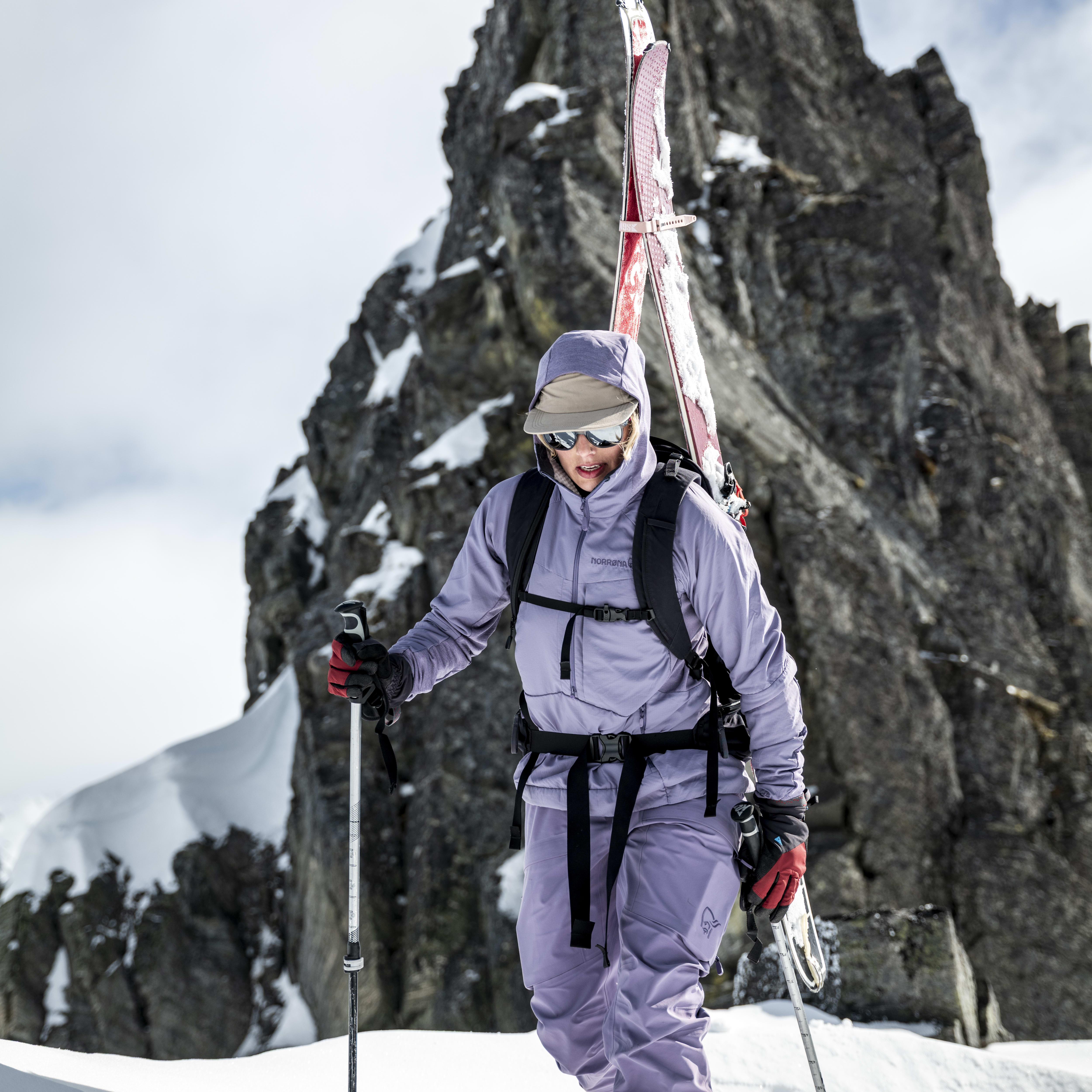
Choosing a shell is about finding the right balance of weather protection, breathability, durability and weight for the activity and conditions ahead.
How Do You Extend the Life of a Shell Garment?
A shell garment can remain functional for many years, but maintaining performance requires regular care. Dirt, body oils and other contaminants can affect breathability over time, while wear to the water-repellent treatment on the outer fabric can cause the surface to become saturated more quickly in wet conditions.
A shell that stops beading water has not necessarily stopped being waterproof. The waterproof membrane and the durable water-repellent treatment on the outer fabric perform different functions. Washing the garment and restoring the water-repellent treatment when necessary can help the face fabric shed water effectively and maintain comfort in wet conditions.
To extend the useful life of a shell garment:
- Wash according to the garment's care instructions.
- Use appropriate detergent for technical outerwear.
- Restore the water-repellent treatment when necessary.
- Repair small tears and damaged components before the damage becomes more extensive.
- Store the garment clean and dry.
Durability, maintenance and repair all contribute to keeping a shell garment in use for longer. Extending product life preserves the function of the garment while making better use of the materials and resources required to produce it.
→ Learn more about Care & Repair

A shell that stops beading water has not necessarily stopped being waterproof.
Carrying Less, Trusting More
Mountain conditions rarely remain predictable for an entire journey. Wind increases, precipitation arrives and exposure changes as the terrain becomes more open. A shell garment provides protection when these external conditions begin to demand it.
Loaded Minimalism is about removing what does not serve a purpose and refining what remains. In a shell garment, that means balancing protection, breathability and durability around a specific use, while ensuring that every fabric, feature and construction detail contributes to how the garment performs.
The result is not a shell designed to do everything. It is a shell designed to do what the activity demands, with nothing unnecessary and nothing you cannot trust when conditions change.