
Text: Håkon Sollund
Photos: expedition members
First published: Nov 7, 2022
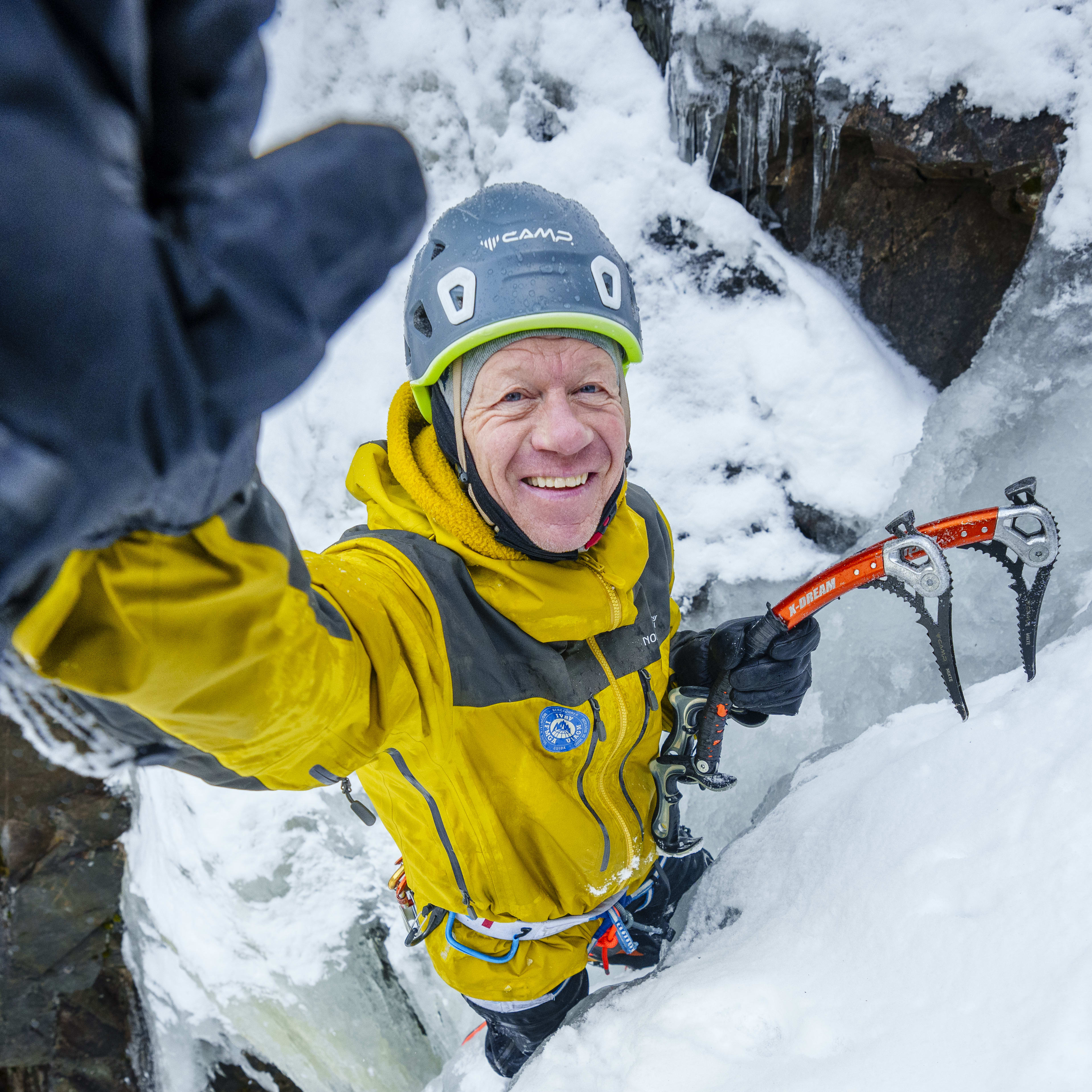
Robert Caspersen is a true climbing pioneer. He contributed to putting Antarctica on the map for the international climbing community and accomplished several first ascents there. He climbs big walls all over the world: in the Himalayas, Patagonia, in the Alps and in Norway. Before that, though, he climbed furniture and trees.
Based on a Norrøna Podcast interview by Eivind Eidslott
In 1993 Robert Caspersen was 22 years old. Together with a crew of seven other climbers, he was aboard a Russian ice breaker, heading for Antarctica. It was the 23d of December. Or maybe it was Christmas eve. He’s not quite sure. Back then, Antarctica was unchartered territory for climbers. But, on aerial photographs they’d seen, taken in the ’50s and ’60s, the mountains looked magnificent: huge walls, pointed peaks.
We sat down with Caspersen to find out what’s so attractive about Antarctica, how he ended up spending his life travelling the world in search of big walls to climb, not seldom risking his life in the process. And about what it takes to become a climber.
- Why did you become a climber, do you think?
"Wow. That’s a big question. I like to paraphrase the Norwegian philosopher, Arne Næss, who was a keen climber as well. He said: ‘I never started climbing. I just never stopped.’”

Getting to Antarctica
That was very much the case with Caspersen and at sixteen, he attended a climbing course at Kolsåstoppen, a crag just outside of Oslo. There, he had an epiphany, and he’s been climbing constantly ever since. A mere six years later, he was skilled enough to be invited to join the first climbing expedition to Antarctica.
“Back in ’93, the only possible way of reaching the continent at all was with ice breakers going on research expeditions. So, we flew to South Africa and got on a Russian ice breaker from there. From the ice barrier and onto land, we were flown by a couple of old Russian helicopters. Then, we skied towards the mountain range. It took a lot of planning, a bit of scheming and a lot of time.”
- You were the first climbing expedition to this area, right?
“That’s right. People had been to the Mount Vinson area before. But the Fenriskjeften mountain range was completely untouched. We were the first people ever to set foot there. People had been close, 30 kilometers away or so, taking photographs. Other than that, all we had were aerial photographs from the ’50s and ’60s, when the mapping service expeditions flew over. So, it was unknown territory.”
The Objective and The Objective
The expedition, needless to say, was going to be expensive. So, Ivar Tollefsen, the expedition leader, got creative in the search of funding.
“Our main objective was climbing Ulvetanna Peak. As far as the sponsors were concerned, the official goal of the expedition was climbing the highest mountain in Norway. But nobody knew which mountain that was – not even the people at the Norwegian polar institute.”
Tollefsen is a capable man. He resolved the problem by doing all the research himself, so that he could get the funding.
“Through all the information that was available, Ivar found that a peak called Jøkulkyrkja was probably the highest peak in Queen Maud’s Land, which is the Norwegian sector down there – thereby being the highest peak in Norway. A first ascent of that, of course, would be of public interest.”
- So how did you go about both pleasing the sponsors and achieving your own goals?
“Jøkulkyrkja is a beautiful peak, but it’s a skiing peak – an easy one. So, already on the first day of the expedition we ticked off the most important objective: the expedition was officially a success in the eyes of the sponsors.”
“After that we had something like six weeks of holiday, during which we tried to achieve our own climbing and mountaineering goals. So, then we skied for four days from there to reach Fenriskjeften, the mountain range where Ulvetanna is the major peak.”
First Impressions of Ulvetanna
They’d seen the mountain in fading photographs. Upon reaching the mountain range and the foot of Ulvetanna, Caspersen and the rest of the team was in awe.
- What did you feel when you first laid eyes on the mountain?
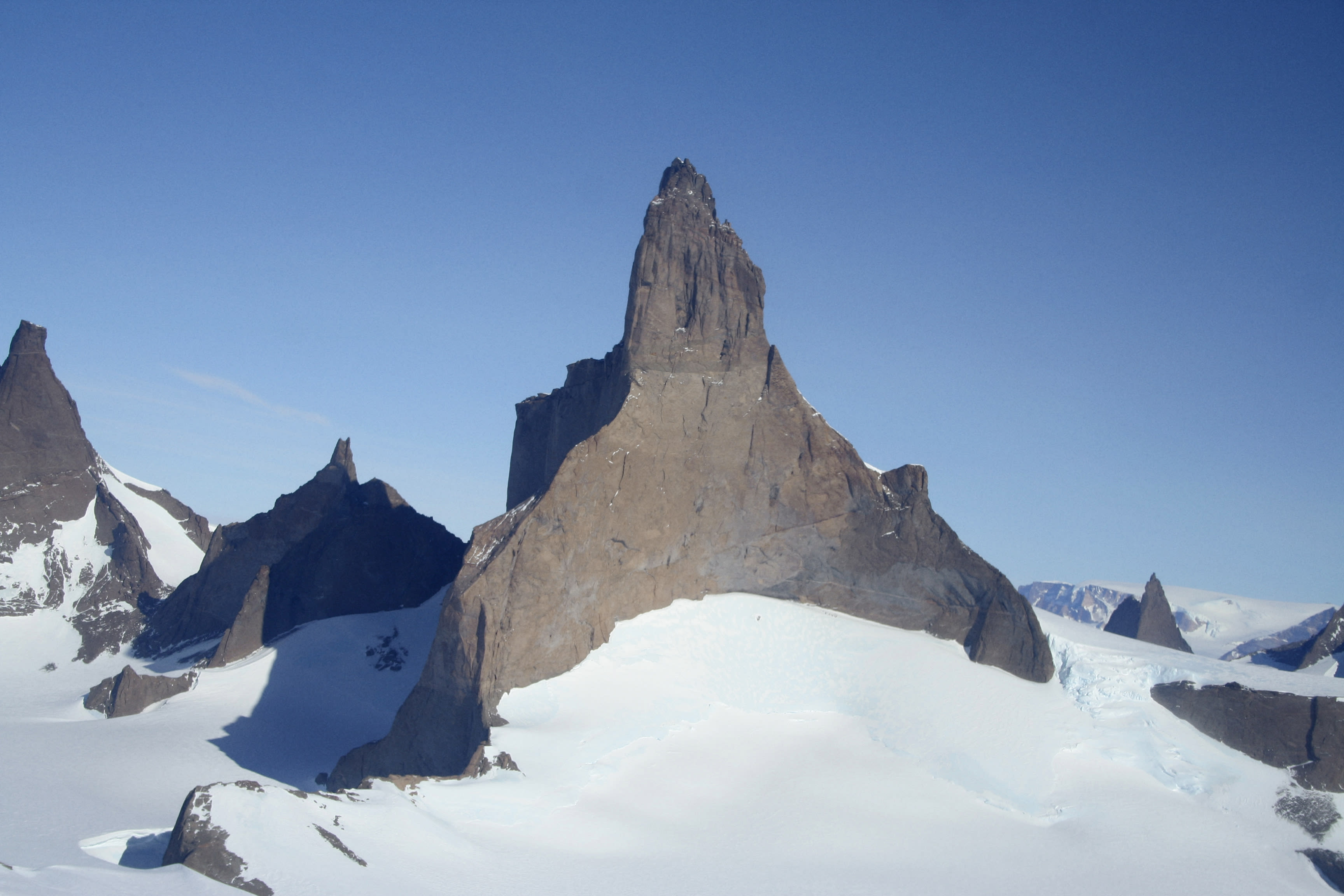
“Wow… It was surreal. I mean, Ulvetanna is like Fitz Roy, Cerro Torre – whatever you compare it to, it’s a major summit. It’s so attractive. And to be able to be the first people on earth to go there, just to ski around it, touch it, and maybe try to climb it – we felt very privileged. It was a dream come true.”
- And then, the moment of truth: when you touched the rock, how was it?
“The granite down there looks great in photographs. It’s golden and it looks solid. But in reality, it varies a lot. Some places it’s good, but a lot of it is very eroded: loose and flaky, with a surface like corn flakes, he explains.”
“So, a lot of the small ledges you’d want to use for climbing can suddenly pop off. Everything else makes it worth it, though: the views, the beauty – it’s amazing. And you get used to the quality of the rock.”
- When the time came to climb did you choose the easiest route or a more demanding one?
“On our first expedition we immediately realized that Ulvetanna was a major prize. But we were a big group of eight, so we divided into two smaller groups. Four climbers started climbing the north face of Ulvetanna immediately – the most awe inspiring and impressive face. But I was a rookie, remember. 22 years old. So, I was not part of that team.”
“Jøkulkyrkja is a beautiful peak, but it’s a skiing peak – an easy one. So, already on the first day of the expedition we ticked off the most important objective: the expedition was officially a success in the eyes of the sponsors.”
The Rookie Gets Lucky
Caspersen and another rookie were assigned smaller summits and easier routes. They were called “the alpine team.” Even though they were living the dream, they were a bit envious of the other team, living bigger dreams.
“We travelled around climbing smaller summits. We were doing faster ascents, climbing for a day, or for 48 hours. Ragged, alpine peak–first ascents, all of them. But I must admit I was a bit envious of the others. It was obvious that Ulvetanna was the major prize and I really wanted to be on the first ascent team. Luckily for me, the north face turned out to be too compact and too difficult to ascend.”
Time was running out. With two weeks remaining, the decision was made that only two climbers would continue the attempt at climbing the north face of Ulvetanna, while two others were to join Caspersen in an attempt at climbing it from the west.
“Looking at the mountain, it’s obvious that the west face is the easiest climb and the natural route for a first ascent. I had pointed this out all along and had wanted to go there. But because of the politics on the team, I had to back off and climb all these other small mountains first. But now I was given a chance to go for it.”
Hooked
“It all played out great”, Caspersen recalls.
“We had a fantastic adventure there. I think we reached the summit after six days and spent another two days getting back down. It was an amazing experience. The whole first expedition down there – it was unforgettable.”
- So, you already knew you’d have to return to Antarctica?
“Of course. We fell in love. I mean, it’s just surreal, this place. It’s perfect if you like winter climbing – more comfortable than winter climbing in Norway. It has 24-hours of daylight. It’s colder sometimes, and when the weather’s bad, it can be harsh”, he says.
“But it’s easy to get around: you ski from mountain to mountain. And when the weather’s nice and the sun is shining 24/7, you get a lot of energy. There are no big slopes or horrendous valleys to traverse. So, it’s a paradise. It’s Disney World, really. So obviously, we wanted to go back.”
Back for More
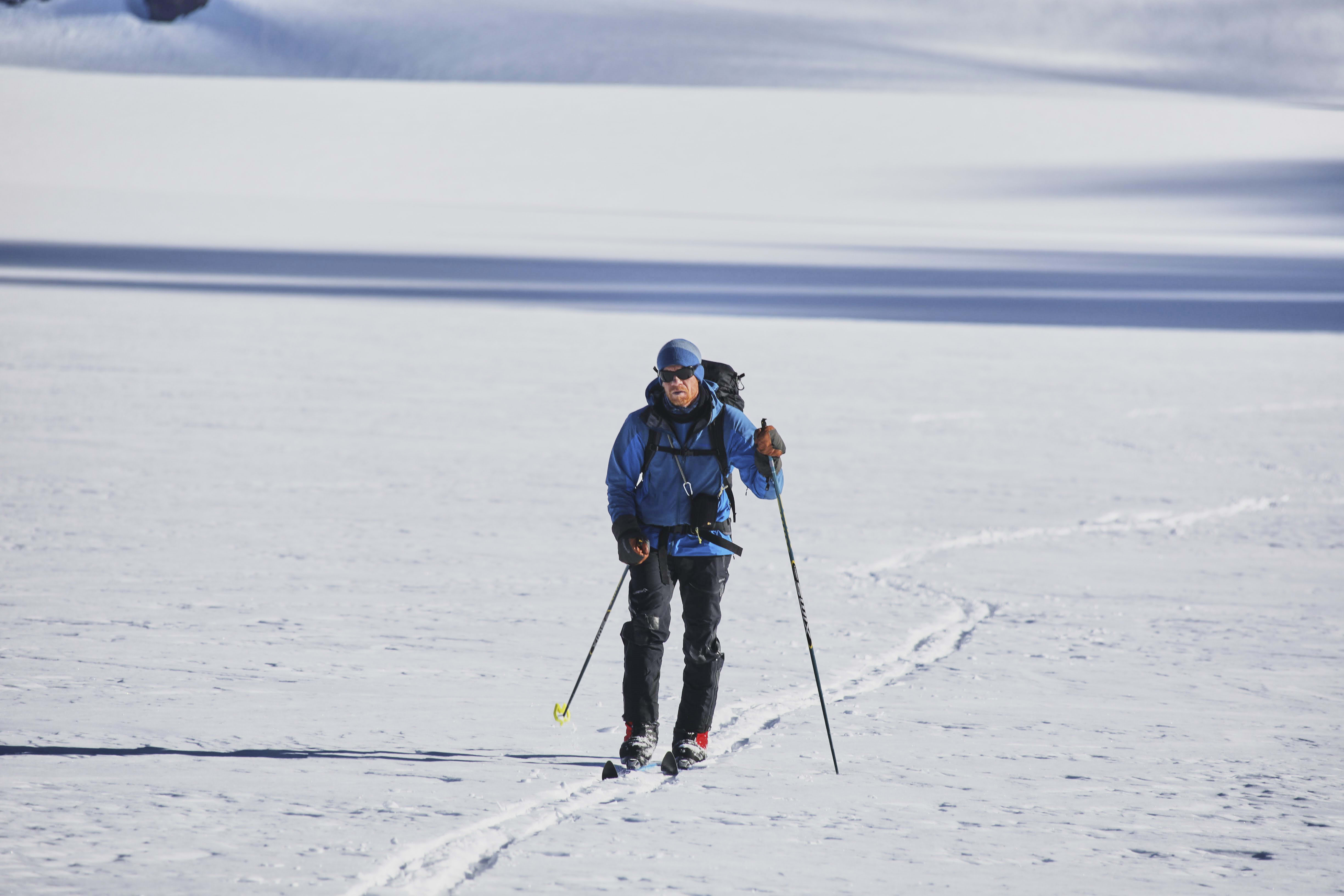
And so they did. Just two years later, Caspersen was back in Antarctica after receiving another call from Ivar Tollefsen. This time, they were headed for a different area, 600 kilometers east of the Fenriskjeften range. The summit they had in mind was Rondespiret.
“We were hoping for the same scenery. We had only one photograph of this mountain, which was taken from a plane something like 40 years earlier. And it looked fantastic. Even more pointed than Ulvetanna. So, it’s just as impressive. But nobody’s been there after we went. I think we scared them off.”
- Yes, I remember reading a lot about windy conditions.
“Yes. It looks amazing, but it’s very, very windy. We had some horrendous weather. It was quite a shock. We flew on a twin otter with skis. And I remember when the plane landed, it stopped after 40 meters – one rope length. I thought it was strange, so I asked, ‘Don’t you need more than 50 meters of runway here?’ The explanation, obviously, was that the head wind was so strong. We couldn’t even get the side doors of the plane open and struggled to get out for a long time.”
- The disappointment must have been huge, after such a long journey?
“The wind just never stopped. As we had a look around, the terrain made it obvious that this was not the first day, or the first week, with strong winds in this area. On the leeward side of the mountains there was turbulence, and big snow formations had been made. On the windward side, the mountain was blown completely blank. You could see the rock, the colors and formations, how they were shaped by the wind.”
“But we had no other hobbies. And we had six weeks to kill before the plane was supposed to return, so we did whatever climbing we could.”
Back to Basics: When Caspersen didn’t Stop Climbing
Caspersen would return to Antarctica three more times and is in no way ruling out a sixth expedition. The only problem is that there are so many other mountains to climb, on so many other continents. He’ll climb as long as he’s able and he’s been climbing as long as he can remember.
“As a young child I climbed a lot, like most children do. I’d climb on furniture, on buildings. I was always way up in the treetops. I climbed every day: tall birch trees with thin branches. Pretty soon I realized that I could climb higher than any of the other kids.”
- Were you not afraid?
“Yes, I was afraid, I felt the thrill. But that’s partly why I did it. I loved that feeling: the sensation of risk and knowing that I had to be really careful up there in the treetops, where the branches were thin.”
“I remember well the feeling I got at the climbing course: I fell in love at once, immediately. I was scared – and I loved it”
- What did your parents say? Did they try to stop you?
“No, quite the opposite. They encouraged me. I think my mother was the adventurous type, but she would look away when I climbed higher than her stomach could handle. My father encouraged me, but made sure – as I do with my children – that I could climb back down again; that I never passed that limit.
Climbing Shelf Meters at the Library
When Caspersen was growing up, climbing as a sport wasn’t as visible as it is today. Caspersen himself discovered it gradually, through mountaineering and through books he borrowed at the library.
“I would go to the library and borrow books about the great polar explorers: Roald Amundsen, Fridtjof Nansen and the like. That’s what I was initially into. I started skiing, going on long trips in the mountains of Norway – in Jotunheimen, at Hardangervidda – at the plateaus”, he recalls.
“So, I was interested in mountaineering. Luckily, in the library, the books about climbing, and especially the ones about climbing in the Himalayas, were placed next to the books about the polar expeditions – they were in the same category. So, it was kind of by chance that I realized climbing was a sport.”
The Epiphany
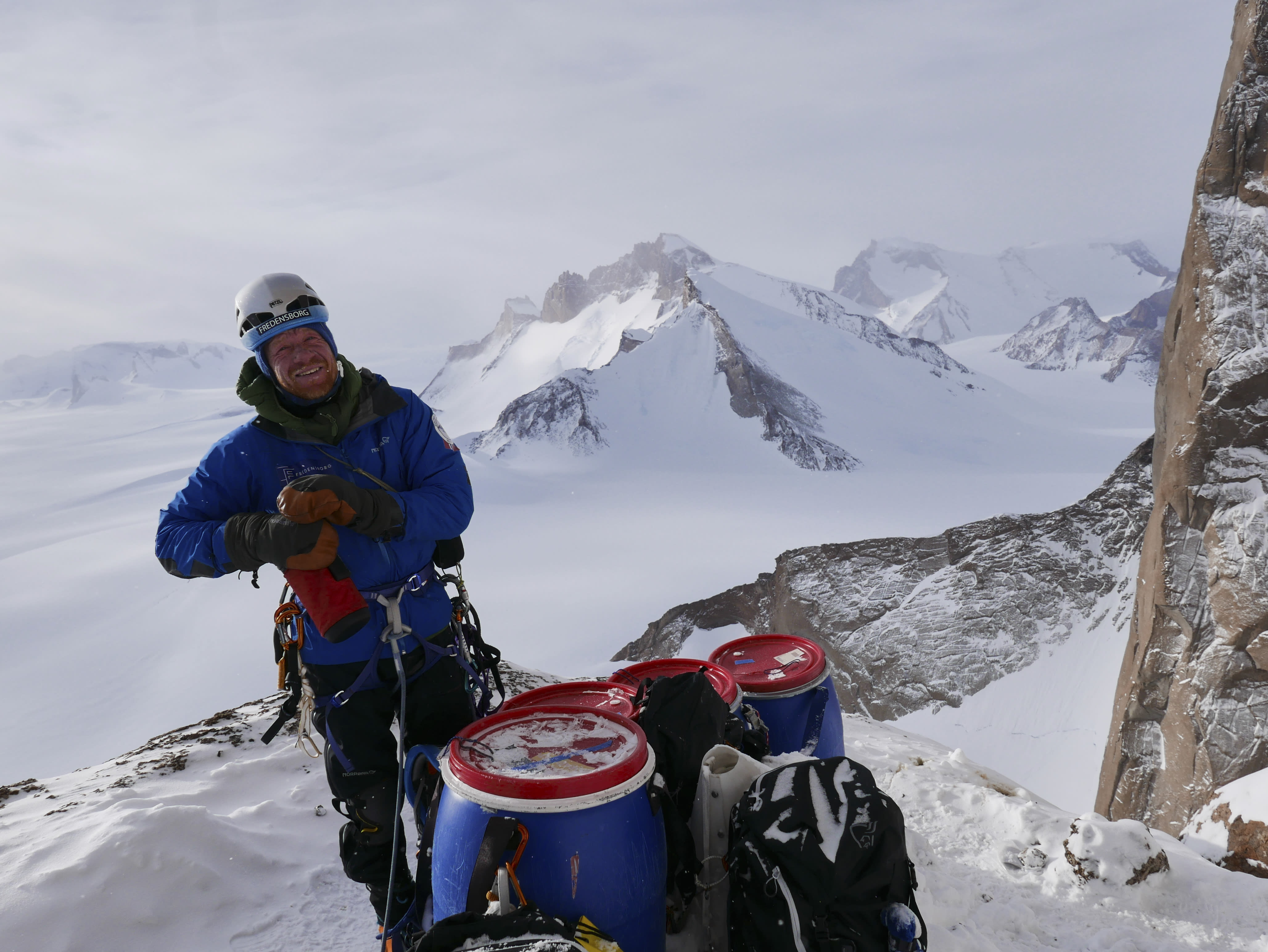
His interest was sparked. As he found out more and more about climbing, he also found out that he lived close to a nice crag outside Oslo. Soon enough, he attended the previously mentioned climbing course that would define his life.
“I remember well the feeling I got at the climbing course: I fell in love at once, immediately. I was scared – and I loved it”, he laughs.
“After a few hours in the crag there, in the steep walls of Kolsås, when I came home in the evening, I had no recollection of where I had been or what I’d done. I’d been inside the bubble for the first time, and I’d never experienced a feeling like that before. I was completely absorbed.”
- Was it joy you felt?
“It was joy, yes. But up in the walls it was serious business. I was a hundred percent focused on trying to stay alive. And that’s what I loved most about it.”