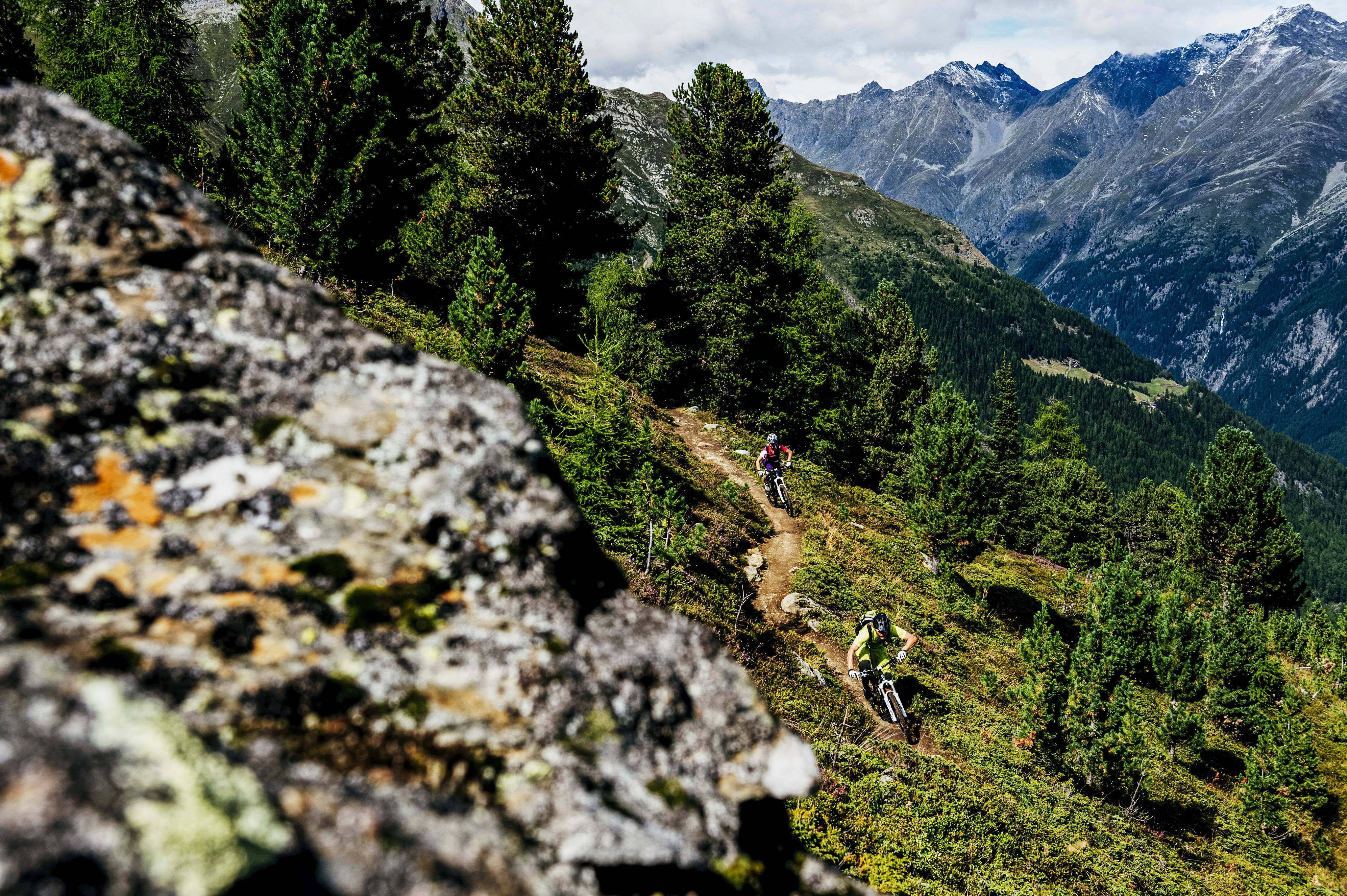
Text: Mattias Fredriksson
Photos: Mattias Fredriksson
Published: Feb 25, 2026
Towering mountains, scenic alpine trails, and a deep-rooted mountain culture make the Alps one of the world’s most exciting places to ride a bike.
When I began travelling to the Alps for mountain biking in the early 2000s, both the trails and the hikers we met on remote singletracks were often rough and not always welcoming. The stunning views and easy alpine access were major draws, but the ski resorts still carried a reputation for being luxurious, conservative, and frankly, boring. Despite that, the annual pilgrimage was worth it. Every year, we discovered dreamy singletrack, endless descents, and authentic mountain culture. Coming from a Scandinavian country where the highest peak is just shy of 2,000 metres, I found the sheer scale of the Alps mind-blowing.
Twenty-five years ago, most destinations in the Alps looked like ghost towns in the summertime; few lifts were operating, and there were no designated bike trails. Today, that quiet has evaporated. Mountain biking has completely transformed the summer economy, replacing winter’s ski queues with bike parks, flow trails, and guiding companies that cater specifically to mountain bikers.
Yet the true soul of alpine riding isn't found in the manicured dirt of bike parks; it lies higher up on ancient singletrack carved into scree and meadowland. For thousands of years, these narrow ribbons of dirt were shaped entirely by shepherds’ boots and livestock hooves. Today, mountain bikers trace those same lines, slicing through jagged passes to link isolated valleys and, at times, crossing international borders. Dropping in demands absolute commitment: sometimes it means a continuous descent of thousands of vertical metres through loose rock and relentless switchbacks that stay with you long after the dust settles.
Chamonix, France
Chamonix embodies the raw essence of the Alps. This legendary capital of alpinism is dwarfed by its own landscape: a wild, incomparable world of rugged 4,000-metre peaks, fractured glaciers, seracs, and the soaring 4,810-metre crown of Mont Blanc. Standing on the valley floor, you watch the mountains rise around you like monolithic walls. They are imposing, spectacular, and—honestly—almost too steep for mountain biking, making Chamonix an incredibly unique playground for those brave enough to tackle it.
Nestled at the eastern tip of the Chamonix valley, Le Tour offers a gentler, more rolling mountain landscape paired with jaw-dropping views of the iconic Mont Blanc massif. From the valley floor, ambitious riders can tackle the climb toward Vallorcine on the Swiss border. Alternatively, for a quicker and more relaxing ascent, hop on the Charamillon gondola and glide up toward Col des Posettes (1,997 m).
Once at the pass, the alpine world opens up with plenty of options. You can cross the border into Switzerland to link up with the Tour du Mont Blanc, one of Europe's most legendary long-distance routes. If you prefer a loop, trace the scenic trail from Col des Posettes back into the Chamonix valley; the stunning ridge path along the Aiguillette des Posettes offers panoramic vistas before delivering you right back to the Le Tour lift station parking lot.
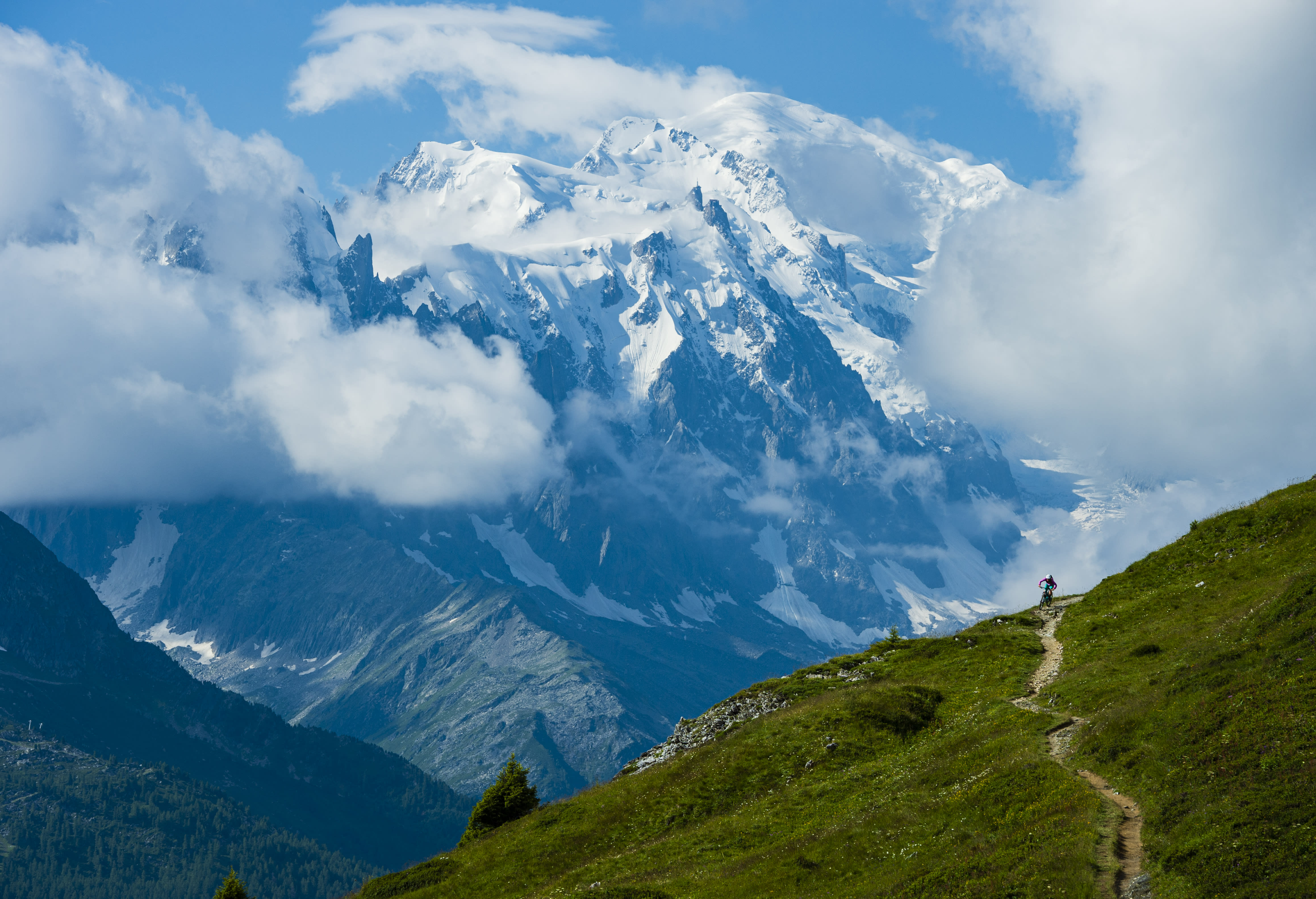
Recommended trail: Col des Posettes to Aiguillette des Posettes, then down to Le Tour. Fantastic scenery, smooth flow, and fun riding.
Travel: Geneva is the nearest airport. From there, the journey takes about 1,5 hours by rental car or 2 hours by bus or shuttle. If you're planning a road trip and want to visit different places in different countries, renting a car is the best option.
Verbier, Switzerland
Once a sleepy winter enclave that shuttered its luxury chalets and fine-dining restaurants in the off-season, Verbier has transformed into a premier summer destination. While skiers always dominated the slopes of the classic Swiss resort, mountain bikers quietly claimed the stunning alpine singletrack. Today, with a thriving bike park and fully equipped bike shops, the resort is vibrant almost year-round.
Yet, with all due respect to the bike park at Les Ruinettes, the area's true magic lies beyond the berms. Use the lifts to escape the park and into the high-alpine trail network, where epic singletrack descends all the way to Le Châble and neighboring valley villages. To get back up, simply hop on the iconic yellow PostBus—each bus carries up to six bikes for just a few extra Swiss francs. Alternatively, if you reach the valley floor before the lifts close, the gondola will whisk you back to Verbier. On the other side of the mountain, a gondola also serves Medran. There, you'll find even more singletrack, all incredibly scenic. You can also descend to Martigny from here, the small city in the Rhône Valley on the other side of the mountain. That could easily become a full-day adventure, much like the Tour du Mont Fort: a 60-kilometre all-mountain ride for fit riders looking for a real challenge. It involves plenty of climbing but rewards you with more than 3000 vertical metres of downhill in total.
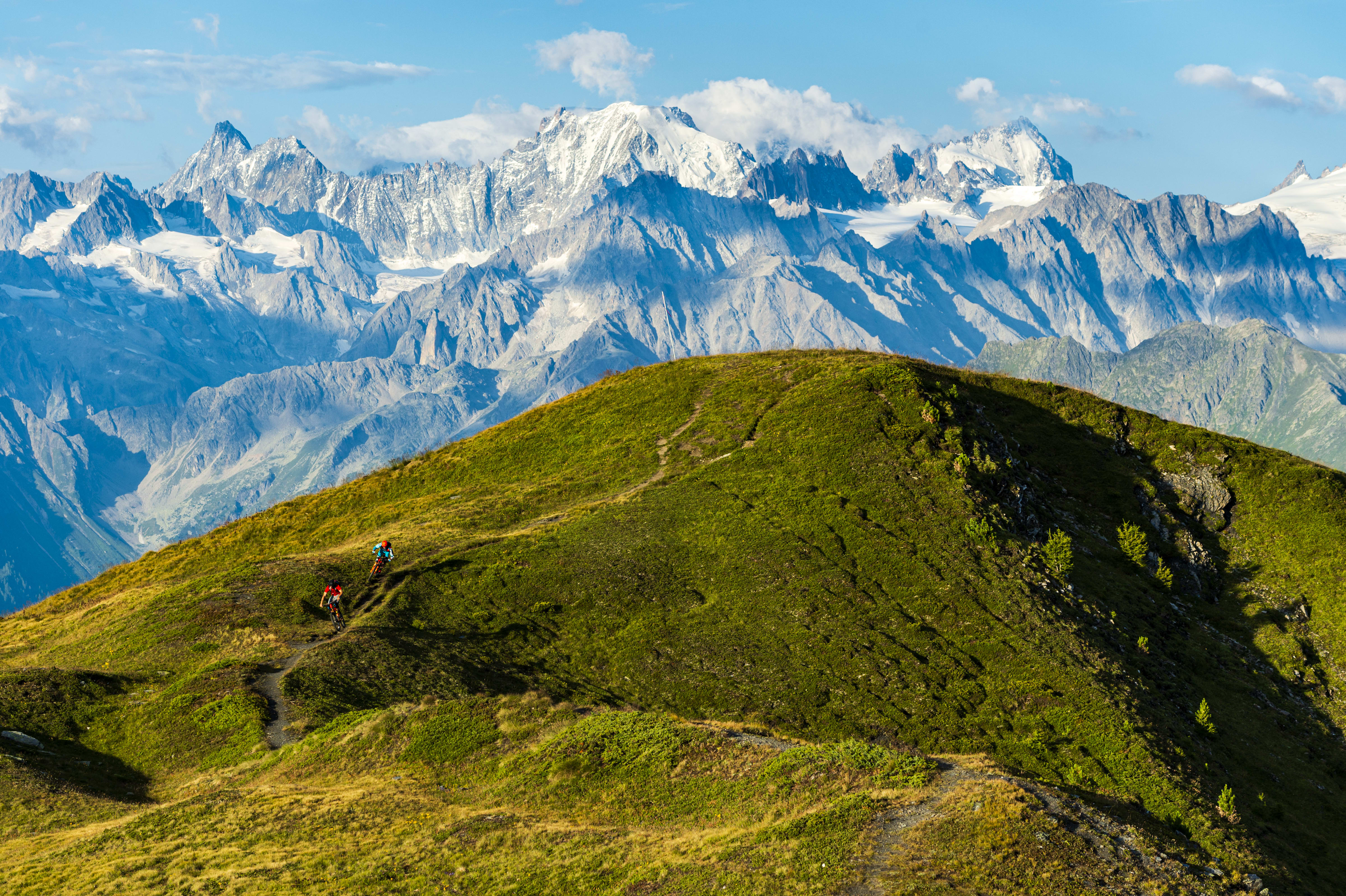
Recommended trails: From the top of the Les Ruinettes lift, ride east and follow the signs to La Chaux. Eventually, you will see a rocky trail below the ridgeline that leads to a fun trail down to Le Morgnes in the valley. From there, you can follow the road to Le Châble and take the gondola or bus to Verbier.
Travel: The closest airport is Geneva, but Zürich is almost the same distance. From either, it's easy to take the train to Le Châble, the village in the valley below Verbier. That is a great place to stay, but if you're staying in Verbier, buses and a lift will take you the last bit.

Livigno, Italy
Once a poor agricultural village, Livigno was isolated by high mountain passes near the Swiss border. Since Napoleon's time, it has benefited from special customs rules. Today, these advantages have helped make Livigno an attractive tourist destination, and it has been a customs-free zone since the 1960s.
Like many winter sports destinations, Livigno targets mountain bikers in the summertime, a shift that got a kick-start in 2005 when it hosted the Mountain Biking World Championships. Since then, a lot has happened, and Livigno is now known as one of the premier mountain biking destinations in the Alps.
With 3,200 kilometres of marked bike trails across Livigno and the Alta Rezia region, plus three bike parks, 12 bike shops and nearly 40 bike hotels, it’s easy to see why Livigno is a mountain biker’s paradise.
Livigno sits at 1816 meters at the foot of the mountains in Stelvio National Park, making it one of the highest villages in the Italian Alps. Its high altitude attracts endurance athletes who want to train at elevation, and some trails climb well above 3000 meters.
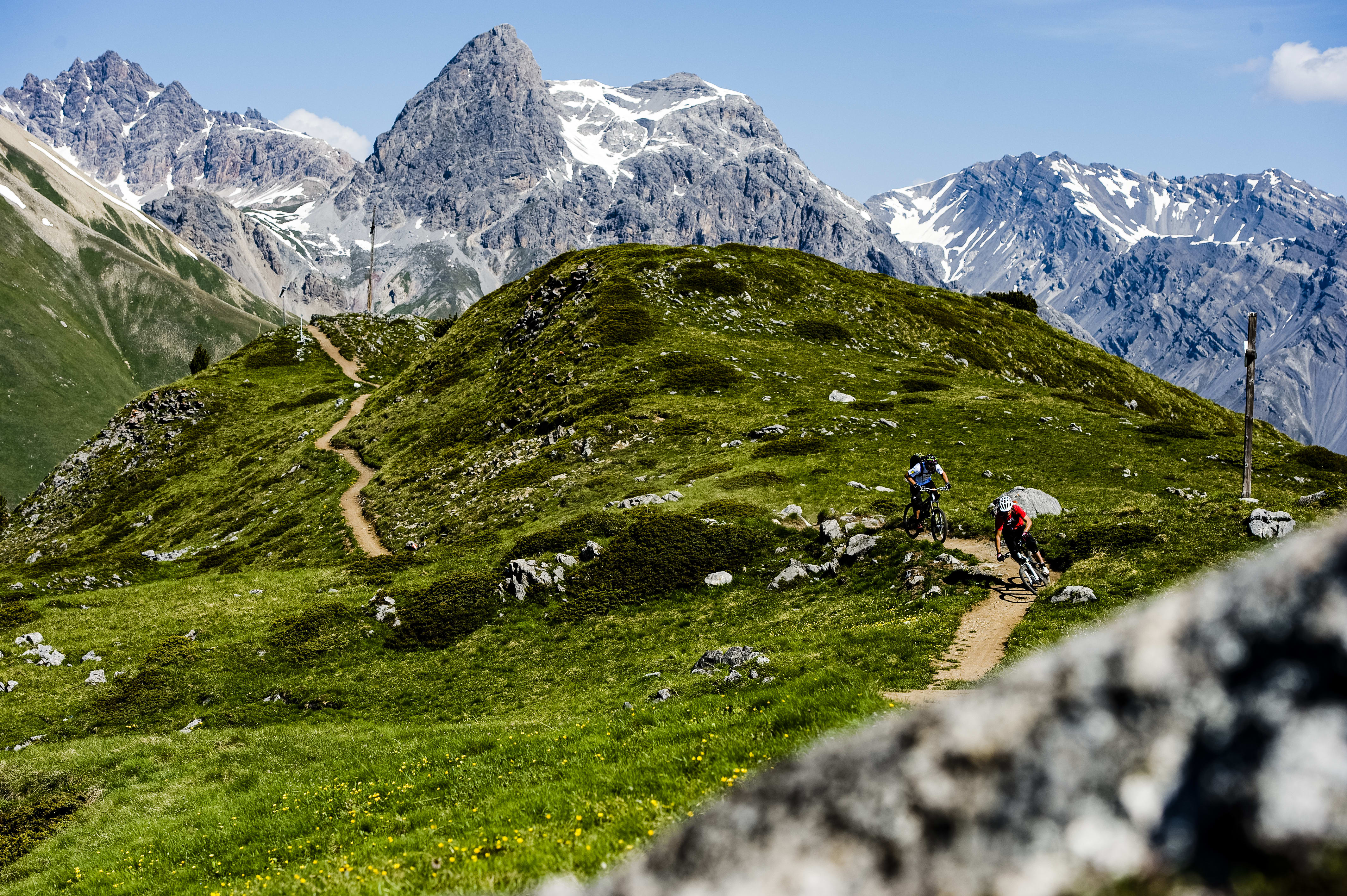
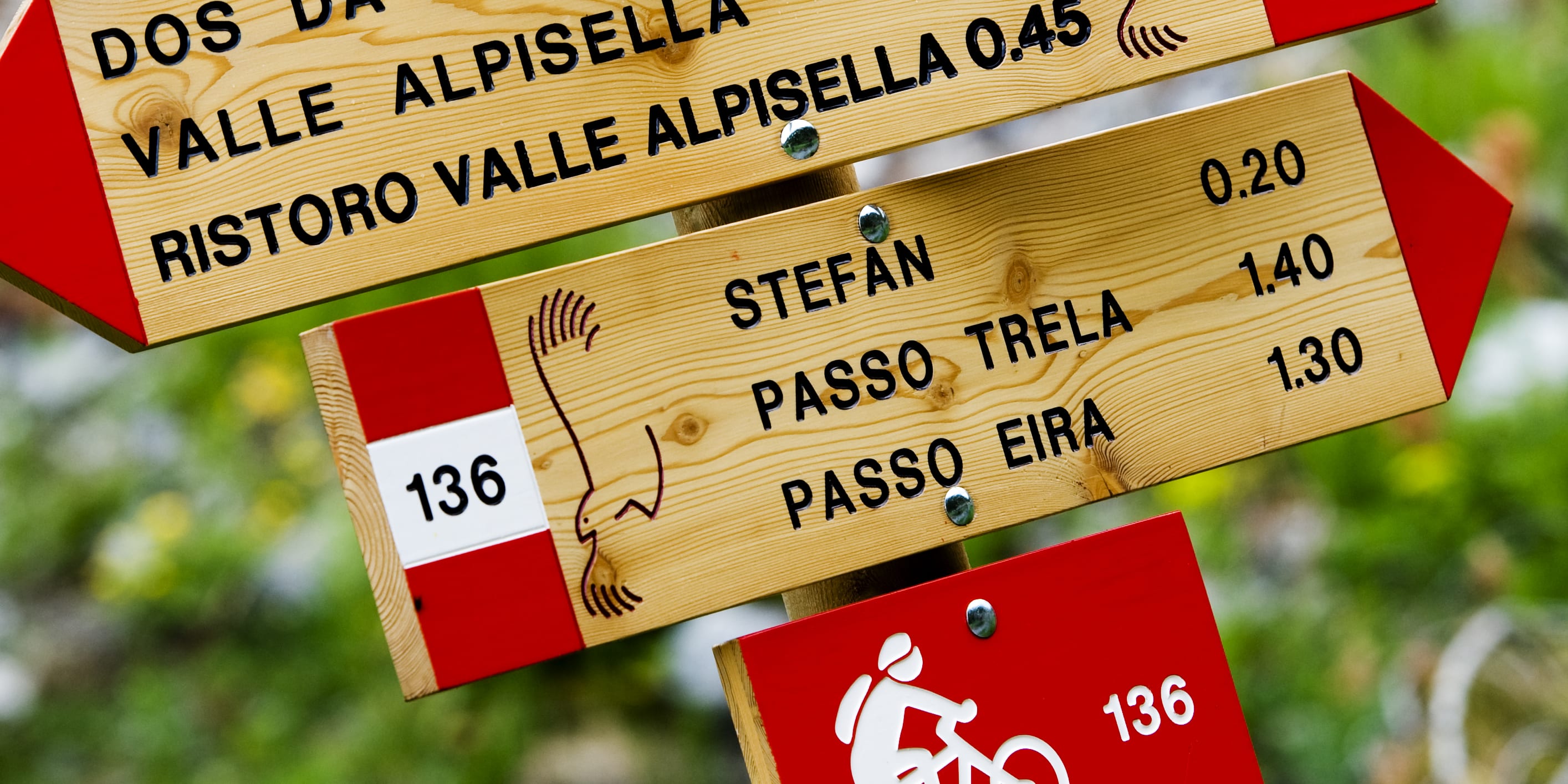
Recommended trail: Livigno–Passo di Val Trela. This 30-kilometre loop includes about 1200 metres of climbing and an equal amount of descent. After the climb, look forward to a fantastic ride along perfect singletrack in stunning surroundings. Enjoy lunch at Alpe Trela. If you want to shorten the climb, take the lift to the top of Mottolino.
Travel: Livigno is somewhat isolated, with a long transfer from the airports in Milan, Zürich, and Munich (3-3,5 hours), but the detour is worth it for some of the best trail riding in the Alps.
Zermatt, Switzerland
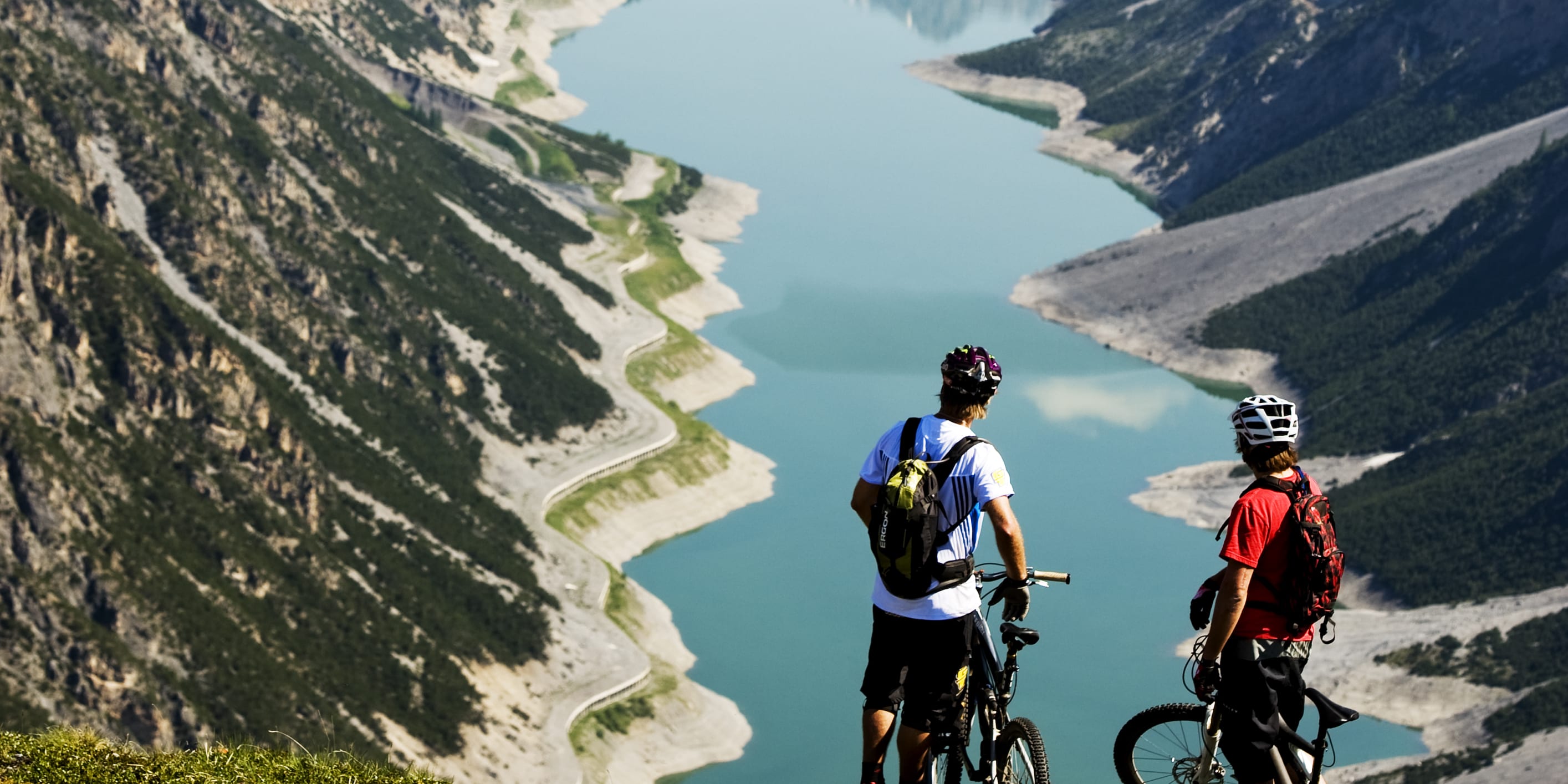
With nearly 40 peaks towering above 4,000 meters and epic trails cutting through breathtaking scenery, Zermatt is a dream destination for mountain bikers. This classic Swiss mountain town has always possessed a legendary reputation, but today it is turning heads for a different reason: a massive investment to become a premier mountain biking hub.
Located in Switzerland’s Valais canton, Zermatt is a historic destination stepping out in a new wardrobe. Historically, visitors flocked here for mountaineering, hiking, skiing, or simply to take in the views. With its car-free streets, deep-rooted alpine culture, and the most iconic mountain silhouette on earth, Zermatt has always held a magnetic pull. Yet, for all its beauty, it was long considered somewhat conservative—even a bit sleepy. Naturally, it took time for mountain biking to gain a foothold.
Luckily, the tide has turned. Today, Zermatt has transitioned into one of the most progressive mountain bike destinations in the Alps. Rather than resting on their laurels and quietly collecting tourism revenue, local entrepreneurs have pushed for continuous evolution. By treating mountain biking as a priority, they have firmly placed themselves on the global mountain biking map. While the region has long been known for its natural singletracks, a massive €11.6 million investment ahead of the 2025 World Championships transformed the terrain and bike infrastructure surrounding the Matterhorn. The resulting network stands as one of the most ambitious mountain biking developments in the Alps.

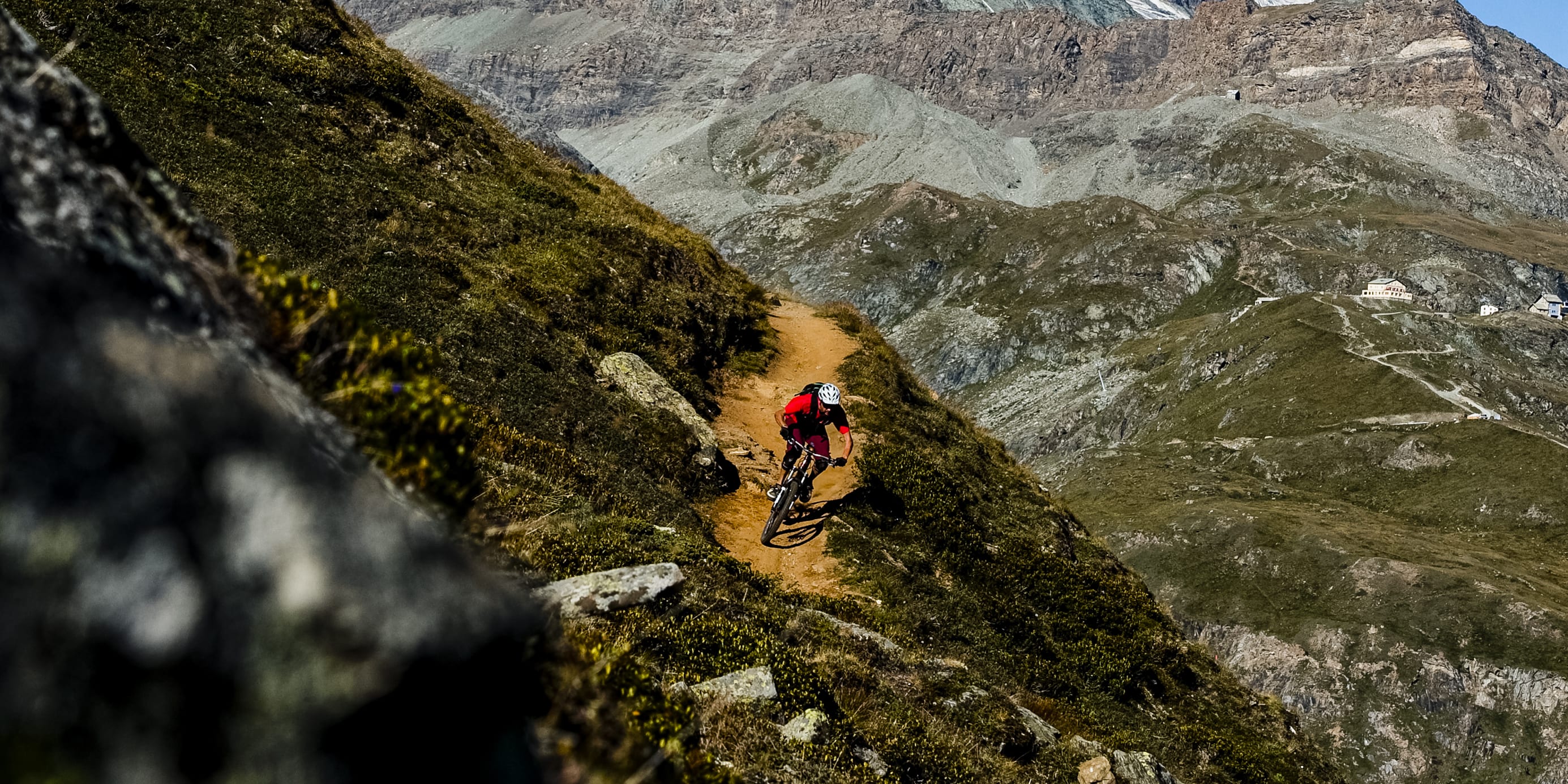
Recommended trails: On the Gornergrat side, the Mark Twain trail follows the mountain's edge and offers spectacular Matterhorn views. From Riffelberg, take one of several smooth flow trails down to the village, avoiding hikers on the lower hiking trails. For a longer descent, try the trail from Rothorn to Täsch, the village below Zermatt. It begins just behind the lift station at Rothorn. In Täsch, catch the train back to Zermatt.
Travel: Fly to Geneva or Zürich; both airports are about the same distance away. I recommend you take the train the whole way; Zermatt is a car-free village, so you don't need a rental car. Parking below the village is a hassle and expensive.
Aosta Valley, Italy
Nestled on the sunny southern slopes of the Mont Blanc massif, the stunning Aosta Valley stretches from the foot of Europe’s highest peaks down toward the rolling meadows north of Turin. It is a legendary winter sports destination, renowned for premier ski resorts like Champoluc, Gressoney, and La Thuile.
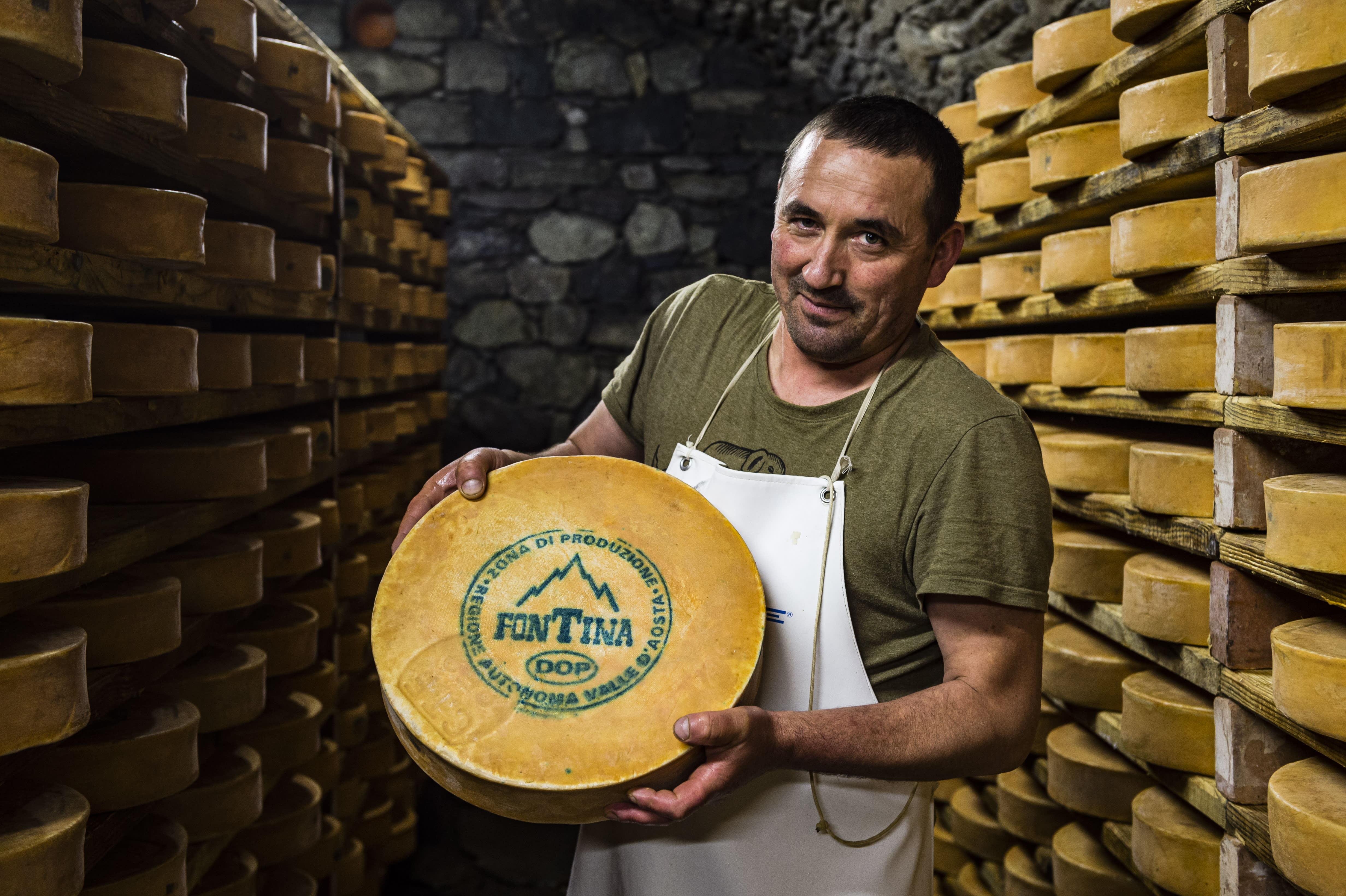
The historic town of Aosta serves as the region's vibrant capital. Home to 33,000 residents, it is one of the largest cities in the Alps—a unique enclave where an authentic blend of industry and adventure thrives. Here, a local steel factory coexists with a buzzing tourism scene powered by skiers, bikers, artists, and students. This contrast gives Aosta a cool, resilient city vibe where daily life carries on regardless of the weather, welcoming visitors without being consumed by them.
While the valley's trails were forged centuries ago for trade, a new generation of mountain bikers is now exploring these ancient routes, drawing global buzz for the region’s epic terrain, rich history, and world-class Italian hospitality.
Basing yourself in the Roman city of Aosta offers the perfect balance—ride straight from the city limits, then dive into the local culinary scene. To supercharge your itinerary, two nearby gravity hubs are absolute must-visits: Pila, home to one of the Alps' finest progressive bike parks, and La Thuile, renowned for its raw, natural lift-accessed network.
To plan your trip, contact Aosta Valley Freeride for expert guiding, bike shuttles, and local logistics: aostavalleyfreeride.com.
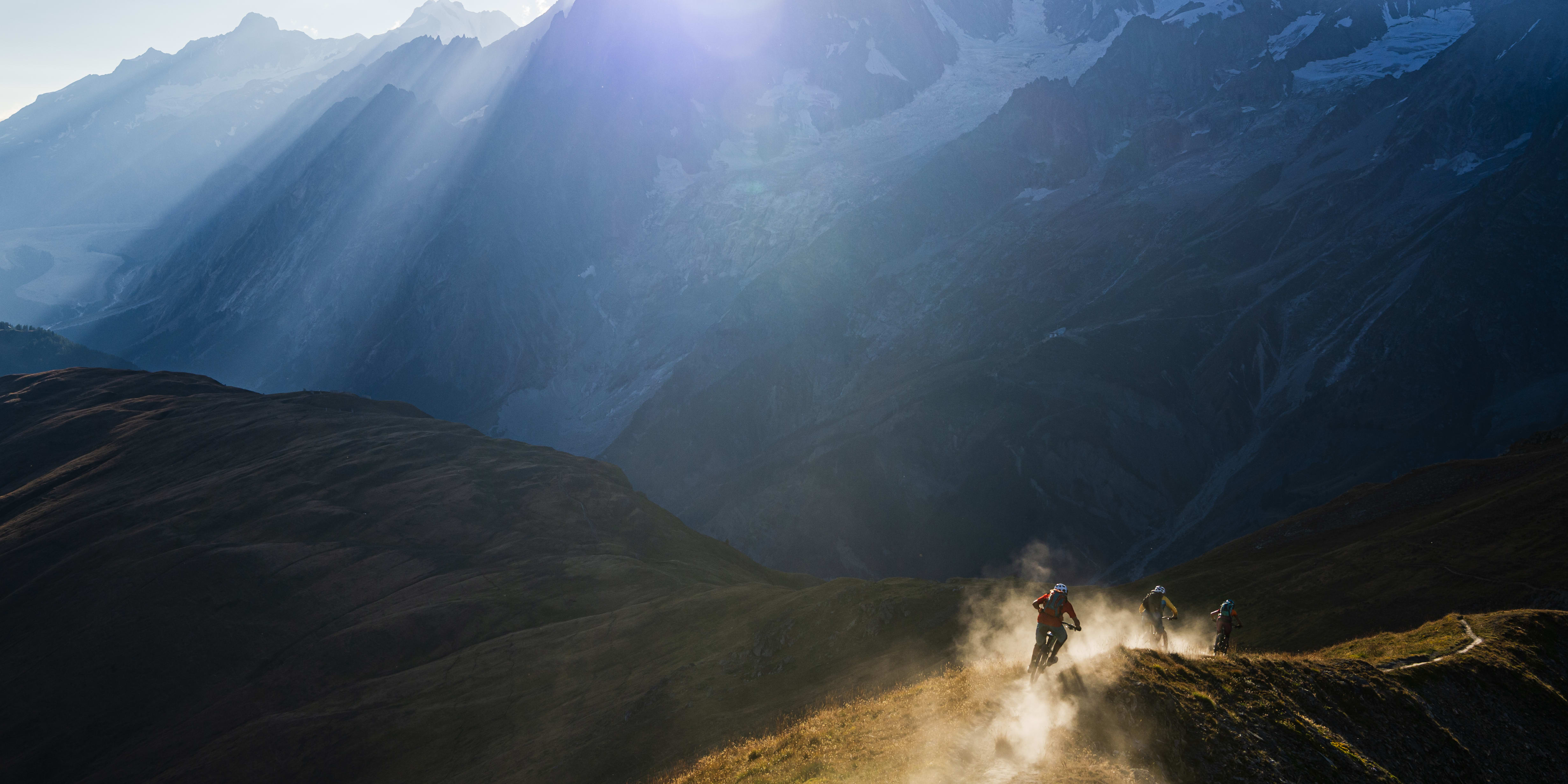
Recommended trail: From Punta Chaligne down to the town of Aosta. First, climb the mountain from Rifugio Chaligne, then descend for a few hours into town. Incredible mountain biking with everything from scenic alpine riding to fast sections in the trees.
Travel: Fly to Geneva or Milan. Both airports are about the same distance, about two hours away. There are airport shuttles, but a rental car is smoother in the summertime, giving you freedom on location – some trailheads are far apart.

Sexten, Italy
In South Tyrol, the classic Italian landscape shifts. You won’t find crumbling Roman ruins, grand historic edifices, or massive cathedrals where tour guides whisper to crowds. While Italy is a land defined by its cities, South Tyrol is defined by its peaks; it has hardly any true cities in the conventional sense. Here, German is spoken more often than Italian, and Apfelstrudel replaces tiramisu as the region's favorite dessert. This distinct identity is a by-product of history: the region belonged to the Austro-Hungarian Empire before becoming an Italian territory following World War I. Today, Italians call the province Alto Adige, and it enjoys fierce regional autonomy.
Nestled right on the Austrian border, at the foot of the Dolomites, lies the small alpine village of Sexten, or Sesto as it’s called in Italian. Just north of the iconic Tre Cime di Lavaredo peaks, Sexten has quietly become one of South Tyrol’s premier mountain biking destinations. The terrain suits every style of rider, and includes everything from gentle, flowy, machine-built trails to long, punishing backcountry routes. For those seeking a true adventure—ideally with a local guide—narrow, epic singletracks wind directly beneath the region's signature limestone giants. These aren't just trails; they are arguably the most stunning rides in the entire Dolomites.
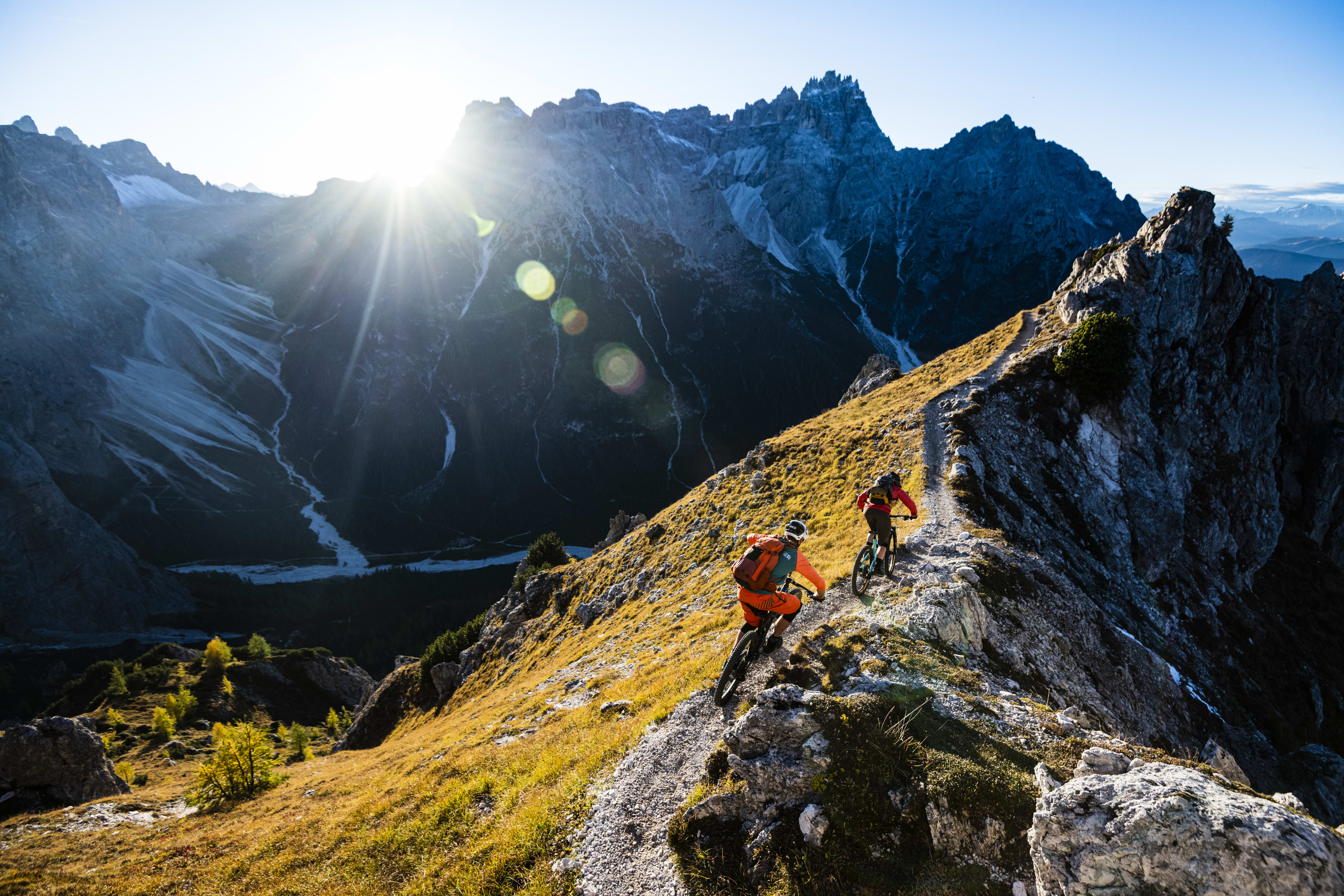
Recommended trail: Either take the cable car or tackle the brutal climb up Monte Helm to enjoy a coffee or apfelstrudel at Sillianer Hütte, perched at 2,447 meters. Afterward, cruise along the spectacular ridgeline right on the Austrian border before dropping into the Erla Trail —a purpose-built singletrack that flows straight back into town.
Travel: Fly to Marco Polo Airport in Venice, which is 340 kilometres south of Sexten, or Münich airport, 340 kilometres north. From Venice, it’s a two-and-a-half-hour drive to Sexten, and from Münich, it’s about a four-hour drive.
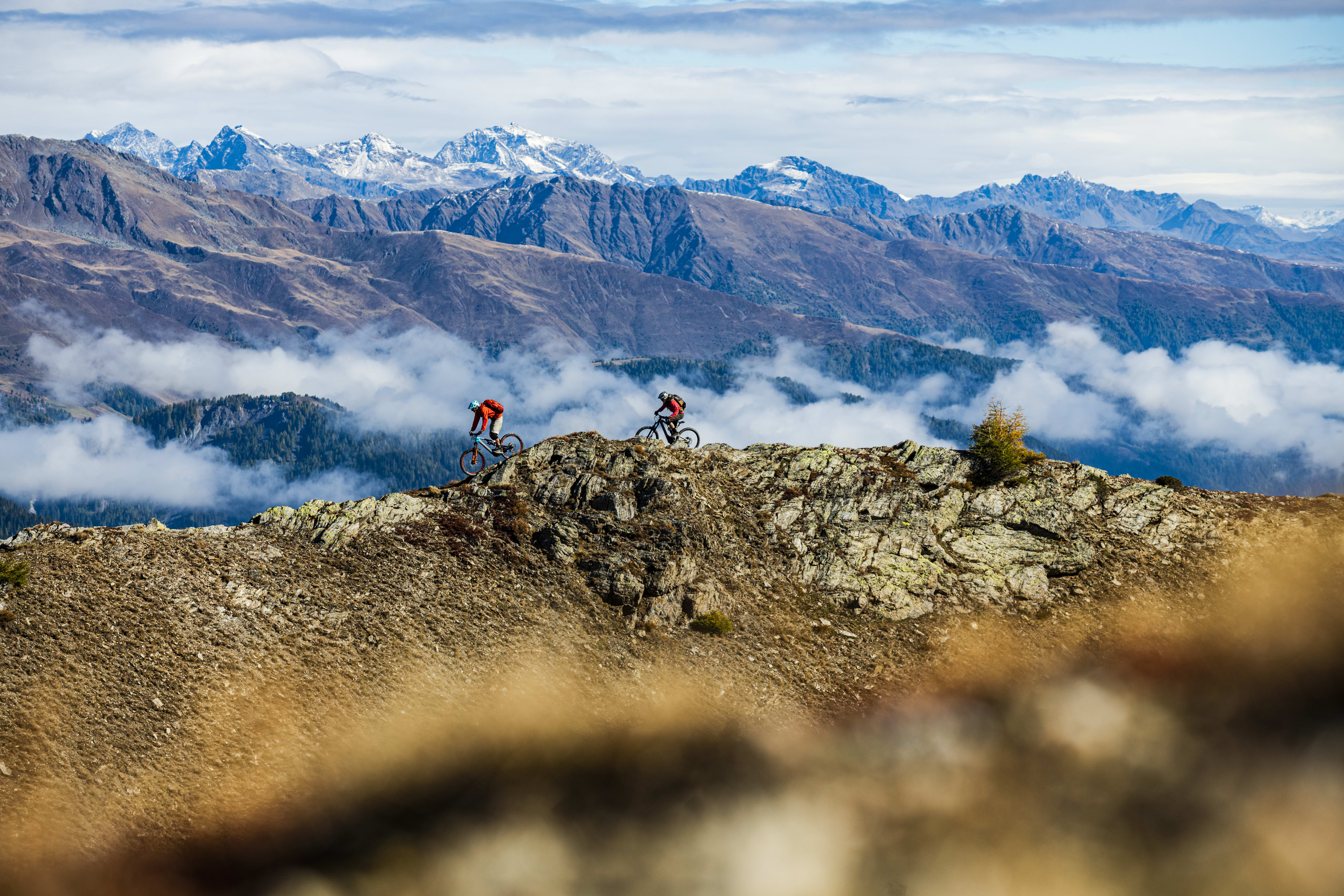
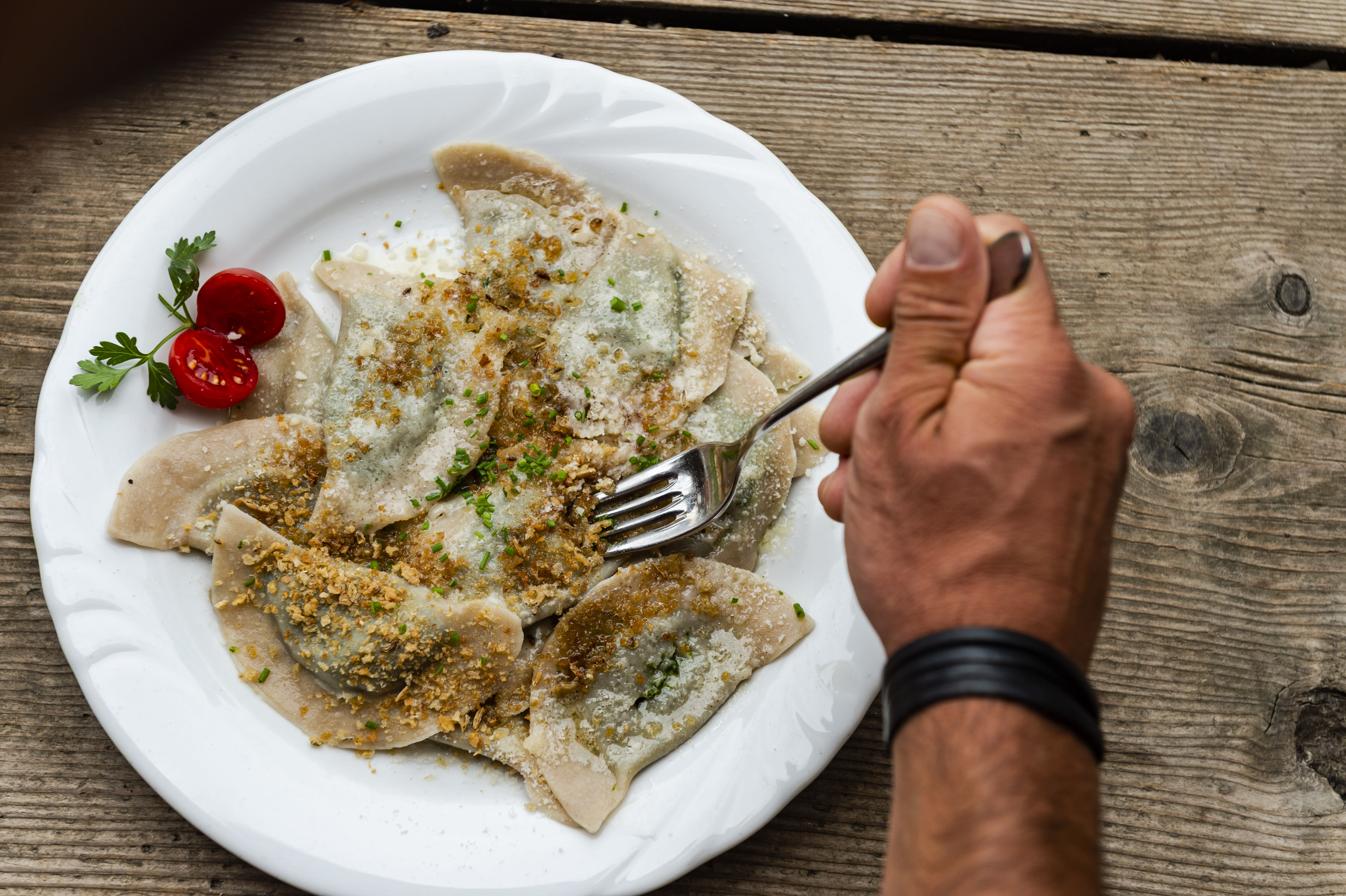
Lenzerheide, Switzerland
Years ago, Lenzerheide in Switzerland's Graubünden canton resembled many other Alps resorts: a vibrant winter hotspot that grew quiet and sleepy in the summer. To balance the scales, local authorities launched an ambitious initiative to transform the region into a premier mountain biking destination.
They quickly realized that true success required more than opening the ski lifts and letting riders descend rugged cow paths. Instead, they partnered with specialized consultants to develop a comprehensive master plan. Within a few years, Lenzerheide built a world-class bike destination from the ground up, using a diverse event strategy—from elite UCI World Cups and World Championships to grassroots community festivals—to put itself on the global map.
The strategy paid off well. Today, Lenzerheide is a thriving, trendy hub for downhill and freeride enthusiasts, with one of the finest bike parks in the Eastern Alps. It is equally appealing to all-mountain riders, who can enjoy lift-accessed singletrack, scenic valley tours, and seamless trail connections to the neighboring resort of Arosa.
This success is anchored in Graubünden’s exceptionally progressive approach to land access. The canton features an expansive 17,000-kilometre trail network shared by hikers and cyclists alike, governed by a unique "shared-use" philosophy that allows anyone to ride virtually any trail. As Switzerland's largest yet least populated canton, Graubünden has become a global leader in sustainable bike tourism. The region features 2,500 kilometres of dedicated, waymarked mountain bike trails, championed not only by Lenzerheide but also by neighboring powerhouses Davos Klosters and Engadin St. Moritz—making a multi-destination road trip an absolute must for visiting riders.
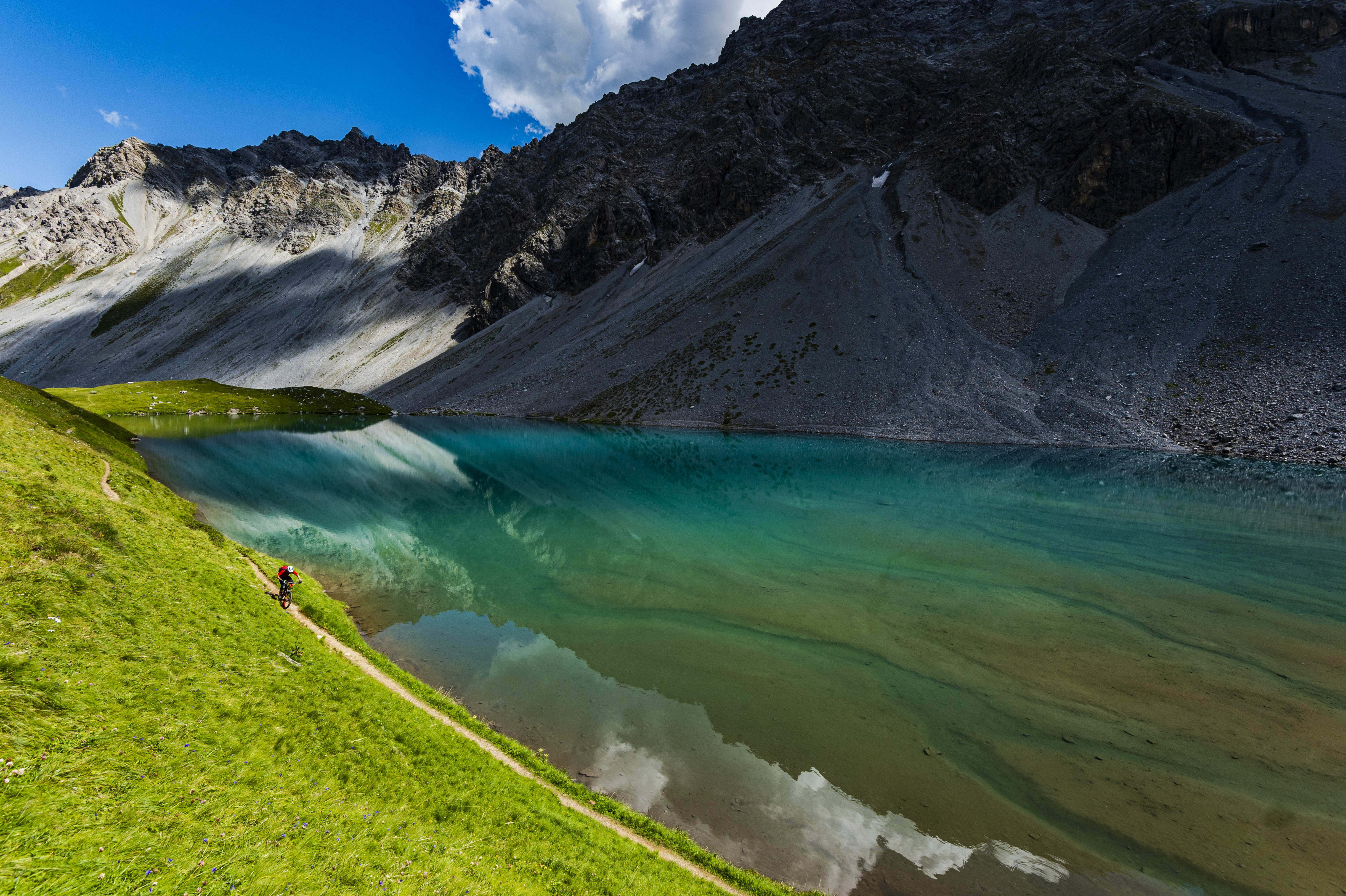
Recommended trail: from Parpaner Rothorn via the Schafalpi trail to Arosa via Älplisee, one of Switzerland's most beautiful alpine lakes. From Arosa, take a few lifts back up into the mountains to Fuerggli, then drop back into Lenzerheide.
Travel: Lenzerheide is only 1,5 hours from Zürich, so that's the best airport to fly into. It's easy to take the train to Lenzerheide, but you have to switch to the bus in Chur, about 30 minutes away.
Ötztal, Austria
Sölden and the Ötztal valley form one of Austria’s premier mountain-biking havens. Over the past decade, this renowned Tyrolean ski hub has meticulously adapted its infrastructure for two wheels. The result is Bike Republic Sölden—a powerhouse in the global bike community. While the high-alpine vistas grab your attention, the true magic lies beneath the canopy, where a dense network of forest trails weaves through the valley. Engineered with inclusivity in mind, the park is designed so riders of all abilities can share the same gravity-fuelled high. As one of Tirol's longest valleys, Ötztal stretches 65 kilometres through the Alps. Its location is ideal: situated an hour southwest of Innsbruck's urban conveniences and just north of Italy, it is perfectly positioned for an extended weekend getaway or a deep-dive week of riding with your crew. Here, the singletrack feels as infinite as the landscape. Backed by three major gondolas across Sölden and Oetz, the lift system unloads riders directly into a massive web of bucket-list tours. Unlike many other bike parks that cater heavily to downhill bikes, Bike Republic Sölden has always focused on designing trails with flow lines, enduro riding, and natural alpine singletrack in mind. To keep the experience seamless, a dedicated 11-person trail crew works around the clock to maintain Sölden's 33 lines in mint condition.
Recommended trail: The Kleble Alm Trail offers a fantastic mix of technical riding with switchbacks, roots, and rocks, and flowy, high-speed sections. Reaching it requires a 600-metre vertical climb from the gondola station, but a pit stop at the Klebe Alm hut makes it easy. From there, you’ll enjoy a staggering 1000-metre descent into Sölden.
Travel: Fly to Münich or Innsbruck, then it's easiest to continue by rental car. From Münich, it's about 2,5 hours, and from Innsbruck, 1 hour.