
Text: Håkon Sollund
Photos: Jon Gangdal, Chris Holter
Published: Nov 11, 2026

Tomas Carlström has done more for Norwegian climbing than most. Amongst a lot of other things, he was one of the few who introduced the climbing community to frozen waterfall climbing. This is the story of how a Swede, and a couple of Americans caused ice climbing to bloom in Norway from the 70s and forward.
Based on a Norrøna Podcast interview by Eivind Eidslott
Tomas Carlström is nothing short of a legend in the outdoor industry. He has done a lot. Still, he’s not at all the bragging type. He’s soft spoken and humble when telling stories of a life lived in, and for, nature, of legendary designs and first ascents. It’s unclear if he ranks them in chronological order as he lists his occupations and passions, but he leaves the impression that he enjoys them all just as much. Maybe except for climbing – the sport he did much to popularize in Norway during the 70s. It’s when he's climbing, that he feels the most alive.
“I’m an engineer, a climber, a skier, and a photographer”, he says. And he has the credentials to prove it.
For instance, Carlström is the designer behind the most popular Norrøna product of all time – the Trollveggen suit. Trollveggen is still in sale, still developing to this day – getting ever more sophisticated – to suit more extreme climbs and expeditions. The Trollveggen suit is nothing short of a milestone for Norrøna.
Discovering frozen waterfalls
Up until the 70s there wasn’t much talk of ice climbing in Norway. That changed, gradually mind you, from the moment Tomas Carlström moved to Hemsedal.
“Ice climbing as we saw it, in the 60s, was alpine climbing: snow slopes or glaciers, but not frozen waterfalls. In ’69 though, there was a picture of two climbers climbing a waterfall in California on the front page of a British magazine. That got me thinking that we could do the same here, where we have so many waterfalls. We started soon after that, with glacier axes and ice hammers”, he laughs. “But the first really difficult climbs were done in the mid 70s.”
In 1977 Carlström got a phone call from one of the most famous climbers at that time – the American “Hot” Henry Barber. Barber was pushing rock climbing to new heights during the 70s, especially solo rock climbing.
“I didn’t know him, even though he worked for Chouinard equipment. At that time, steep, vertical ice climbs had only been done in Colorado, USA. Anyway, not long after – Henry came to Norway with his friend Rob Taylor. They stayed at our place and by the time they left, they had made first ascents of a lot of what are considered classic ice routes today.”
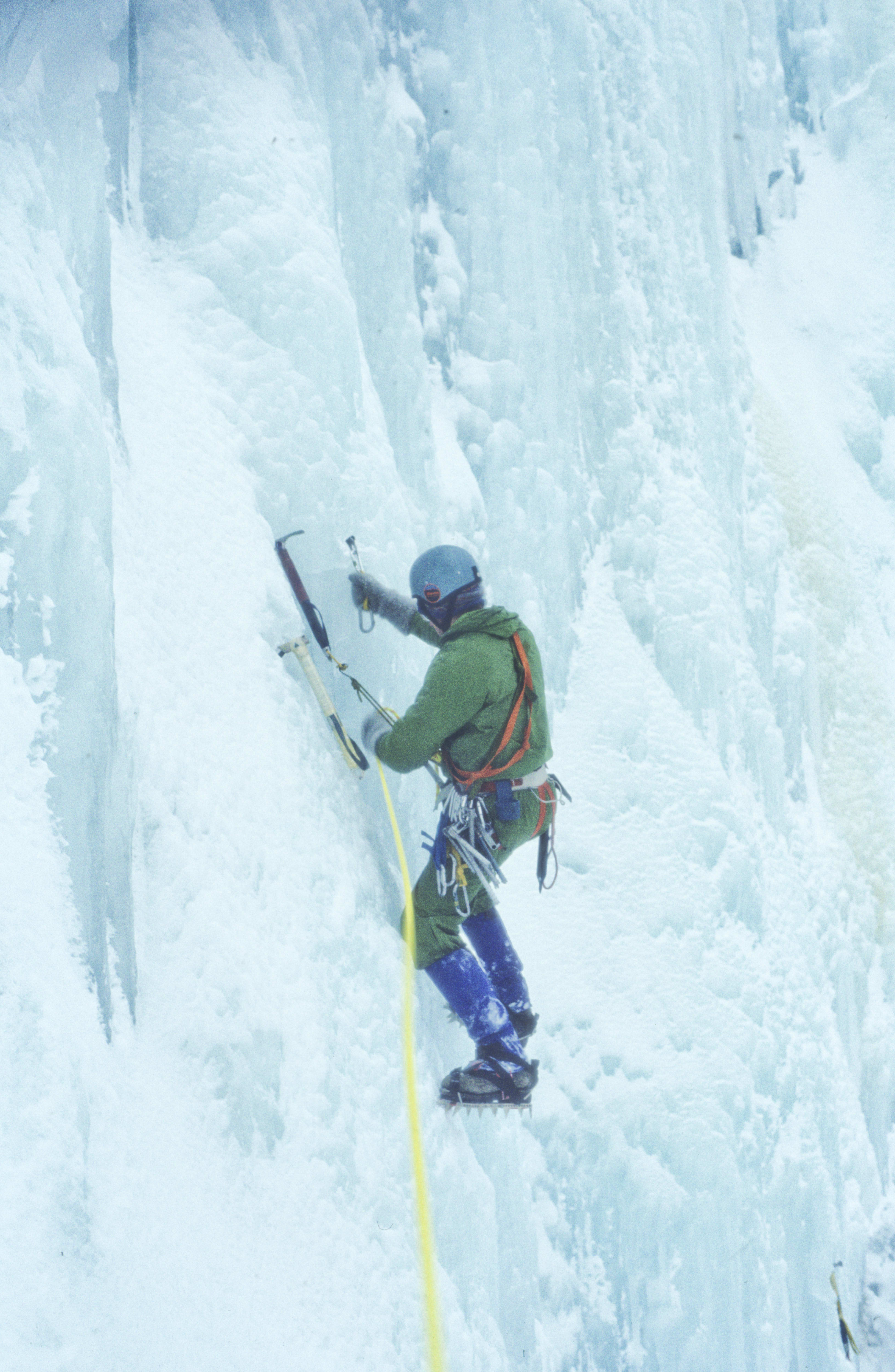
Vettisfossen – the highest vertical waterfall in Norway
One of the most groundbreaking climbs first completed by the Americans was Vettisfossen. The waterfall is 272 meters high and seldom frozen, so the climb wasn’t repeated for another 19 years. Barber and Taylor insisted that Carlström and a climber from Trondheim, Håkon Gammelsæter, joined them on the climb.
“We joined them for a third of it. The rest was a bit too hairy for us, so as they continued up the vertical part of the waterfall, we found a nice escape route to the right, where we discovered a perfect ledge where we could photograph them as they continued.”
Gammelsæter and Carlström returned to the cabin at five in the afternoon. Barber and Taylor returned at ten o’clock, without headlamps, in the dark.
“Henry had been hit on his head by a piece of ice and had blood in his balaclava, as they did not use helmets. They were very tired – but very happy. For many years this would remain the hardest ice climb ever successfully completed.”
Scandinavian mountaineering equipment
“When I moved to Norway, I had already accumulated a lot of knowledge about climbing gear. So, I figured I could do something about the dire situation with gear for sale in in the country. At the same time, I wanted to spread knowledge about mountaineering”, Tomas recalls.
“I decided to open a shop dedicated to sale of climbing gear. I wanted to live in Hemsedal, as close as possible to climbing and skiing in the mountains, so I started the shop there.”
So it was that Carlström opened the soon to be well renowned shop “Skandinavisk Høyfjellsutstyr” or “Scandinavian mountaineering equipment” together with a.o. Hans Petter Fernander. The market was keen, and Carlström knew every potential customer. The Scandinavian climbing community had earlier bought their equipment from Great Britain and Central Europe, now this equipment was imported to Hemsedal and sold mainly via mail order. Tomas also knew which other suppliers to order gear from: Chouinard Equipment – which today is known as Black Diamond after Yvon Chouinard quit the company.
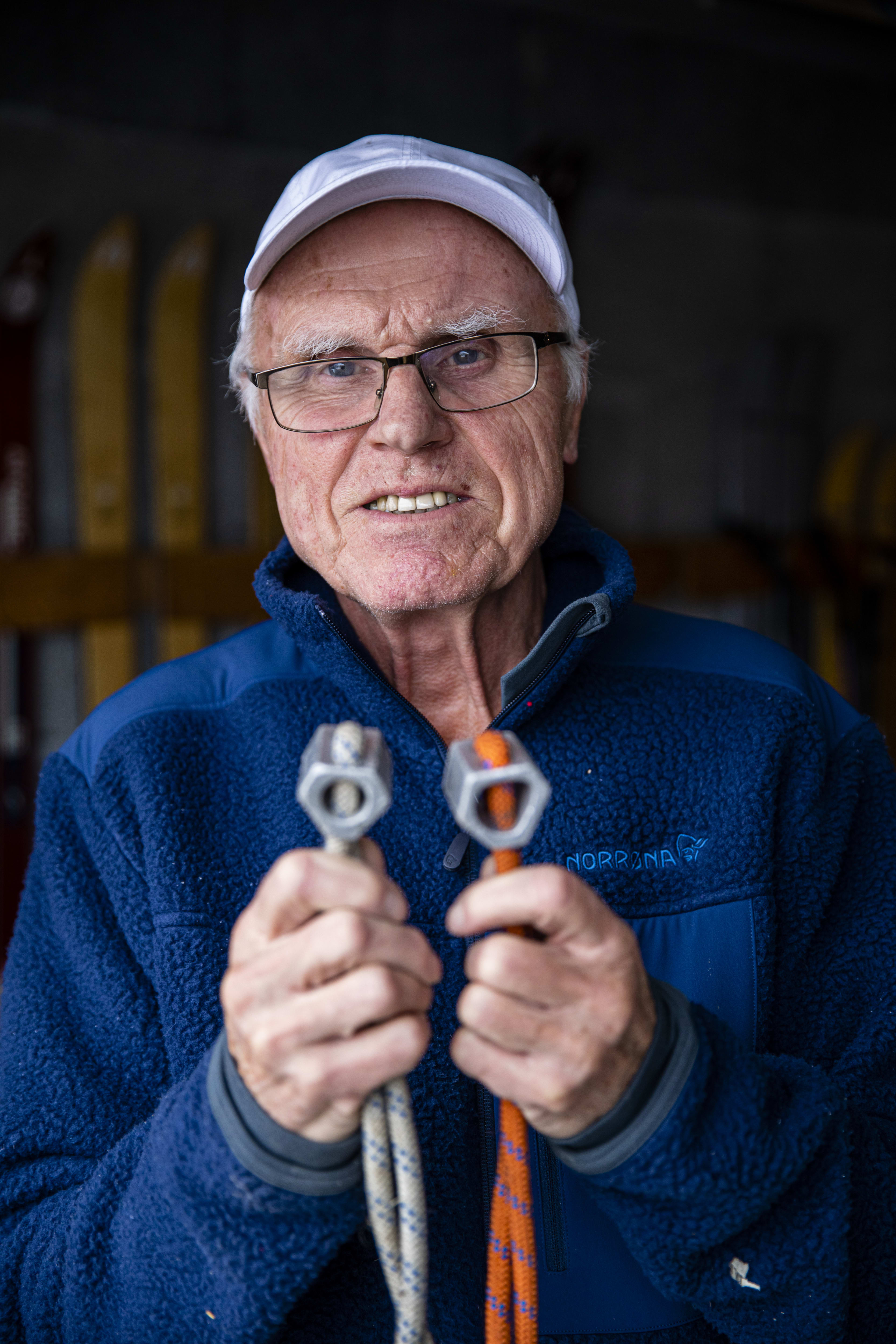
“We started importing Chouinard gear, which was more sophisticated than a.o. the British gear. Chouinard was a master of redeveloping gear that quickly took over the climbing market. Chouinard had for example designed a hexagon shockstone called “Hexentrics” which was asymmetric, but not quite.”
“I made a new version – redeveloped it, completely asymmetric this time, and sent it to him. They responded and took on my design, and at that time it became the most popular climbing nut globally.”
Living the dream
Carlström started climbing with his brother in 1956 in Stockholm, when very few in Scandinavia even considered it a sport or knew about it for that matter. He was 14 years old at the time. His first climbs in Norway took place in 1962. Carlström moved to Norway in the spring of 1970 to work in the Norwegian school of mountaineering in Hemsedal, and has stayed there ever since. It’s his paradise on earth. He now lives with his wife on a secluded mountain slope. They can go straight out the door with their skis on, walk up the mountain for a few hours and ski down in 20 minutes. In other words: Tomas Carlström is still living the dream in his eighties.