
Published: Mar 4, 2026
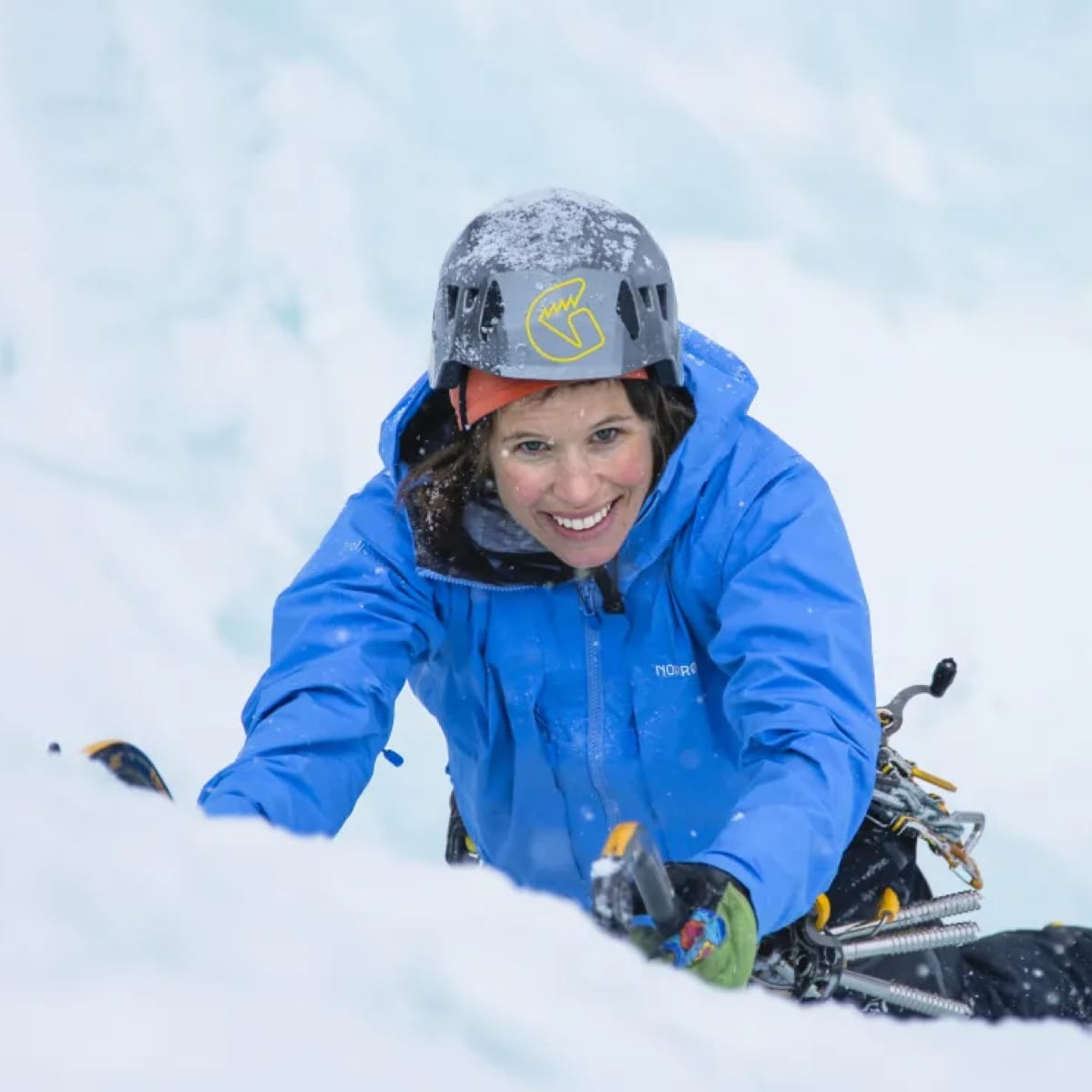
She started ice climbing when she was 8 and conquered the highest mountain in the United States as a 12-year-old. Now Merrick Johnston is juggling life as a ski guide, entreprenur and mother in Tromsø.
“I never even thought about not being able to do it. I knew I would stand on that summit. If you just keep going, you’ll make it. If you have enough food and enough time, and wait for the right weather window, you will make it.”
Norrøna Ambassador Merrick Johnston was 12-years-old when, in 1995, she became the youngest ever to climb Denali, the highest mountain in the United States. Together with her mother and a guided group, she climbed the 6,190-meter-high mountain in Alaska.
“It was nice to reach the summit, but it wasn’t like I thought: “Wow, now I have nailed my dream.” It was more like, ”yeah, now I’m finally up and running!”
Energetic
In skiing circles, Merrick is known as the one who is always geared up on the trip, does backflips and runs the steepest slopes on skis. Ropes and harnesses are often part of the package.
“If you don’t get to do the run you planned that day, you can always build a jump. I like the playfulness and determination needed for jumping on skis. Also, it keeps you in shape.”
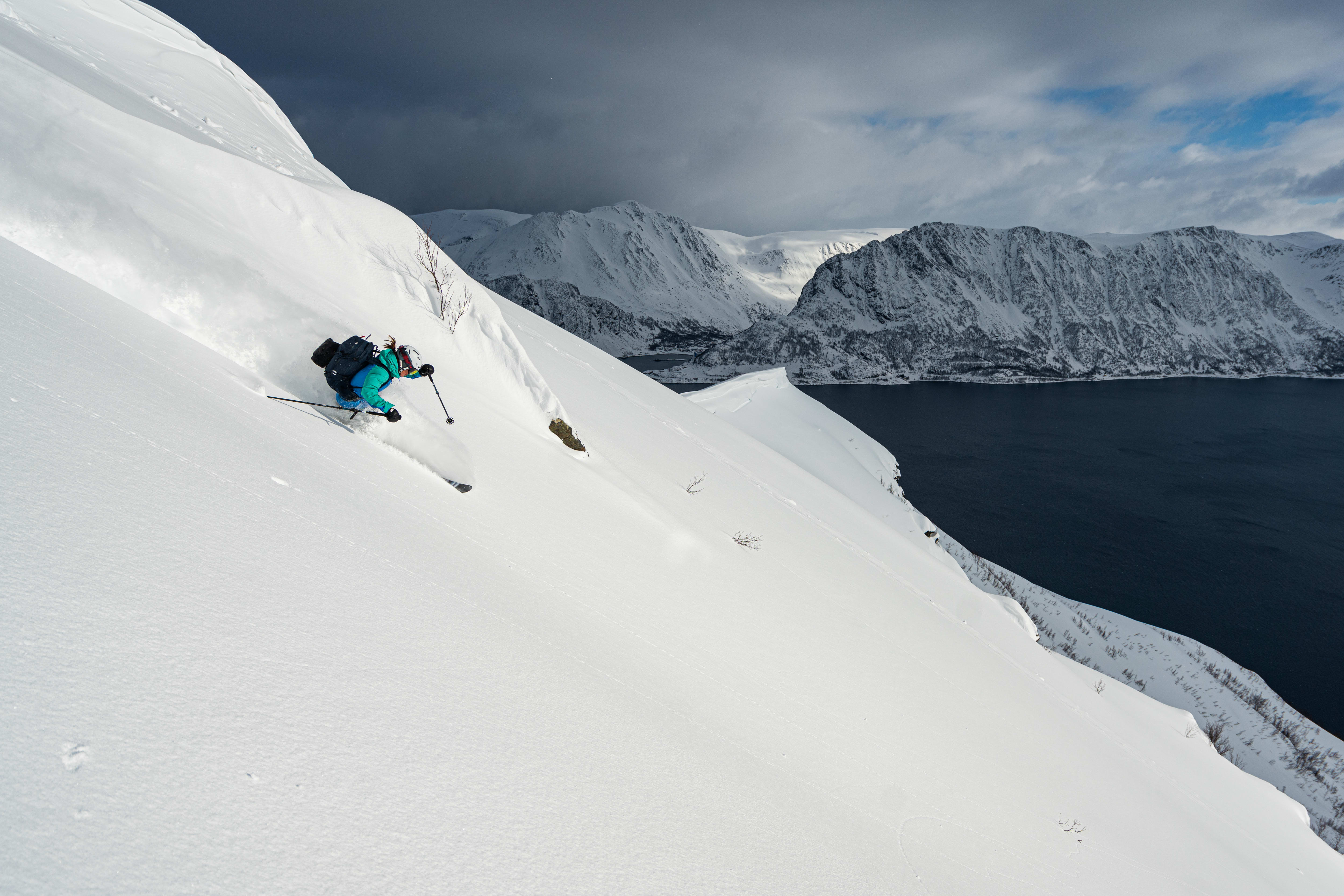
Above: “I enjoy finding the safest way to move in complex terrain,” says Merrick Johnston.
Merrick is now based Tromsø with her two children that she has together with her ex-husband. On top of working as a consultant at Kystmiljø, a company that turns fish waste into bio gas, Merrick runs the company Tromsø Ski Guides with partner Lena Dahl. During the afternoon, she coaches soccer. That is, when she’s not on the climbing hall – or inviting to ‘drytool Mondays’ at home in the garage. In other words, climbing with an ice axe and crampons on a self-built steep wall ‘as an alternative to coffee klatches’. In other words, Merrick has tons of energy and is good at logistics. It’s been that way for as long as she can remember.
Alaska Playground
When Merrick, as a 10-year-old, decided to climb Denali, her mother let her daughter believe she organized the trip herself, while mom actually pulled the strings in the background. Together they worked towards the goal.
“My mother had wanted to do more treks for a long time, but hadn’t had the chance.”
With a businessman father, and two big brothers who didn’t care much for the outdoors, Merrick and her mother became the mountain team. With a home address in Anchorage, Alaska, it was easy to get out.
“My mother learned outdoorsmanship with me. I started ice climbing when I was eight because she wanted to learn it.”
The duo took an avalanche course and a rock-climbing course. They went for long hikes with heavy rocks in their backpacks and slept in snow caves. At age 10, Merrick had already been on month-long expeditions in the Alaskan wilderness.
“It was a good period, but it was also hard. There was a lot of freezing and little comfort. For my mother, it was important to get out in all kinds of weather. Always. My upbringing was marked by ‘tough love’.”
Diversity
After the trip to Denali, Merrick continued to learn at a record pace. As a 14-year-old, she started working as an assistant guide on large mountains – and she took part in a first ascent of a 40-rope-long route on Dragon Spine. On the 24-hour trip, she became so dehydrated that her few drops of urine were completely brown.
The active teenager also did other sports. From the age of 14 to 18, she was on the US national junior snowboard team.
After her career on the national team came to an end, the desire to compete on snowboard was still there, but the idea was shelved because of the high cost of taking time off from university studies. Her focus then was on school and mountains.
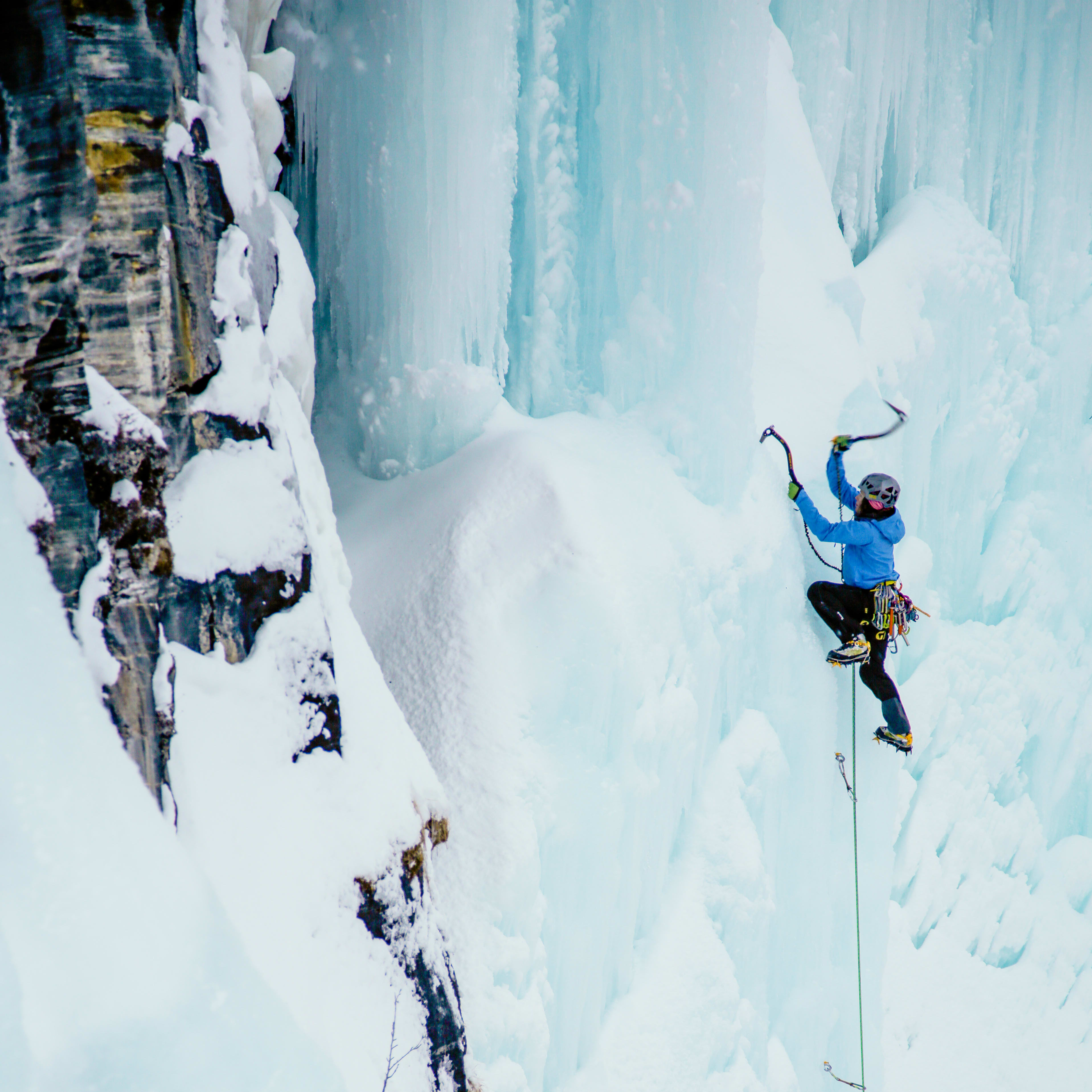
Above: “I think most people have a playfulness inside them – but in adults that quality is not nurtured by our society,” says Merrick Johnston.
At age 18, she was an assistant guide at Denali.
“There were 12 men on that trip. We were doing a difficult route and I felt a lot of pressure to make it happen.”
Merrick talks about unpleasant experiences. Sexual harassment and exclusion. It was not easy for a young girl to be on a demanding high mountain hike for three weeks with only adult males.
“The trip went okay, but it took a long time to process everything that happened. I was exhausted and lonely – and had no one to talk to about it. I missed female role models.”
New drive
After that Denali climb, Merrick lost the desire to guide. It was also difficult to find friends who were her equal in the mountaineering circles of Anchorage. She didn´t have male mentors because it was weird to go on overnight trips with girls. She was always left out of the toughest treks. And she wanted tough. Push hard and reach for it. Become as skilled as possible in the mountains.
“I missed a mentor in the mountain sports community.”
“I don’t want to live a life of fear, but I also don’t want to take unnecessary risks. It is inevitable that I have a lot of time being exposed to risk in the mountains.”
She decided to work three seasons in Jackson Hole, Wyoming, which turned out to be a good idea.
“In that area – the Tetons – I became one of the gang. I developed faster and gained more control. Suddenly people wanted to go on treks with me. Other guides would teach me things. They showed me that I could find a balance between guiding and doing my own projects where I could push the envelope.”
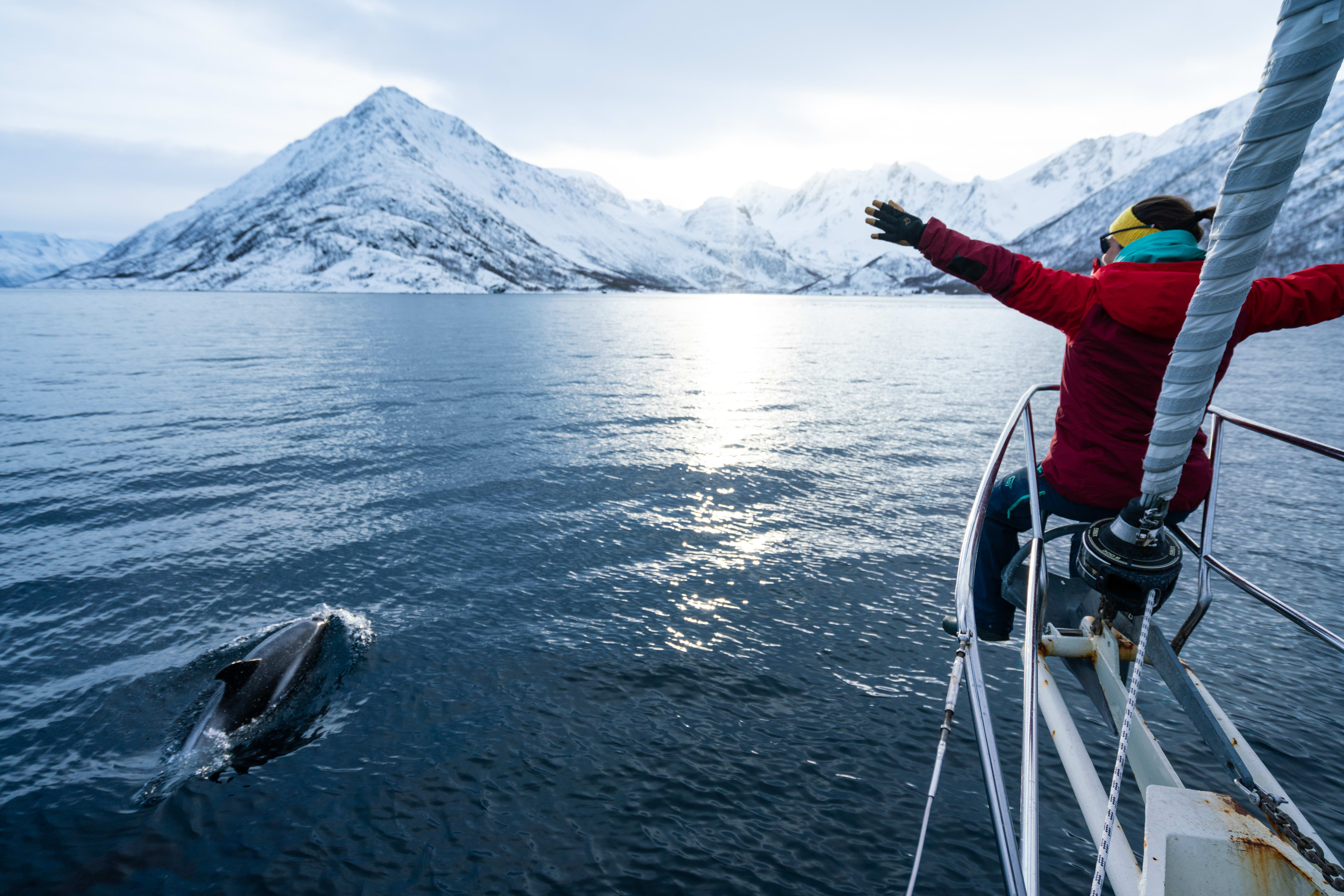
Above: “For the first time in my life, I managed to calm down,” says Norrøna-ambassador Merrick Johnston about moving to Norway.
While tearing through the mountains, Merrick took a master’s degree in geophysics. The plan was to go on for a doctorate, until she did her seventh and last internship in Norway in 2007. But instead of moving back home to Alaska, it was more tempting to move to Norway with eight-hour workdays and five-week vacations.
Fun trip
“This is the place!”
Merrick switches to American English as she enthusiastically describes her first meeting with Norway. In 2007, she got an internship at Statoil (now Equinor) in Trondheim. She was well received there and treated as a full partner from the first touch of her ski pole.
“I didn’t grow up with ‘coziness’ or having candles on a tent trip. I never thought of finding a nice lunch spot and then sitting down to eat.”
In the United States, it was always about maximizing the number of climbing routes or laps on skis. There was stress and time pressure. Food was just something you shoved into your mouth along the way. In Norway, Merrick
discovered much simpler logistics. There was no need for bush planes or pack rafts to get out. And there was never any hike worth mentioning.
“In Norway, there is no pressure. It’s just fun! For the first time in my life, I managed to calm down.”
The fearless woman from Alaska was sold. The plan for a doctorate was shelved – and after a few years in Trondheim, her new home address was Harstad.
Golden handshake
“I wanted to move to north Norway. It’s a little like Alaska. And I had been able to keep the good job at Statoil.”
After six years in Harstad, Merrick gave herself an unintentional kick in the behind when she accidentally applied for a severance package at work. She had only been curious about how much she might get paid.
“I had long thought about the idea of doing peak guide training (UIAGM guide education) at Nortind. I thought it was ‘now or never,’ so I took that severance package.”
The children were one-and-three-years-old when Merrick started training as both a climbing and skiing guide – the first mother ever to do so.
“I was nervous about starting the UIAGM training. There were no female instructors. I was the only woman – and the only one who wasn’t Norwegian.”
Merrick felt that the learning environment wasn’t good. She was frustrated and quit, and later went for a ski coach and ski guide education instead. Together with her family, she moved to Tromsø, where she got a job as a project manager for a waste handling company.
“I was back in a steady job, so guiding was not something I had to do for the money. I had more self-confidence and quickly built good relationships. I understood that a good network is essential to success in the guide industry.”
Cooperation
Until she was in her teens, Merrick struggled to even pronounce her own name on demand. While she excelled in math and physics during her studies, she had trouble communicating. When she wanted to start her own company in 2020, she wanted to do it with someone. Someone with complimenting qualities. Lena Dahl is a peak guide (UIAGM), mother of two and on her way with a doctorate in outdoor life and safety: a skilled and structured woman who is a master of organization.
“Perfect,” Merrick thought when Lena initiated a collaboration.
The two women quickly became close friends, as did their families. Lena, her husband Øystein, Merrick, Anders (now ex-husband), and the four children together, soon functioned as one large family. The adults took turns going on trips with the children and driving to various practices. They had their own chat room where they coordinated weekend plans, joint dinners, childcare and work logistics. As a result, the grownups had more badly needed time to climb ice waterfalls, ski steep mountains and bike new trails.
The mountain calls
Merrick says that it is out on a trek that she finds peace. Out there she has to be so focused that it creates an inner calm. She has never been diagnosed with ADHD, but says that both brothers have it, and that they are considerably calmer than her. The mountain, at any rate, is her cure for inner turmoil.
“I try to have as nice a day as possible based on the existing conditions. I enjoy finding the safest way to move in complex terrain.”
If it’s hard and icy, it can mean an alpine trip with crampons and ice ax. If the snow conditions are bad, you can climb. If the powder is stable, do a big mountain run. And a ski is not just a ski.
“It’s cool to go guiding on the same type of ski as the guests have, because then you speak the same language.”
On steep runs, it is best to use ski touring skis. In deep powder in the woods, snowboarding is the best choice. On large, open flanks, the Telemark ski wins.
Family-friendly operation
Merrick is committed to building a strong female-run business. The goal is creating a workplace that is at one with family life.
“You don’t have to go to the Lyngen Alps for ski and sail treks to have good skiing experiences. There are lots of untouched mountains in all directions just outside Tromsø. Which means you can pick up the children at kindergarten in the afternoon.”
Since becoming a mother, the kids have become her main focus. But Merrick is very conscious of not abandoning the things that make her happy.
“When you’re happy, you have more energy for good parenting. I think most people have a playfulness inside them – but in adults that quality is not nurtured by our society.”
When it comes to her own children, she makes sure not to force her own attitude on them. They must be allowed to develop at their own pace. Even though her own mother took a tougher approach, Merrick is very grateful for having grown up in Alaska
“My mother did so much for me and the children in the neighborhood. Instead of complaining about shortcomings in the community, she became a cross-country ski coach and coordinated equipment so anyone could join. She was the one who taught most of the kids in the neighborhood to ski. She spent a lot of time with other people’s kids. She is a great role model on that front.”

Above: “I get a lot of energy from looking at the same mountain, but trying to find new lines,” says Norrøna-ambassador Johnston.
Change of direction
One Saturday in January 2021, everything was turned upside down. Øystein, business partner Lena’s husband, never came home from a ski trip. The extended family lost one of its mainstays. Øystein died in an avalanche on Kattfjordeidet outside Tromsø. He was just out for a little evening ski tour with a headlamp, as usual. Merrick and Anders helped look for him. They realized right away when they got to the place that it was all over. No one could survive that inferno of an avalanche.
“It was a powerful experience. I saw a lot of myself in Øystein. He was like a reindeer calf. Eager and happy when he was out in the mountains. He was the youngest 52-year-old I have ever met.”
The friend’s death has made Merrick reflect more on the way she has lived her life. She says it was pure luck that she survived her 20s.
Life is fragile, unpredictable, and breathtakingly beautiful all at once. "Øystein’s passing is a reminder that while we cannot control the length of our journey, we can choose how we walk it. We can embrace each day with the same joy and eagerness he did—finding adventure, cherishing loved ones, and honoring the wild places that make us feel alive. In the end, it is not just about how long we live, but how deeply we do. Let us move forward with gratitude, courage, and an open heart, always remembering to come home to those who matter most."