
Published: Sep 29, 2026
The climb is over. Now the trail drops towards the fjord below.
Minutes earlier, the steep trail demanded steady effort, generating heat and moisture through sustained movement. Now the bike points downhill, speed increases and the cooling effect of airflow becomes immediate.
The weather has not changed. The rider has.
Fleece is particularly effective during transitions like this because it provides insulation while remaining breathable and able to manage moisture. It helps retain body heat when activity slows, without trapping as much excess heat during sustained movement as less breathable insulation layers.
Understanding fleece therefore begins with a simple distinction: more warmth is not always better. During active mountain travel, the most useful fleece is often the one that provides enough insulation while still allowing excess heat and moisture to escape.
What Is Fleece Actually Designed For?
Fleece is a synthetic insulation material that works by trapping air within its fibre structure, helping slow the loss of body heat. Unlike less breathable forms of insulation, fleece also allows excess heat and moisture to move through the fabric during activity.
This combination of insulation, breathability and moisture management explains why fleece remains so useful in modern layering systems. It can provide warmth when activity levels drop while remaining comfortable enough to wear during sustained movement.
Different fleece constructions shift the balance between these characteristics. Some prioritise warmth, while others use more open structures to increase airflow and drying speed. The right fleece therefore depends less on finding the warmest option and more on matching insulation and breathability to the activity ahead.
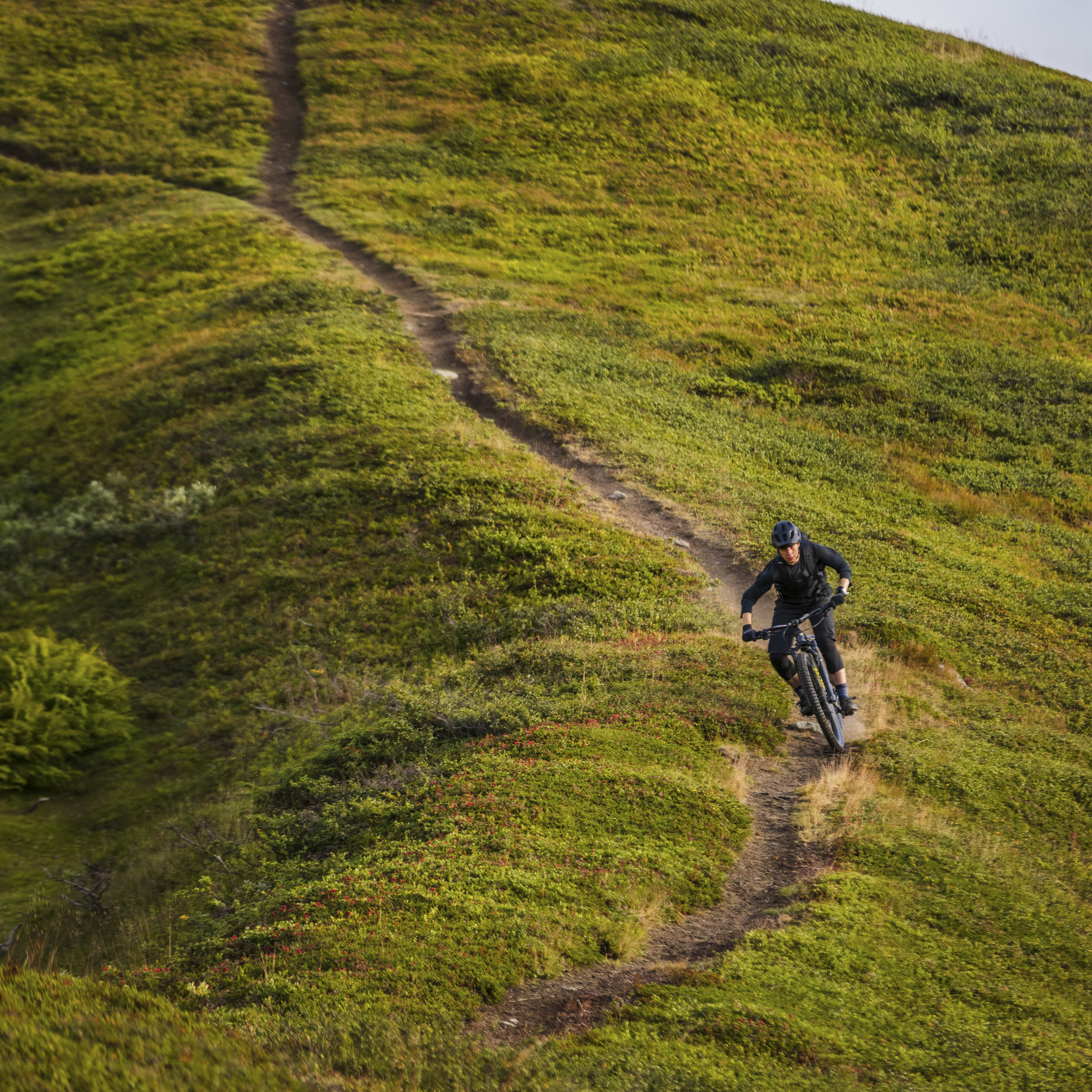
During active mountain travel, the most useful fleece is often the one that provides enough insulation while still allowing excess heat and moisture to escape.
When Is Fleece the Right Midlayer?
Fleece is particularly useful when you need insulation without sacrificing too much breathability during movement. This makes it well suited to activities where effort levels change throughout the day and the clothing system needs to manage both warmth and excess heat.
For hiking, ski touring, climbing and mountain biking, fleece can often remain in use across a wider range of activity levels than less breathable insulation. The right construction depends on how much warmth you need and how much heat and moisture the activity generates.
Why Different Types of Fleece Exist
Not every rider reaches the top of Fjørå generating the same amount of heat, moving at the same pace or facing the same conditions. Different activities and environments require different balances of warmth, breathability and moisture management.
Modern fleece has therefore become increasingly specialised. Some constructions prioritise airflow and moisture management during sustained movement, while others trap more air to provide greater insulation in colder conditions or during periods of lower activity.
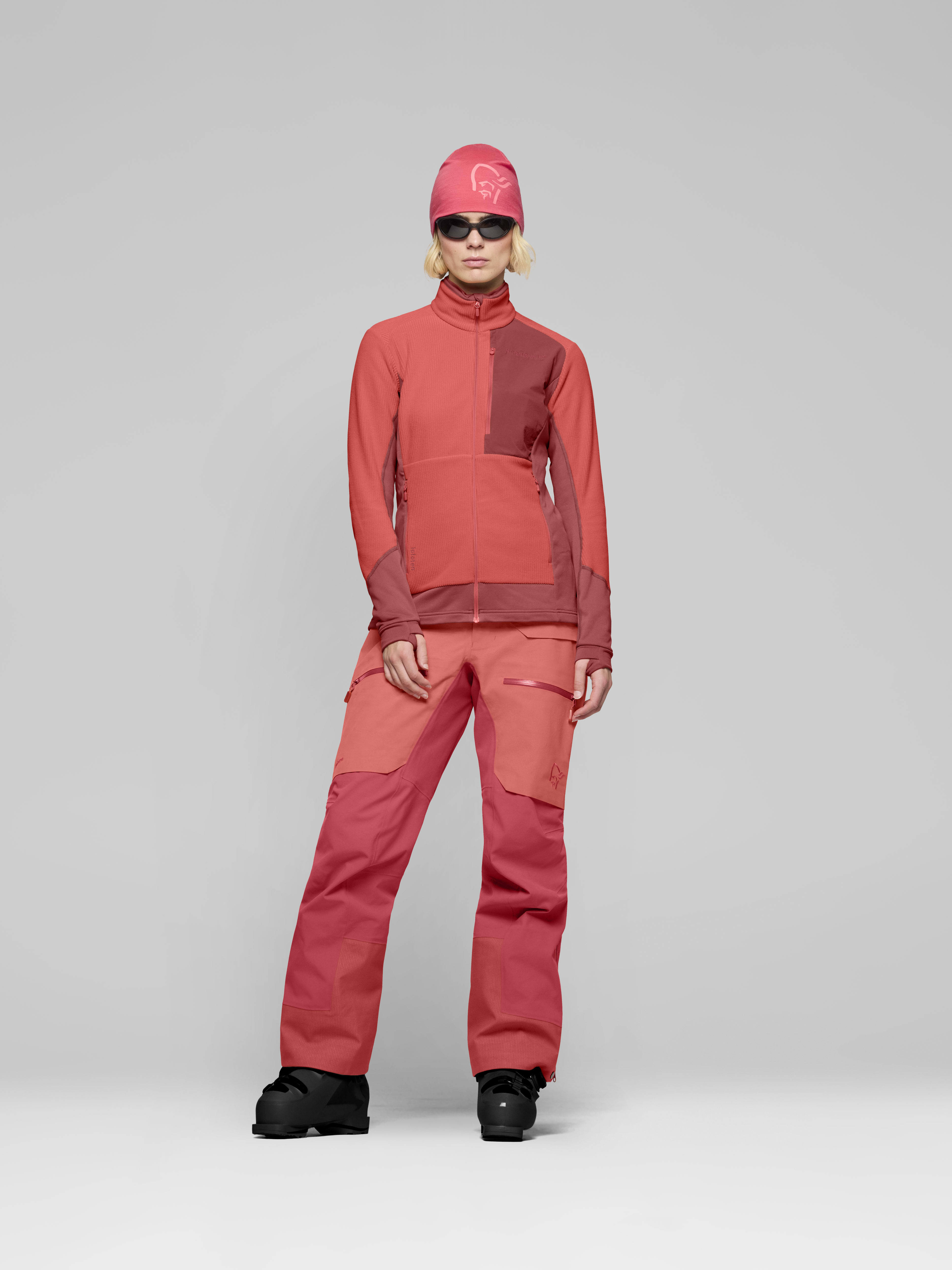
At Norrøna, these different performance profiles are reflected in the warm™ system. Rather than ranking fleece from better to worse, warm1™, warm2™ and warm3™ represent different balances of insulation, breathability and moisture management.
warm1™: Prioritising Breathability
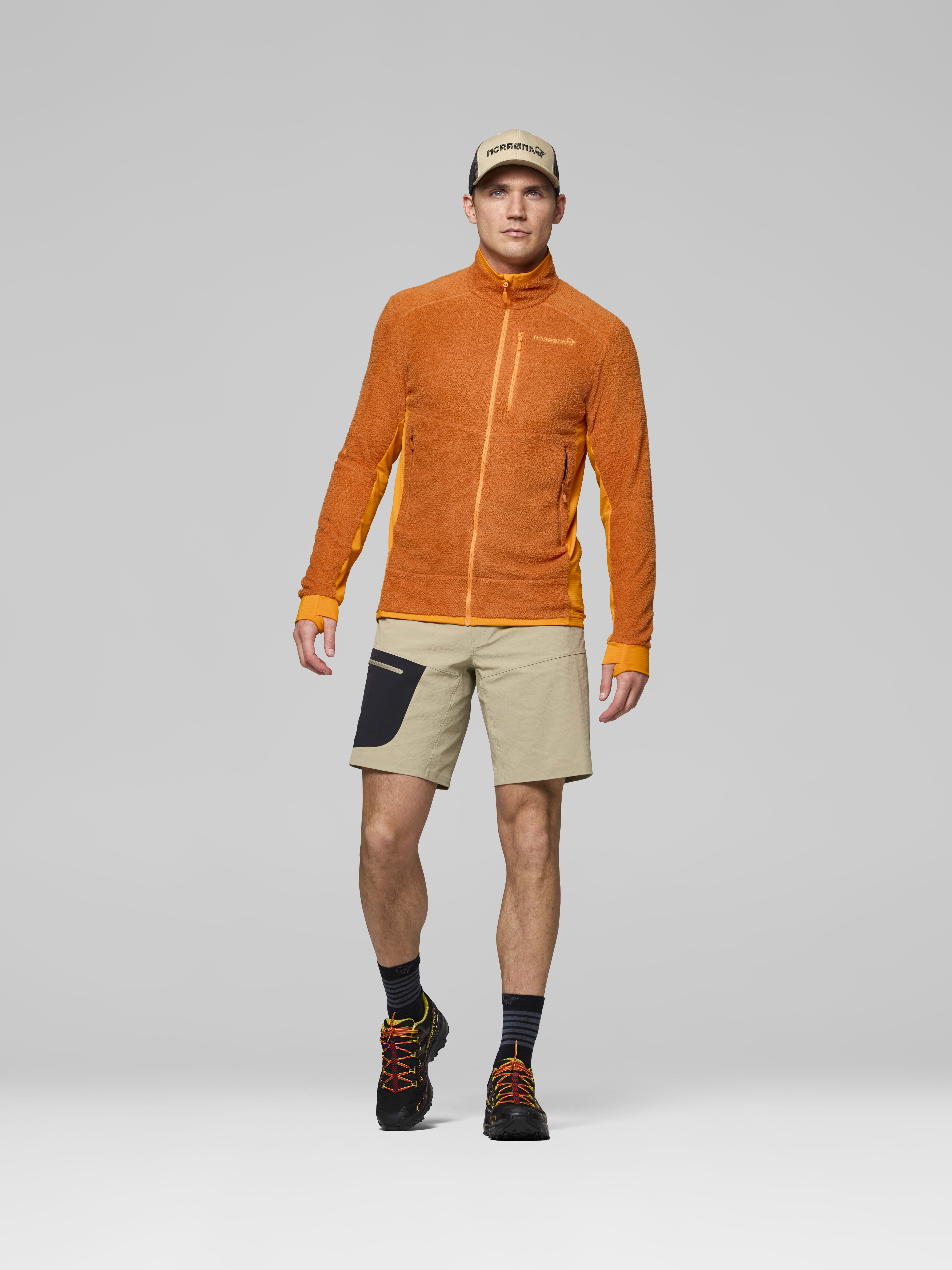
warm1™ is intended for high-output activities where managing excess heat and moisture is particularly important. Lightweight and breathable constructions make it well suited to sustained movement such as trail running, ski touring and other activities where overheating can become a greater challenge than staying warm.
warm2™: Balancing Warmth and Breathability
warm2™ provides a more balanced combination of insulation, breathability and moisture management. This versatility makes it useful across activities such as hiking and general mountain travel, where temperatures and activity levels may change throughout the day.
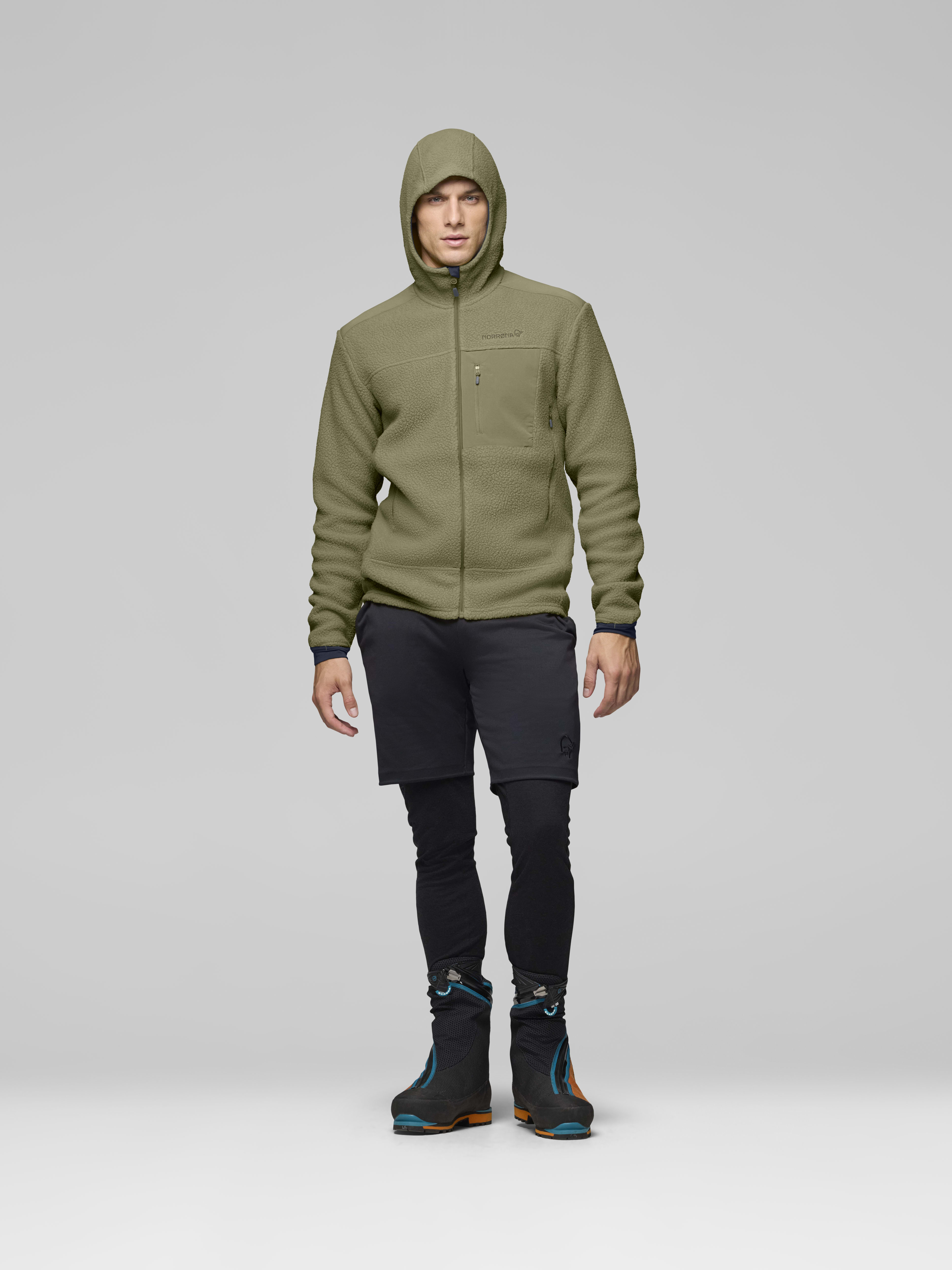
warm3™: Prioritising Warmth
warm3™ shifts the balance towards greater insulation. It is intended for colder conditions and periods of lower activity where retaining body heat becomes increasingly important.
No warm™ category is inherently better than another. Choosing the right fleece means matching the balance of warmth, breathability and moisture management to the activity, conditions and level of effort ahead.

How Does Fleece Fit into a Layering System?
A midlayer can serve different purposes depending on the activity and conditions. Some prioritise warmth, while others need to remain breathable enough for sustained movement.
Fleece occupies an important position between these demands. It provides insulation while allowing heat and moisture to move through the clothing system, making it particularly useful when activity levels change throughout the day.
Fleece is not the only material that can fill this role. Wool and other insulation systems offer different combinations of warmth, breathability, drying speed and comfort. Understanding those differences makes it easier to choose the right midlayer for the activity ahead.
Fleece vs Merino Wool vs Down: What's the Difference?
Fleece, merino wool and down can all provide warmth, but they serve different roles within a layering system. The most useful comparison is therefore not which material is best, but what each one is particularly good at.
Fleece: Warmth During Movement
Fleece combines insulation with breathability and moisture management. This makes it particularly useful during sustained activity and when effort levels change throughout the day.
Merino Wool: Comfort Over Time
Merino wool combines temperature regulation with next-to-skin comfort and natural odour resistance. These qualities make it particularly useful for baselayers and extended use over multiple days.
Down: Warmth at Low Weight
Down provides exceptional insulation relative to its weight and pack volume. It is particularly valuable when temperatures fall or activity levels drop, such as during transitions, summit breaks and time at camp.
Fleece, merino wool and down do not necessarily compete for the same role. In fact, they can form a highly effective layering system because each material serves a different purpose. A merino baselayer provides next-to-skin comfort and moisture management, breathable fleece adds insulation during movement, and a lightweight down jacket provides additional warmth when activity levels drop. Together, they allow warmth and moisture management to be adjusted as conditions and activity levels change.
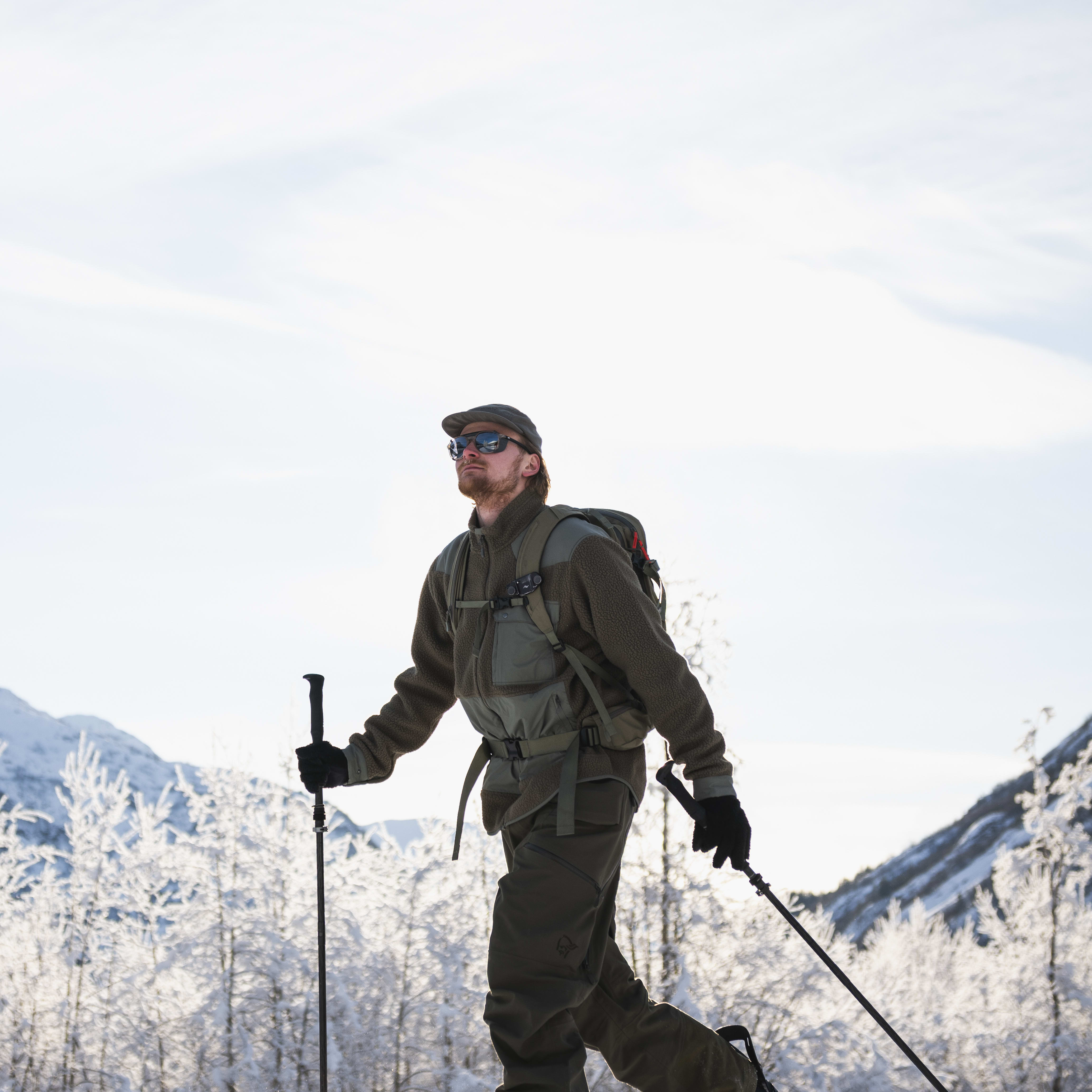
Fleece combines insulation with breathability and moisture management. This makes it particularly useful during sustained activity and when effort levels change throughout the day.
Responsibility Beyond Performance
Fleece is typically made from synthetic fibres, which creates environmental challenges alongside its performance advantages. Recycled fibres can reduce the demand for virgin materials, while durable fabric constructions and long product life help make better use of the resources already invested in each garment.
Microfibre shedding is another consideration with synthetic textiles. At Norrøna, we work with suppliers to develop durable fabrics and explore alternative constructions, while maintaining the performance and longevity required for mountain use.
Material development is only one part of making garments that last. At our own factory in Kaunas, Lithuania, we work directly with manufacturing processes and quality control. The facility primarily produces baselayers and midlayers and also supports initiatives related to production waste and garment repair. This gives us practical experience with how production decisions can influence resource use and the long-term value of clothing.
Responsibility also extends beyond production. A fleece that remains functional for years and can be repaired when necessary reduces the need for replacement and makes better use of the resources required to produce it.
Carrying Less, Trusting More
Mountain travel rarely demands the same level of effort from start to finish. Climbs become descents. Movement becomes rest. The most useful layers are often those that remain comfortable through these transitions without requiring constant adjustment.
Fleece is particularly effective across changing activity levels because it balances insulation with breathability and moisture management. This allows the same layer to remain useful through periods of both sustained movement and lower activity.
Within Loaded Minimalism, the versatility of fleece has a clear purpose: carrying a layer that earns its place by continuing to perform as both the mountain and the person moving through it change.