Det är inte bara isoleringen som får Antarktis att kännas som världens ände – som sista stoppet innan månen. Logistiken och kostnaden för att ta sig dit påminner också om en rymdodyssé. Därför kändes det som ett stort privilegium att återigen få sätta foten på denna väldiga kontinent i november 2006.
Vårt främsta mål var Ulvetanna (2960 m), en majestätisk topp i bergskedjan Fenriskjeften i Drottning Mauds land. Toppen bestegs för första gången i februari 1994 av Ivar Tollefsen, Sjur Nesheim och mig, via västväggen. Under samma expedition gjorde Trond Hilde och Thomas Cosgriff ett misslyckat försök på nordväggen. Nu var Ivar, Trond och jag tillbaka, tillsammans med Stein-Ivar Gravdal, för att försöka ta revansch. Vi hade drömt om Ulvetannas obestigna väggar i nästan 13 år.
Medan västväggen, som vi klättrade 1994, består av 500 meter flacka svaformationer följt av brantare väggklättring de sista 450 metrarna, är nordväggen lodrät eller överhängande längs större delen av sina 1 000 meter. Bergets brantaste och högsta vägg är dock östväggen, med en imponerande höjdskillnad på 1 200 meter. Med lite sol under dygnets varma timmar och ett utsatt läge för de förhärskande katabatiska vindarna framstod den här väggen som den största utmaningen för oss. Därför var den vårt främsta mål.
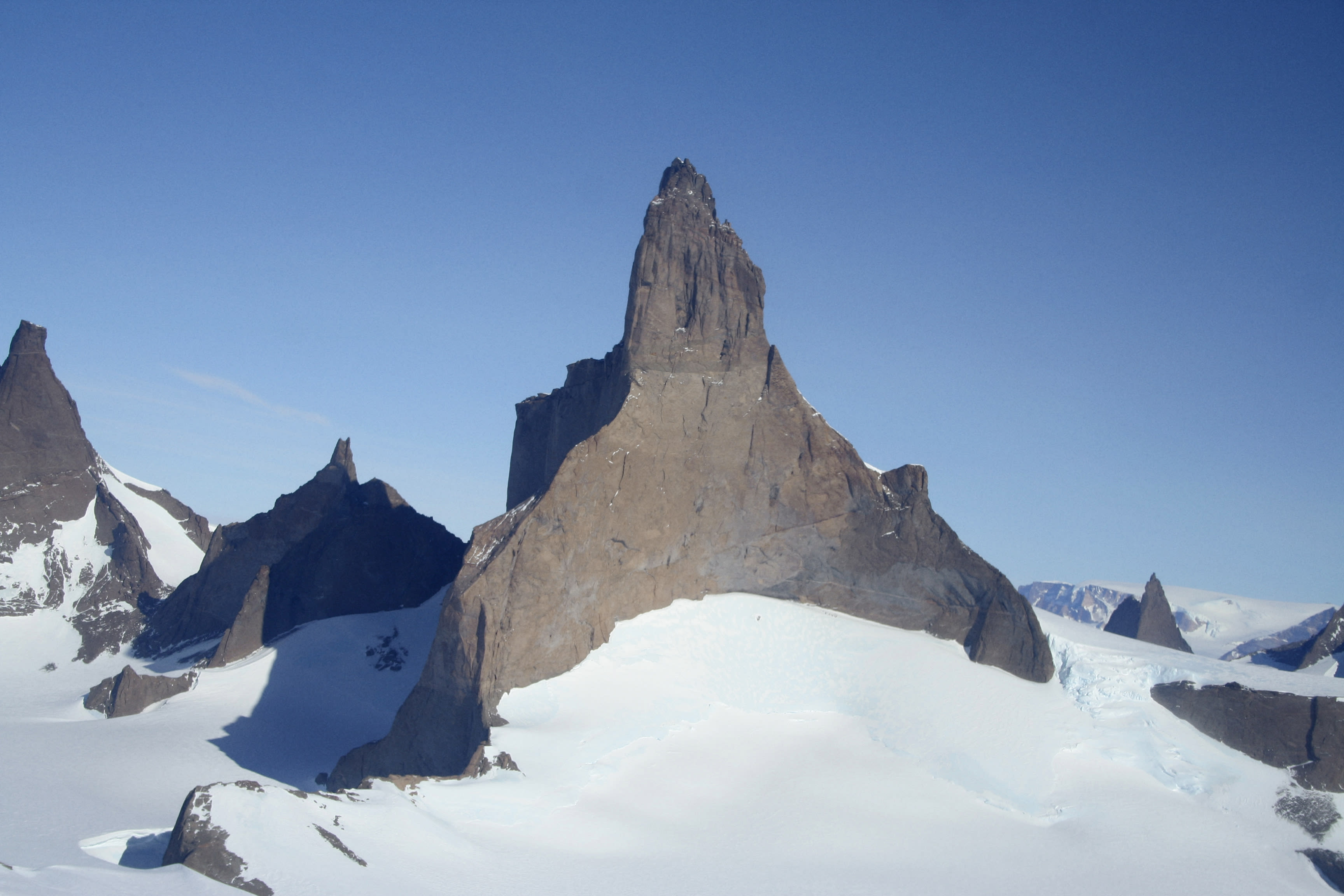
Men våra förväntningar var måttliga. Trond och jag hade redan rekognoserat östväggen 1994, och eftersom vi inte hittade några sammanhängande formationer att följa hade vi bedömt den som omöjlig att klättra. Men år av bortträngning och livliga drömmar hade övertygat mig om att det måste finnas en led uppför denna imponerande klippvägg.
Nu, äntligen tillbaka efter alla dessa år, närmade vi oss väggen med vördnad och lät blickarna febrilt söka efter formationer i berget. Ju närmare vi kom, desto tydligare blev det att min drömled aldrig skulle bli verklighet. En halv kilometer från väggens fot slutade vi dra de tunga pulkorna med klätterutrustning och fortsatte med bara en kikare.
På nära håll bekräftades bara våra värsta farhågor. Formationerna vi hade upptäckt på våra gamla fotografier visade sig bara vara geologiska intrusioner, mörka eller ljusa ådror av andra bergarter inpressade i den kompakta klippväggen. De första formationerna som gick att klättra på fanns 600 meter ovanför marken! Verkligheten var hård men svindlande vacker.
Vi kom snabbt över besvikelsen och fann tröst i att en led mitt på den formationslösa östväggen förmodligen aldrig kommer att klättras, åtminstone inte i någon vettig stil. Och framför allt hade vi en fantastisk plan B: den ännu obestigna nordväggen.
Fulla av förhoppningar började vi flytta vårt basläger till bergets norra sida. Vi visste att vi stod inför en stor utmaning. År 1994 hade Trond och Thomas bara klättrat fyra replängder på nordväggen innan de avbröt försöket. Klättringen hade varit krävande och riskfylld, med två replängder graderade A4. De hade helt klart försökt sig på den mest uppenbara leden på väggen, men formationerna var grova och berget verkade löst. Det lockade inte att göra ett nytt försök på deras led. Men jag hade ett vagt minne från 1994 av en alternativ, mindre uppenbar led, hundra meter åt vänster. Förhoppningsvis var inte också den en skapelse av mina bortträngda minnen och livliga drömmar...
Runt hörnet på berget reste sig nordväggen som en raket, tusen höjdmeter rakt upp från isfältet. Vilken gåva! En närmare granskning med kikare bekräftade snart att det faktiskt fanns en smal linje av svagheter till vänster om väggens mitt. Nu var vi på gång!
Början av den första replängden satte ribban för vad som väntade: femton meters balansgång på skyhooks som försiktigt hängts över tvivelaktiga kristaller för att nå den första sprickan. När jag tittade ner på det ensamma, osäkrade repet som löpte ner till Stein-Ivar fick min förtjusning en bitter bismak av skräck. Jag märkte att han hade tagit några steg åt sidan och inte var särskilt fokuserad på att hålla i repet, men jag klandrade honom inte. Han var säkert trött på att bombarderas av små stenflagor, och repet var ändå inte till någon större hjälp.
Bergkvaliteten var precis som väntat: kraftigt frostsprängt berg med en grov och skivig struktur. Lösa flak i alla storlekar hängde kvar på väggen av ren nåd, och sprickorna bestod av flera lager berg, som en sandwichkonstruktion, men utan det nödvändiga limmet som håller ihop alltsammans och gör det tryggt att klättra på. Men vi hade inte kommit för bergkvalitetens skull; vi visste av tidigare erfarenhet att den skulle vara medioker. Platsens skönhet och känslan av äventyr överskuggade denna trots allt viktiga detalj. Märkligt nog började jag faktiskt uppskatta bergets brist på kvalitet. Dess karaktär förhöjde definitivt klätterupplevelsen genom att göra passagerna både intressanta och spännande.
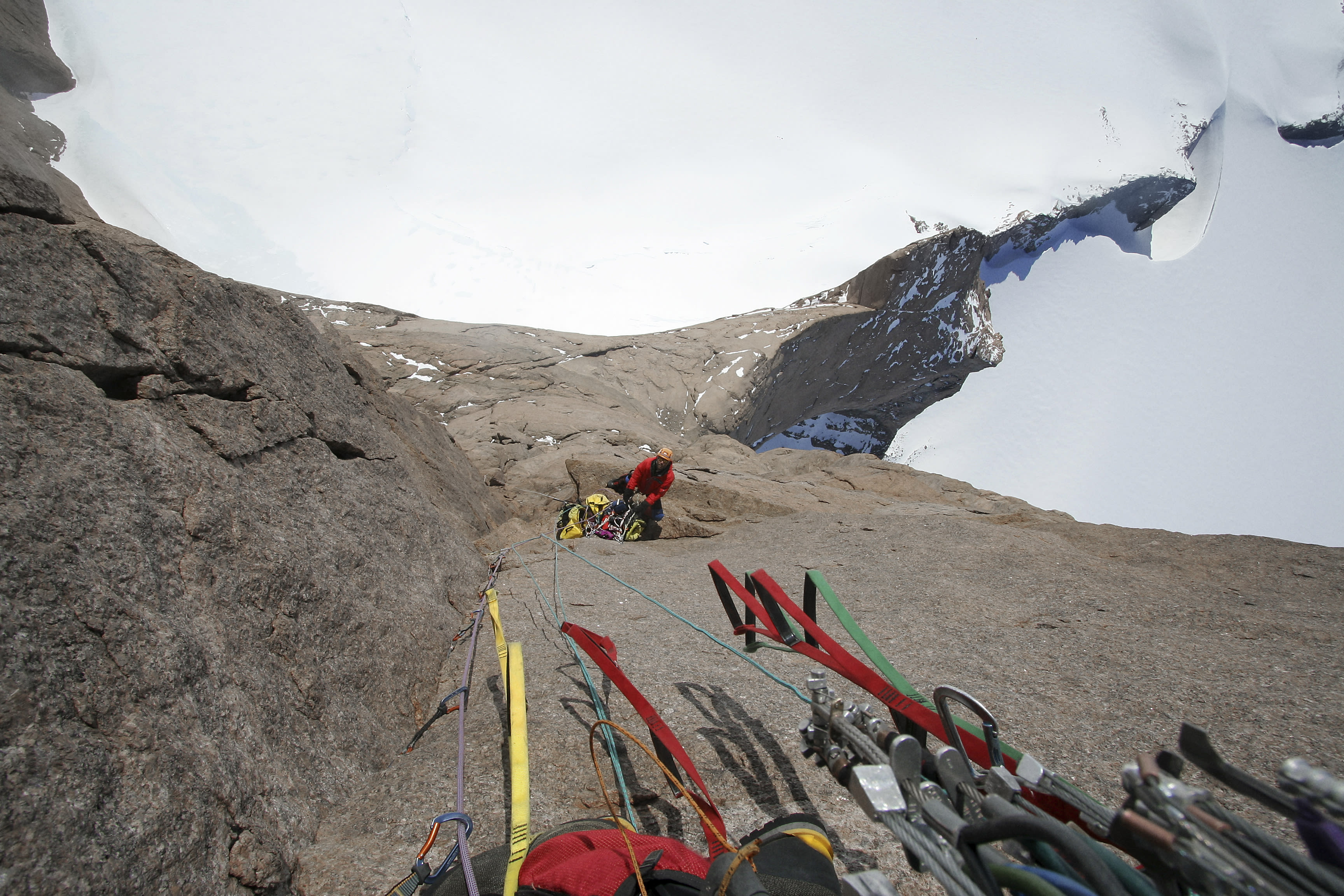
Vi vande oss snart vid vår nya A4-livsstil. Stein-Ivar ledde de första 15 metrarna av den andra replängden, ut och över ett tak av stora, ihåligt klingande klippflak, med obehaglig risk att falla ner på en hylla. Dagen därpå tog jag mig åtta meter horisontellt åt vänster med skyhooks, längs en relativt solid intrusion av finkornigare röd granit, perfekt försedd med små fördjupningar för mina krokar. Fantastisk klättring! De sista tre skyhookplaceringarna satt i sämre berg och krävde min fulla uppmärksamhet. Avslutningen var intensiv: Hängande i två tvivelaktiga krokar som belastades åt motsatta håll lade jag en hög hälkrok, sträckte mig så långt jag kunde efter ett sluttande sidogrepp och förde försiktigt över kroppsvikten från stegarna till hälen. Jag såg noga till att inte pendla loss från greppen, drog mig upp och fick in ett stabilt knälås i nästa klippformation – säker. Jag sjöng inombords – klättringen var extatisk!
Nästa replängd var kraftigt överhängande. Från marken hade den sett ganska slät ut, och vi hade befarat att det här partiet skulle kräva omfattande användning av borrade krokhål och bultar för att ta oss upp – metoder som vi hoppades kunna klara oss utan eller åtminstone begränsa till ett minimum. Nu framträdde en rad små naturliga formationer i klippan som gjorde det möjligt att ta sig vidare med ganska god stil. Efter 15 spännande meter försvann solen från väggen och temperaturen sjönk. Det dröjde inte länge förrän Ivar började jämra sig vid standplatsen, ett tecken på att det var dags att fira ner till vårt läger på marken. Med temperaturer kring minus 20–25 °C föredrog vi att klättra, och inte minst att säkra, i solen. Nästa dag avslutade Stein-Ivar replängden i imponerande stil. Trots risken för långa fall nöjde han sig med att borra för två bultar och tio krokhål på 40 meter. När jag dagen därpå jumarerade förbi, fritt hängande i luften, studerade jag replängden med vördnad.
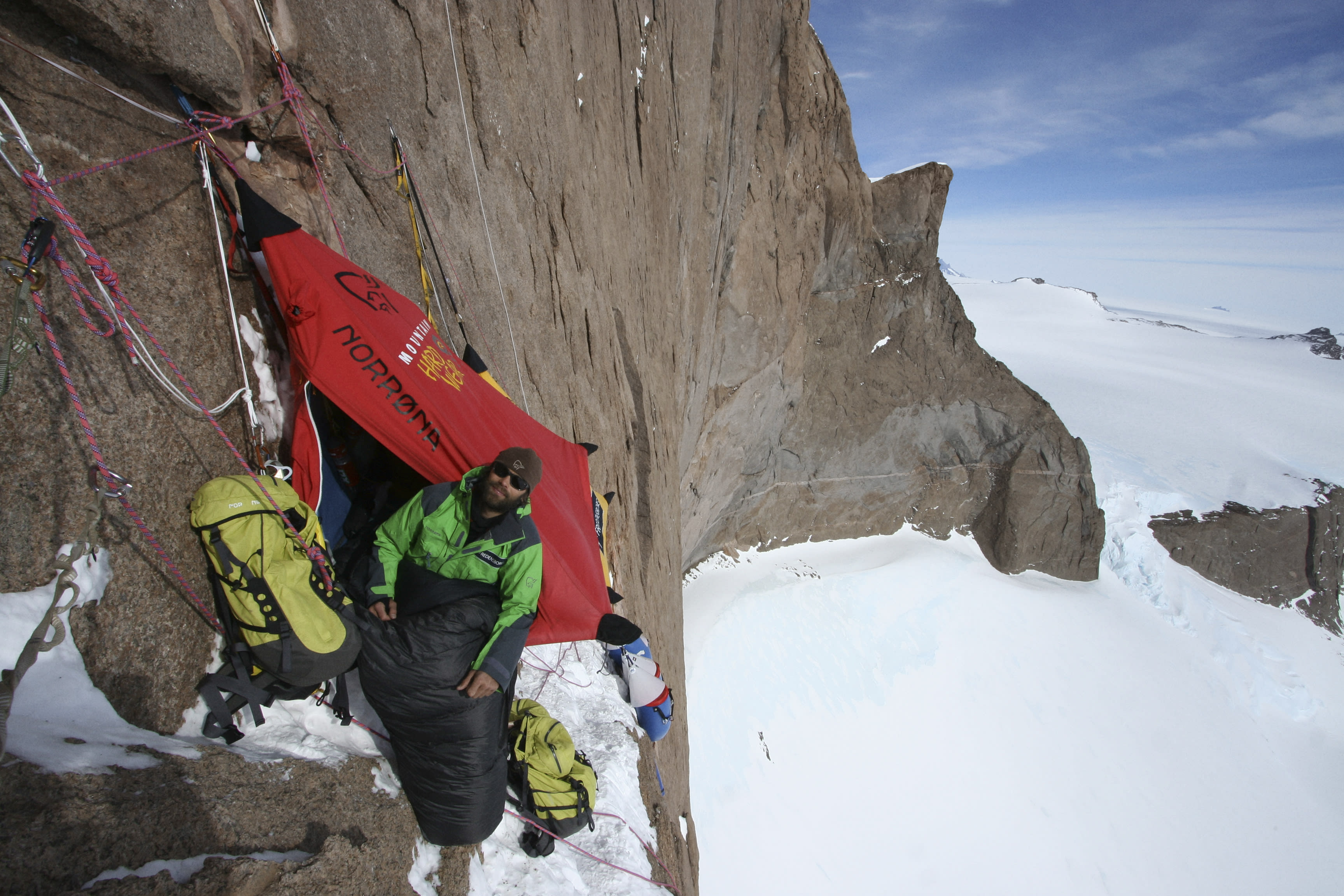
A long pitch with thin loose flakes followed. Here, a seemingly solid hook placement exploded and sent me flying for the first time. The fact that the edge had held me for five minutes before it decided to crumble didn’t encourage further trust. Luckily it was steep so I didn’t hurt myself. At the top of the fourth pitch I found a ledge with enough snow to cover many days of water supply, so now there was no longer any excuse not to move up on the wall and commit ourselves to the climb.
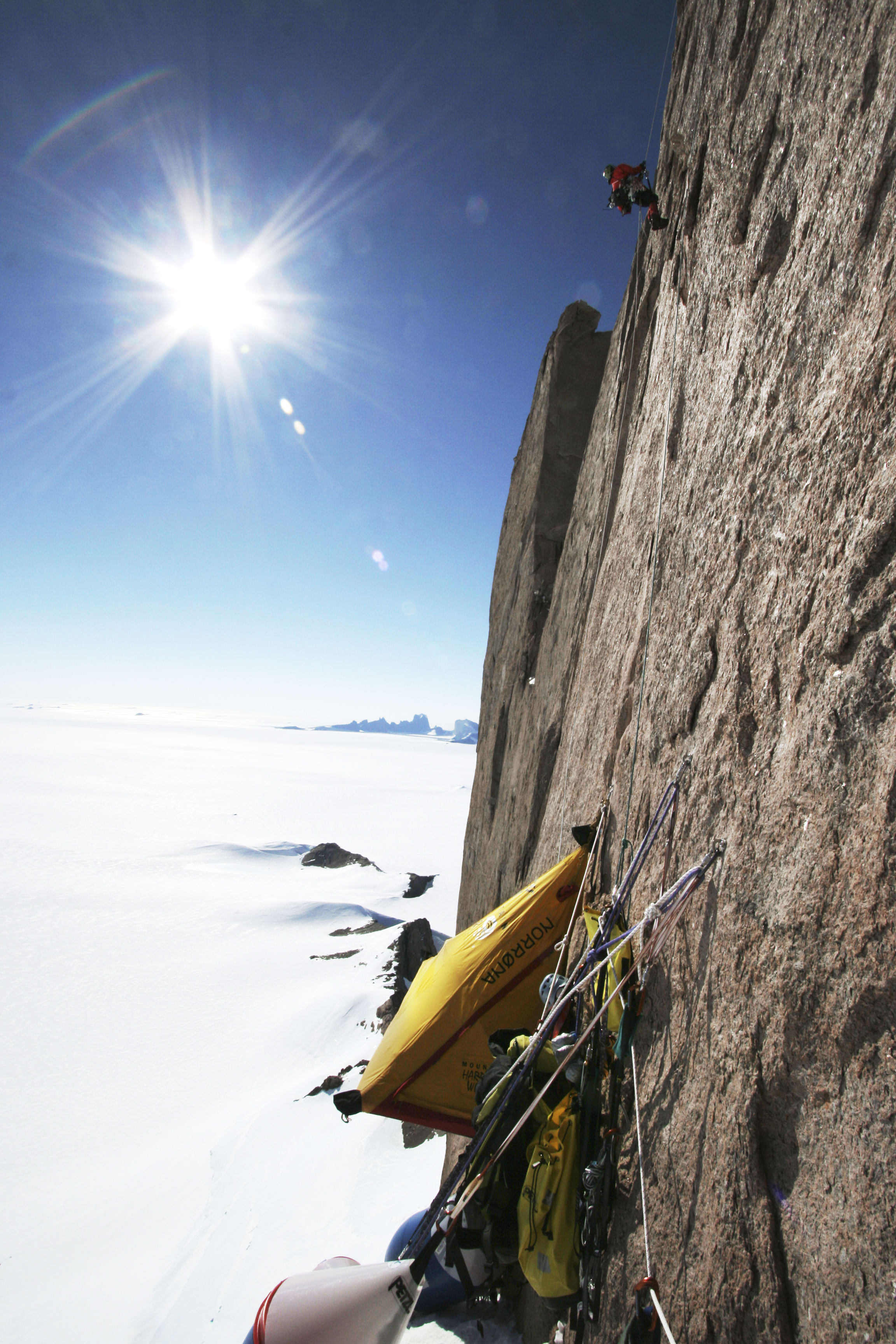
The light was blue and the shadows on the ice plateau long when we finally crawled into our wobbly nylon nest. I had forgotten how cramped a port-a-ledge becomes when two adults in full winter armour enter ... It is quite an operation to undress the big clothes and boots, get the stove going with only a few centimeters of clearance to highly flammable polyester and nylon on all sides, and then balance the pot with three litres of boiling water while cramps torment your compressed body. But what a safe haven! – A pause from the vertical world outside. Then the luxurious three dishes every night. First soup, preferably a fish soup, followed by a freeze dried surprise, usually tasting similar to chicken and rice, and then chocolate, both in solid and a liquid form. Full up, safe and happy. Good night.
The mornings were as always both mentally and physically the most demanding part of the journey. From deep inside the warm comfort and safety of the sleeping bag, peeping through a hole at the inside of the tent covered with an inch of ice, knowing that once you start moving it will start to find its way into your neck and make your clothes wet and cold, warm and safe in your sleeping bag thinking about the world outside the tent: consequences of ambitious moments, exposure and uncertainty ... Out and up!

Above camp 1 the wall was less steep, with more and bigger formations. For a short while the climbing was faster, but soon enough the formations disappeared and a new wonderful A4 pitch revealed itself. Again I followed a beautiful intrusion of finer grained red granite, this time 30 meters diagonally upwards. The whole day was spent searching for gear placements to support my body weight where there seemingly was none. I was close to giving up several times, but one more unreal placement after the other gave me enough support to continue. I found good use of the short knifeblades, birdbeaks and copperheads, and sometimes only by equalizing two or three such points did I find enough support to progress.
It was a wonderful, intense day. 20 meters above the last good piece I finally reached a decent crack that led me to a narrow sloping ledge. I was somewhat disappointed by the amount of snow on the ledge since it would have to serve as our next camp. If the climbing above became slow we would probably not have enough snow for food and drink.
When we moved camp the next day this issue was buried by a two day snowstorm. The spindrift from above was constant and resembling small avalanches. Ivar and I struggled to pitch the tents in the snow chaos, but I had to smile. It was nice feeling the elements. We had extra energy and enough control of the situation to experience the seemingly dramatic situation and our exposed position as something positive. It was fun with a brake from the blue sky and now at least we didn’t have to worry about not finding enough snow for water and food. This probably also meant great skiing conditions later when we returned to the ground!
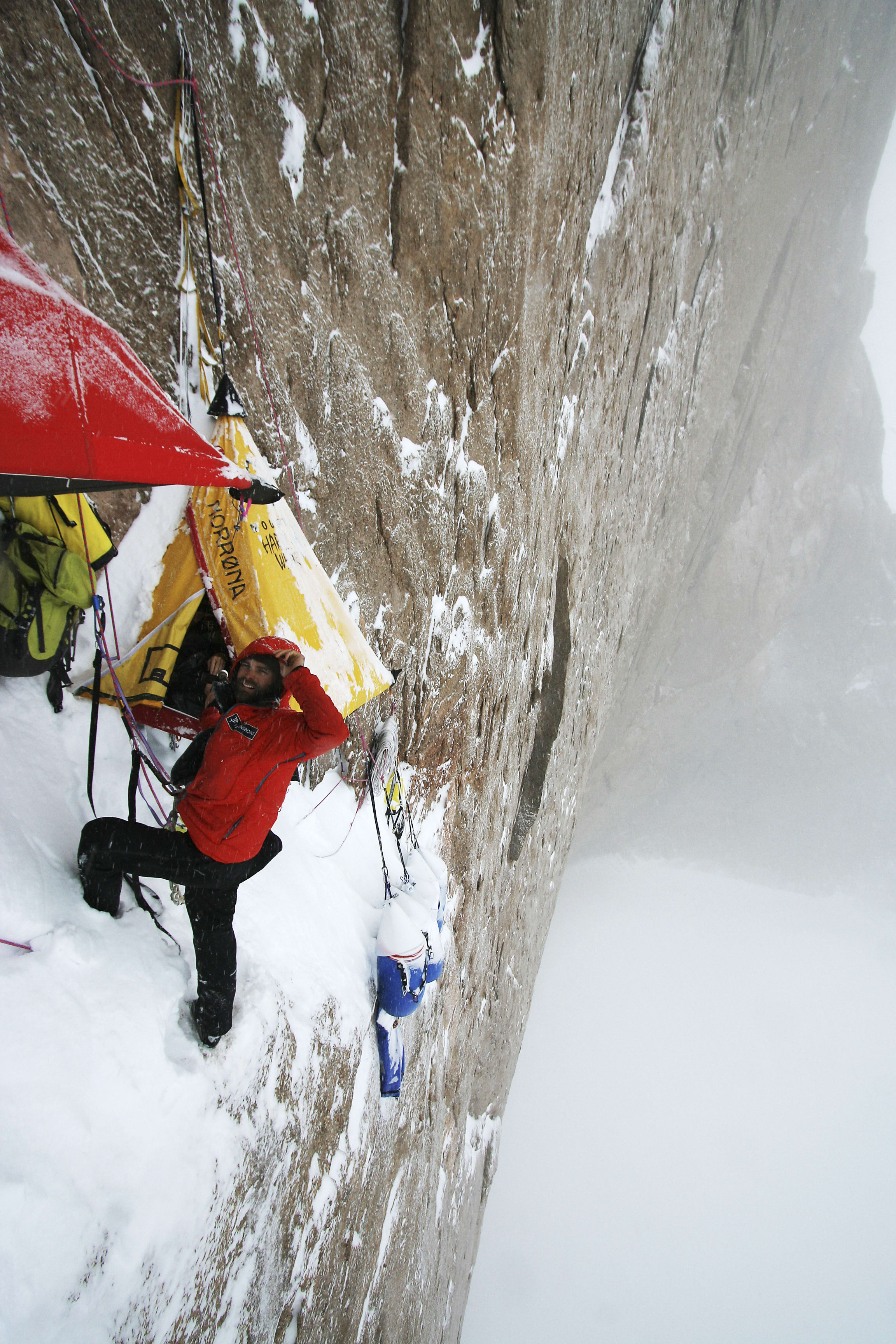
Luckily not everybody had been loyal to the packing list, soon two complete novels appeared and were dissected into a pass-around-library for everyone.
I thought about how smoothly everything had gone up to now. Despite our personal differences, the four of us worked really well together as a team. We seemed to share a common understanding of what it takes for a group of people to achieve a goal together – at least such an easy and well-defined goal as a mountain summit.
We were all pulling in the same direction. We all felt very privileged to be here, and the surroundings put us in a state of awe. This state of mind coloured our words, deeds, and our interplay, and helped make the atmosphere good and relaxed. This was our dream holiday.
After 48 hours cramped in the port-a-ledges, it felt like a relief when the storm finally lifted, and we could stretch our limbs properly again. Stein-Ivar and I continued to lead every other day, while Trond and Ivar swapped freezing at the belay. After first an easy pitch, two slightly harder ones and two easier ones, we reached a fantastic bivouac ledge under some giant roofs, two thirds up the wall. The 50m2 Alcove made a perfect base for the last leg up the top pyramid.
From the Alcove we had to traverse left for 25 meters to reach the crack system we hoped would lead us to the summit. I could feel Stein-Ivar’s envious stare as I racked up and set off.
The pitch had amazing exposure, and I climbed with a big smile on my face the whole day. The quality of the climb astonished me. On our other climbs here we had often ended up climbing fairly big formations – grim squeeze chimneys and off widths – which of course was quite normal since we were trying to do first ascents of summits via the easiest way. But on this wall we were climbing the one thin and exposed pitch after the other, and the rock quality was by far the best we had experienced in Queen Maud Land.
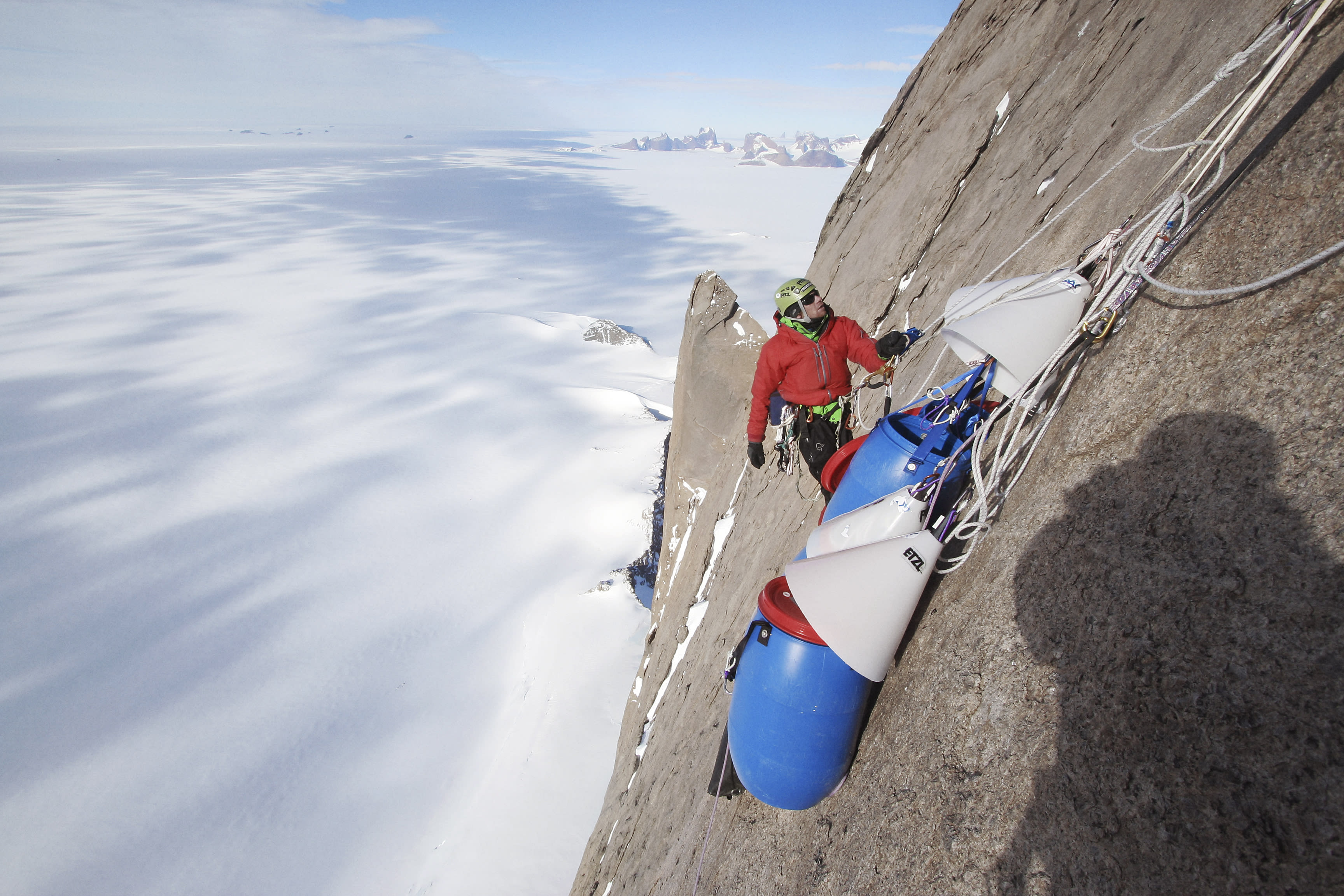
Stein-Ivar and Trond got their own dream pitches the next day, following a perfect crack in the depths of a huge and severely overhung dihedral – exquisite. Their long day and three pitches brought us in position for a summit bid. And the next day, after two moderate and two easy pitches, we were just below the summit. I stopped, startled, as I discovered an old sling around a piece of rock in front of me. What, traces of others ... ?
Then memories flooded me. It had gone 13 years since I had placed that sling and abseiled down the west face after reaching the summit with Ivar and Sjur. At that time I did not imagine the possibility of ever visiting this continent again, I felt too privileged to dear to. Now my intense feeling of privilege had a new dimension: With a wife and two children at home, I was enjoying the best of two worlds – I felt like the luckiest man on earth.
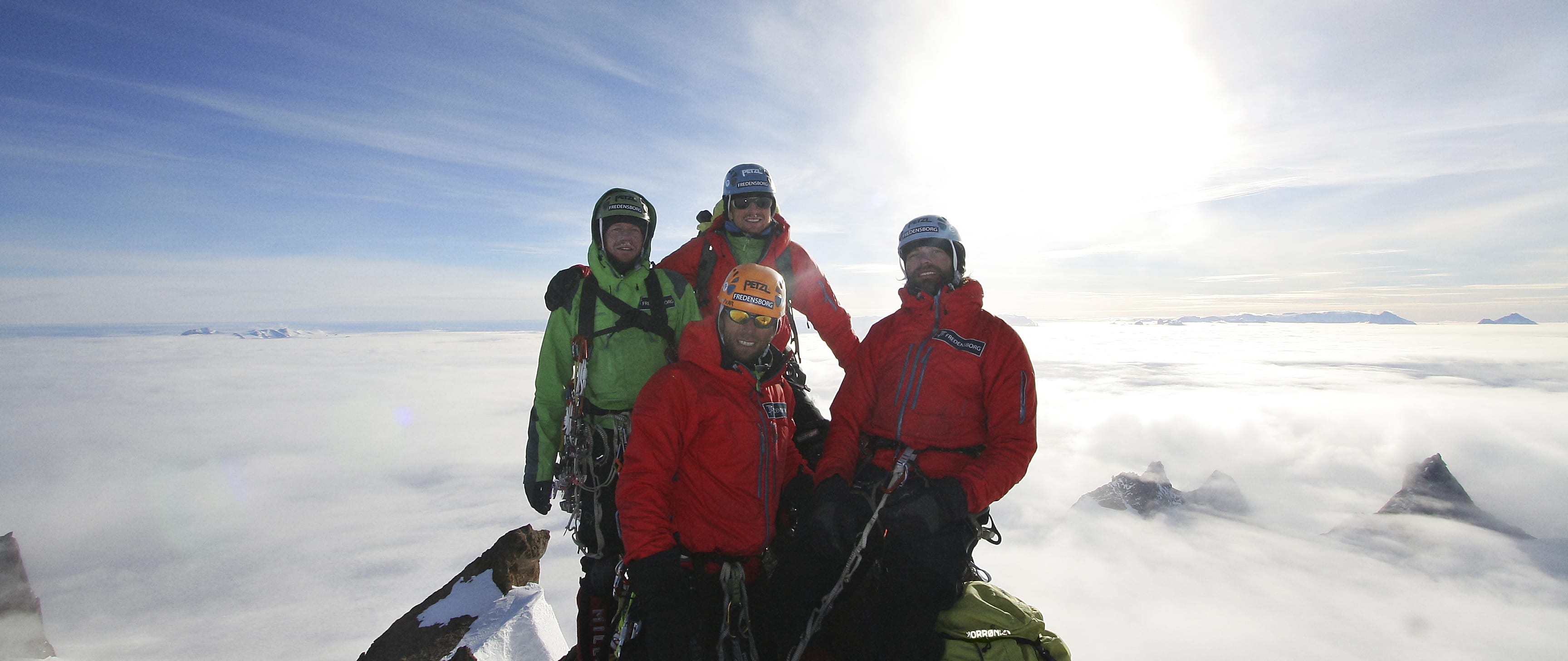
Soon the others followed and in the evening the 20th of November 2006, 16 days after leaving the ground, we stood together on the summit in silent awe. The weather was amazingly calm, with no wind. The landscape to the south and west which had been obscured to us while on the north face, now lay before us in all its splendour.
At our feet, the ragged teeth of Fenriskjeften, the perfect profile of Holtanna, the huge Kinntanna with a myriad of complex arêtes, the fortress of Midgard – a piece de resistance – and all the other sculptured summits. Further away, Gessnertind, Rakekniven and the Troll Castle, and in the far distance the Fimbulheimen with King Olavs Mountain. A fantasy world of virgin summits, walls and ridges, perfectly placed on an endless plateau of ice, so simple, so clean.
To make sure we stayed humble and respectful, nature choreographed our summit goodbye in an unforgettable way. As we stood there absorbing the good feeling of dreams fulfilled and new horizons experienced, clouds appeared out of nowhere and silently started to cover everything. Before long the whole world had disappeared under a thick white carpet, just leaving the summit of Ulvetanna clear above.
We knew our visiting time was over. On the ground new adventures awaited us. Luckily, we still had three weeks left of our holiday.