
Published: Aug 17, 2026
A practical comparison of down and synthetic insulation to help you choose the right option for the conditions ahead.
You're packing for a ski tour in Lyngen. The forecast calls for cold temperatures, but there's also a chance of wet snowfall later in the day. Before leaving, you need to choose your insulation layer.
One option offers exceptional warmth for its weight. The other is designed to perform more consistently as weather, moisture and activity levels begin to change. The better question isn't which insulation is better. It's which mountain problem you're trying to solve.
Down and synthetic insulation prioritise different characteristics. Choosing between them starts with understanding the conditions you'll encounter, how you'll be moving and what you're asking your insulation to do throughout the day.
For a deeper understanding of how each insulation system works, read:
→ Understanding Synthetic Insulation
Is Down or Synthetic Insulation Better?
Neither is inherently better. Down and synthetic insulation prioritise different performance characteristics and become more valuable under different conditions.
Down remains the benchmark for warmth relative to weight, particularly in cold, dry conditions. Synthetic insulation generally handles moisture better and can provide more consistent insulation as weather and activity levels change.
The better choice depends on which of those characteristics matters most for the conditions and activity ahead.
When Should You Choose Down?
Down becomes particularly valuable when warmth relative to weight and packability are high priorities.
In cold, relatively dry conditions, down can provide substantial insulation without adding unnecessary weight or bulk. This makes it particularly useful when an insulation layer spends time in your pack before being used during breaks, at camp or during longer periods of low activity.
For cold-weather mountain travel where moisture can be managed and carrying efficient insulation matters, down remains difficult to match.
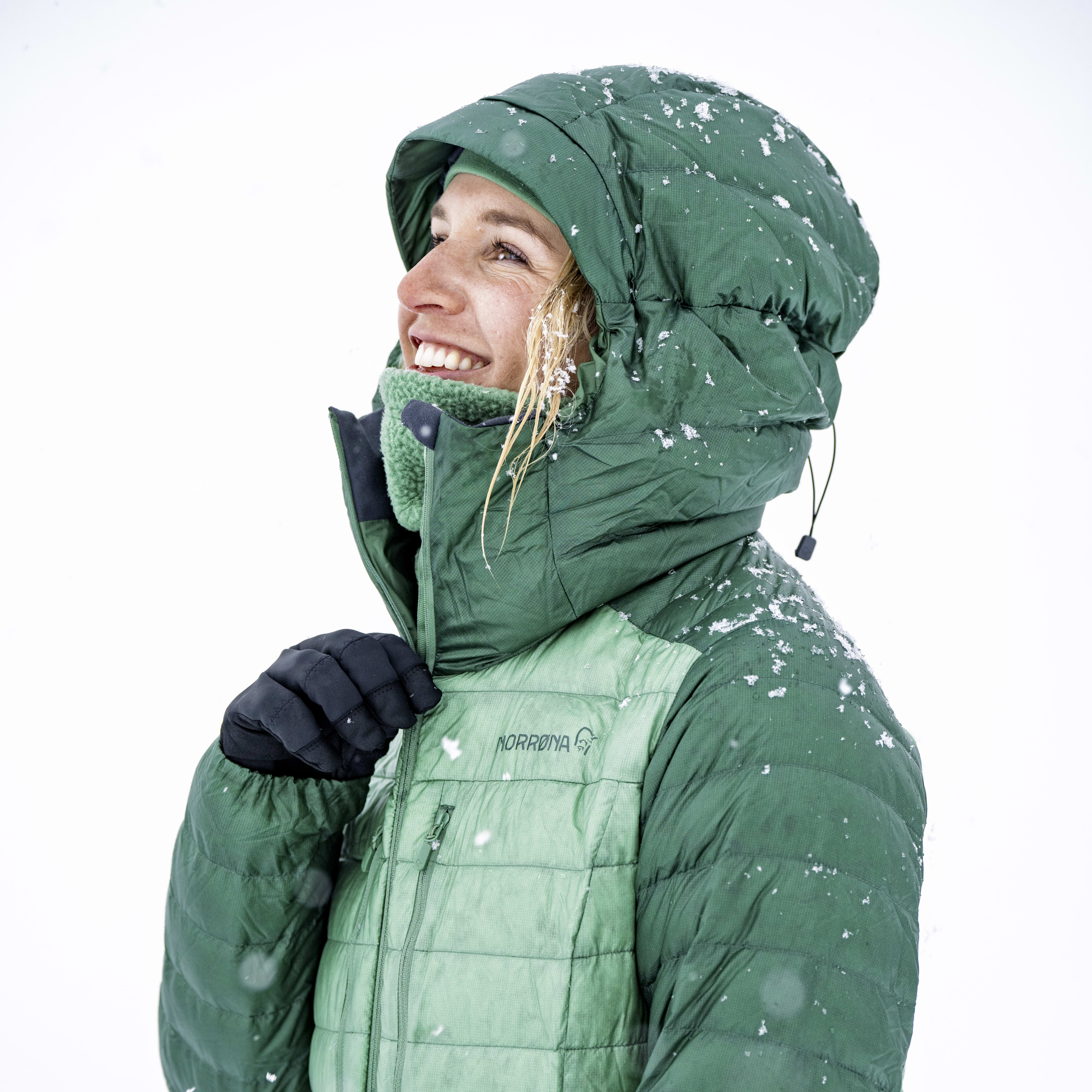
Down becomes particularly valuable when warmth relative to weight and packability are high priorities.
When Should You Choose Synthetic Insulation?
Synthetic insulation becomes particularly valuable when moisture, changing weather and fluctuating activity levels are likely to become part of the day.
During sustained movement, moisture can come from both the weather and your own body. Synthetic insulation generally retains more of its insulating performance when damp and dries faster than down, providing a greater margin for changing conditions.
These characteristics are particularly useful in ski touring, mountaineering and other activities where periods of movement, exposure and changing weather place different demands on the same insulation layer.
Choose synthetic insulation when consistent performance across variable or damp conditions matters more than achieving the highest warmth-to-weight efficiency.

Synthetic insulation generally retains more of its insulating performance when damp and dries faster than down, providing a greater margin for changing conditions.
Which Insulation Best Matches Your Priorities?
Down and synthetic insulation can both perform across a wide range of mountain conditions, but their advantages become clearer when you consider how the insulation will actually be used.
Insulation type is only part of the decision. The amount of insulation, garment construction, ventilation and how much heat you generate during activity all influence how warm and comfortable a jacket feels. A lightweight synthetic jacket and a heavily insulated down jacket are designed for very different jobs, regardless of the insulation material itself.
The situations below describe where each insulation type tends to offer particular advantages.
Warmth With Minimum Weight and Bulk
Consider: Down
When you need substantial warmth without carrying unnecessary weight or volume, down offers exceptional thermal efficiency and compressibility. This becomes particularly valuable when insulation spends significant time packed before being used during stops, camp or colder periods of the day.

Cold, Relatively Dry Conditions
Consider: Down
When temperatures are low and moisture can be managed, down provides highly efficient insulation for its weight. It is particularly well suited to situations where retaining warmth during periods of lower activity is the primary challenge.
Damp or Variable Conditions
Consider: Synthetic
When wet snow, precipitation or moisture from sustained activity are likely to affect your insulation, synthetic materials provide a greater margin for changing conditions. They generally retain more insulating performance when damp and dry faster than down.
Changing Activity Levels Throughout the Day
Consider: Synthetic
Activities such as ski touring and mountaineering can move repeatedly between sustained effort, exposed transitions and periods of lower activity. Synthetic insulation can be particularly useful when the same layer needs to cope with moisture and changing demands throughout the day.
Multi-Day Mountain Travel
Consider: Down or Synthetic
Longer trips can make the advantages of both insulation types more important. Down provides substantial warmth with low weight and pack volume, which can be particularly valuable when carrying equipment over several days or weeks.
Synthetic insulation can become more attractive when repeated exposure to moisture and limited opportunities to dry clothing are part of the trip. It generally dries faster and retains more of its insulating performance when damp, providing a greater margin when keeping insulation consistently dry becomes difficult.
For multi-day mountain travel, duration alone doesn't determine the best insulation. Consider how much weight and pack volume matter, how likely the insulation is to become damp and how easily you can keep it dry throughout the trip.
What About Hybrid Insulation?
Choosing between down and synthetic insulation isn't always an either/or decision. Some insulated garments combine both materials, using each where its characteristics provide the greatest value.
Down can provide efficient warmth with low weight and bulk, while synthetic insulation can be used in areas more likely to encounter moisture, repeated compression or changing conditions. For example, a garment may use down through much of the body while placing synthetic insulation around the shoulders, where moisture and repeated compression from backpack straps can place different demands on the insulation.
Hybrid construction doesn't remove the trade-offs between down and synthetic insulation. Instead, it allows designers to manage those trade-offs within the same garment by matching different insulation materials to different demands.

Can Down and Synthetic Insulation Work Together?
Yes. Down and synthetic insulation can serve different purposes within the same mountain clothing system.
A lightweight synthetic layer may provide comfort during periods of movement and changing conditions, while a down jacket can remain packed until longer stops or colder periods make efficient warmth more important.
The advantage of combining them is that each layer can solve a different problem. If you expect to generate heat and moisture while moving but need substantial warmth when you stop, synthetic insulation can handle the more active periods while down provides efficient warmth when activity levels fall. The exact combination depends on the conditions, how much insulation you need and when you expect to use each layer.
How Do You Choose Between Down and Synthetic Insulation?
For that ski tour in Lyngen, the decision depends on more than temperature alone.
If conditions are cold and relatively dry, and efficient warmth with low weight and pack volume is the priority, down may be the better tool. If wet snow, moisture and changing activity levels are likely to become part of the day, synthetic insulation may provide a greater margin for changing conditions.
How you plan to use the insulation matters too. A layer that spends most of the day packed before being pulled on during longer stops faces different demands from one that is worn repeatedly during movement, transitions and changing weather. On longer trips, consider both how much weight and bulk you're carrying and how easily you'll be able to keep your insulation dry over several days.
The decision doesn't always have to be either/or. Some mountain days may justify bringing both insulation types, while some garments combine down and synthetic insulation within the same construction.
The goal isn't to decide which insulation is better. It's to understand what you need your insulation to do—and which characteristics matter most when you need it.