Published: Mar 7, 2026
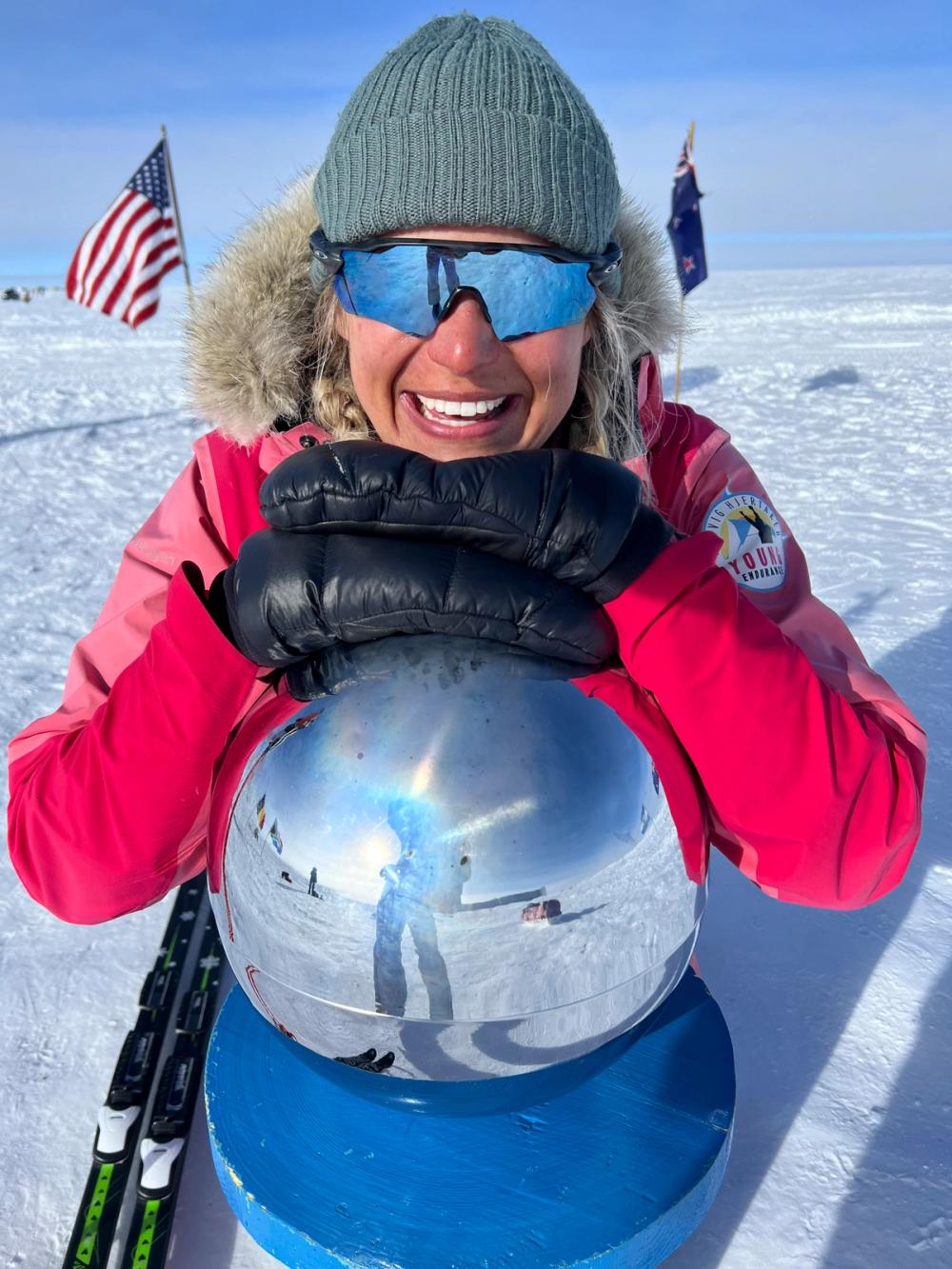
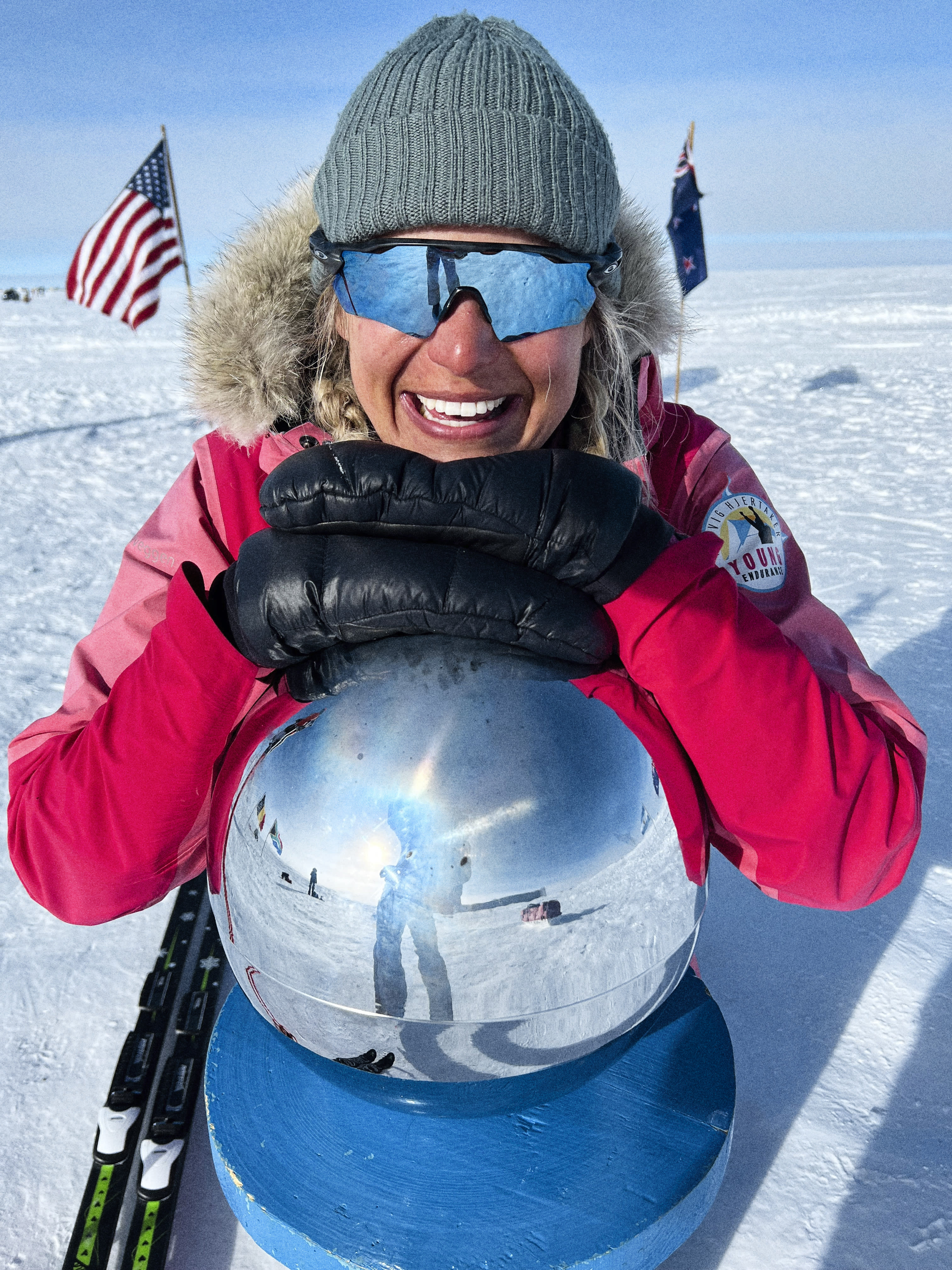
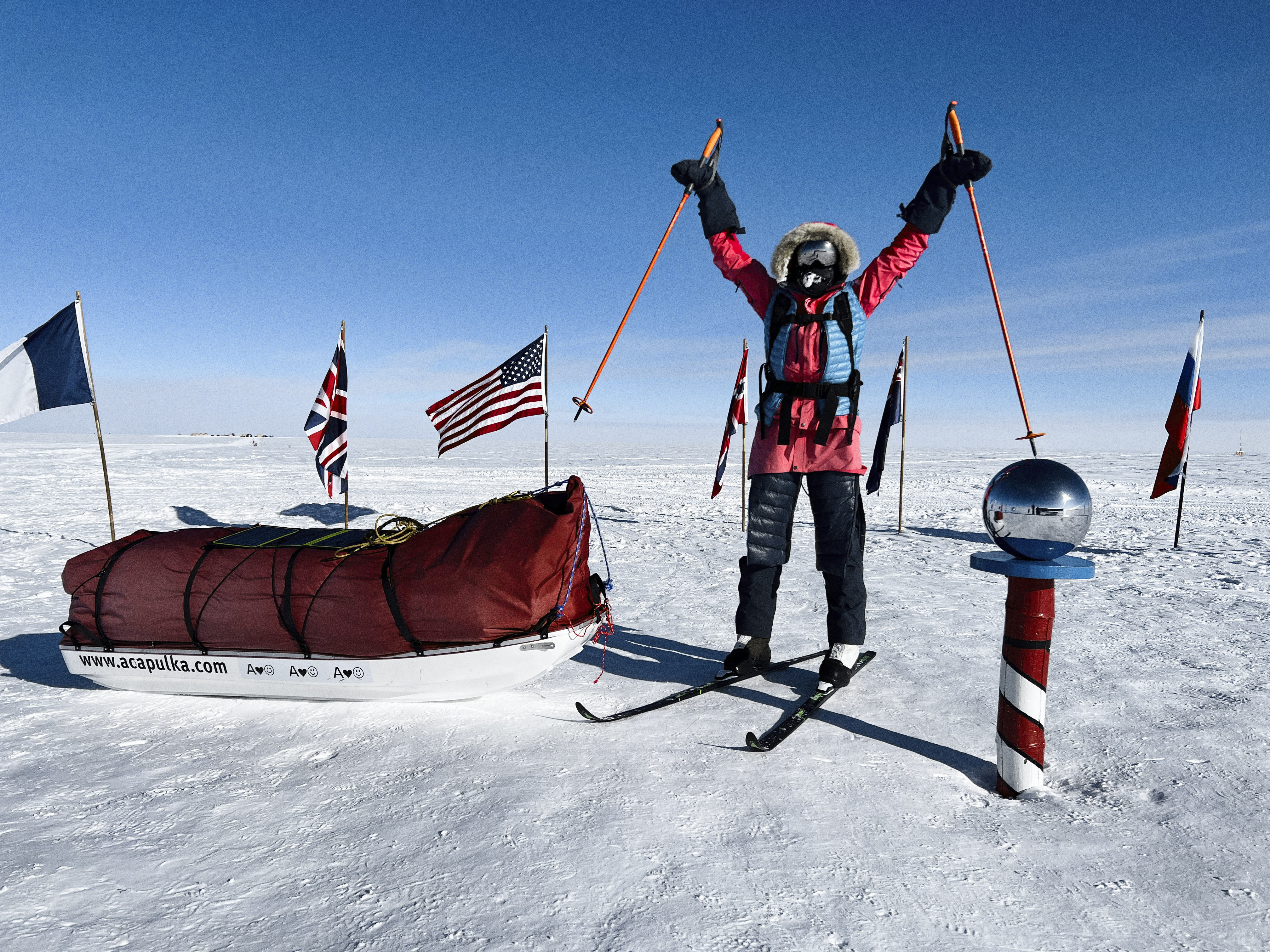
At only 28, Hedvig Hjertaker has experienced and accomplished more than most do in a lifetime. Recently she became the youngest woman to reach the South Pole. In her mind, the key to achieving any goal isn't experience, gear or preparation. It's pure will power.
From an early age Hedvig Hjertaker was always on the move, always activated. During the first 19 years of her life, it was all about swimming. Then she branched out: hiking, bicycling, skiing, trying to learn different skills – because she wanted differing experiences.
In 2021, though, she saw no reason to do much of anything at all. She had just lost her mother to cancer and was apathetic with grief. Her otherwise strong lust for life had evaporated.
"I no longer saw any reason to eat my greens, I was questioning why I should bother going to work, why I should go outside. I just wanted to lay on the couch.
I knew being outside in nature is probably the single best things you can do for your physical and mental health, but the thing was: why bother if you'll get ill anyway?"
Even so: two years later, she was in Antarctica. She was all alone, on her way to the South Pole, having very little experience with polar expeditions and, for that matter, with skiing at all. How did that come about?
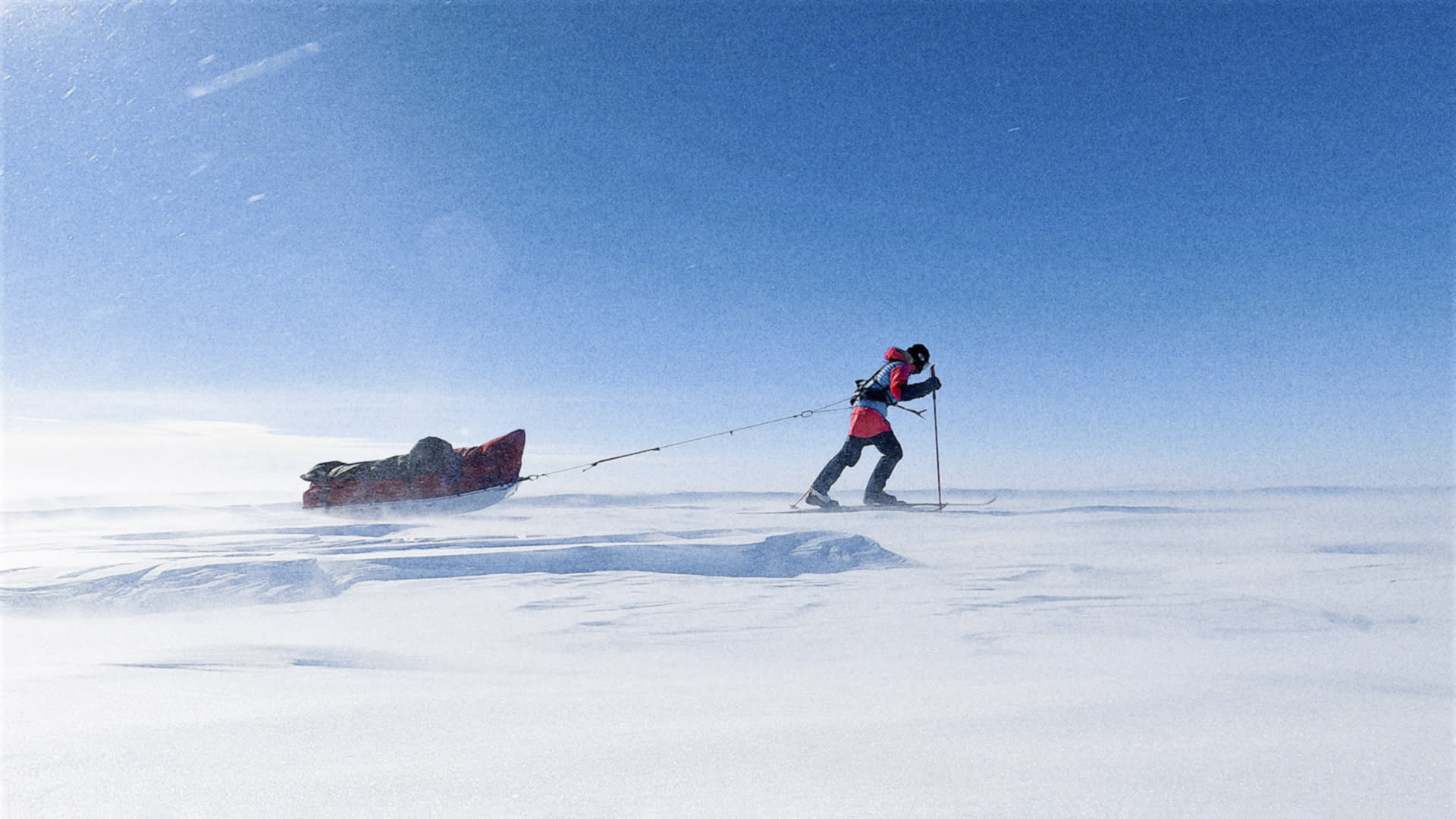
The short answer: it's a long story. One thing seems clear though: she has a different view of challenges than most of us – and a different way of meeting them.
Like a fish out of water
Skiing and hiking wasn't a big part of the Hjertaker family's activity repertoire when Hedvig was growing up. So, when she reached the South Pole on skis, she most likely wasn't only the youngest woman to do so. Probably, she was also the one with the least time spent skiing. She used to prefer her water liquid.
"When I was growing up, we used to go on summer holidays to southern Norway. My parents found that I spent more time in the sea than on land. So, one fall, my father asked me if I wanted to take swimming lessons."
– And you would eventually go on to win a lot of championships?
"Yes, eight national medals, I think. Swimming is a big sport, so I never made it internationally. And it demands a lot of training. I started in seventh grade, swimming two hours before school in the early mornings. In the end I was up to 25 hours a week. So, it was a lot of work."
– But you still wanted to do it, that's the crazy part!
"Yes, I was dedicated, and I think following such a strict routine at such a young age strengthened my dedication and my self-discipline. I got a lot of my personality from swimming."
A different kind of challenge
When she was 19, Hjertaker got the kissing disease. She was training for what would be her last swimming championship, while at the same time serving in the Navy. The result was a post-infection fatigue, that left her in bed for a year. She slept for 15 hours, got up to eat and went back to bed again.
"I actually slept for a whole year. I quit swimming, I quit the Navy. The change was dramatic. Swimming was my whole identity – I had no idea what to do."
– Did you gradually get better, or did you have no energy at all for that whole year? "The thing with fatigue is, you're scared of getting tired. You're scared of doing things that will drain your energy, because it might mean having to spend 24 hours in bed, in pain. I was afraid that whole year. I feared challenging myself, which was strange. Challenging myself was the one thing I'd always been very good at."
One step at a time
"After a while, my father said, “we've got to do something.” So, he started planting seeds in me. He suggested things that I might like to do, places I'd like to go. Bali, for instance. But what he talked most about was a walk he'd done – Camino de Santiago – which is a Spanish pilgrimage route."
Hjertaker believes that her father knew exactly what he was doing. Her body wasn't the same, but the same drive she'd always had was still in her somewhere. And as it turned out, it helped: she wanted to pursue something. And slowly, she started challenging herself, so that she could be up for the challenge she really wanted to pursue.
"I really wanted to walk Camino de Santiago. So, I started taking walks. One day, I walked for five minutes, the next day, I walked six. Eventually it was spring, and it was so beautiful – I just wanted to get out of bed for those small walks, which grew longer and longer by the day."
Some months later, her dad followed her to the starting point of the pilgrimage route. "He followed me for three days before he sent me off alone. There he told me, “I know you can do this, Hedvig. I'll go home now, and you'll do the rest on your own.” And I did. It was an amazing journey."
Branching out
Getting well from the fatigue and completing the journey across Spain on her own was a game-changer for Hjertaker. Having spent all her time in swimming pools growing up, she now understood that she was fully capable to meet other types of challenges – physical or mental.
"When I completed the walk, I was thinking, 'if I managed to walk 900 kilometers, I will be able to manage studies. If I'm able to do that, I can attain a master's degree as well. And if I can walk, I guess I can ride a bicycle too.' So, then, I bicycled from England, through France and Switzerland to Italy," she says.
– That's a long ride!
"Yes! And after proving to myself I was able to do that, I began seeking out other challenges. So, during winter, I took the train to the mountain plateau at Finse, with an old sled that I filled up with stuff, to see what it was like to go skiing with a heavy load."
"I liked it a lot, so I started venturing on longer trips. I made some horrible mistakes," she laughs. "But that's how you learn the fastest!"
The greatest challenge
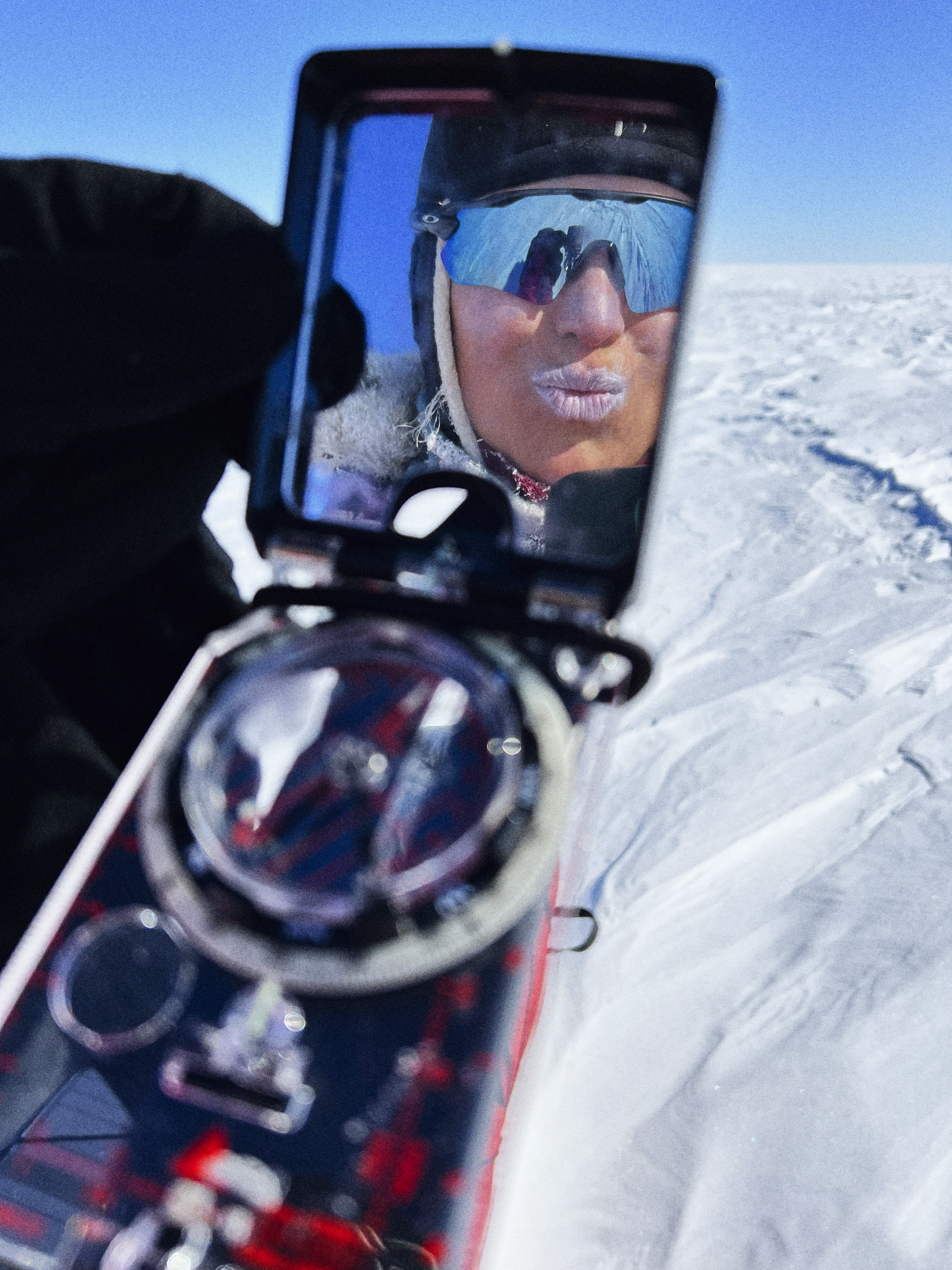
Then, when Hjertaker lost her mother, she found herself on her back again. But this time, it was different. Now, she didn't want to get up, and found no apparent reason to move. But then, the South Pole appeared. "It was a rainy day. I was sad, lying there, scrolling through Instagram. I am well aware of the algorithms – still, I'm really glad this ad got to me. It featured Molly Hughes, the woman who held the record before me. It was a short clip of her skiing towards the South Pole."
"I stopped and thought, 'wow, the South Pole. I never thought of that.' I did some googling and found out that I had a chance to beat the record. And at that moment I decided to do it. I guess you could say it's typical: I decide to do something and then I find out how to do it."
"It was a rough start. To make it worse, there was a lot of wind, and the sled was at its heaviest."
Getting up, going south
Thinking back, Hjertaker is not so sure she would have gone through with the expedition if she had known how much it would cost, how much she'd have to sacrifice, how much training it would demand of her, and last but not least, the cold.

"Thankfully I'm a happy-go-lucky and spontaneous person, she says."
– Having so little experience with polar expeditions, two years is a very short time from making the decision to accomplishing a South Pole-record. How did you do it?
"I didn't tell anyone about it for a year. I decided to cross the Greenland ice cap first, because I had to prove I didn't lack the experience. Greenland was my ticket in. I did that in May 2022. So, I only had six months to get the funding – and to let everyone know that I was going to be a polar explorer in early 2023," she laughs.
– How did you go about that? Did you just call your dad and tell him “Hey, I'm going to the South Pole?”
"Well, I wanted to have an adventurous year, and at the time I was in South America, ascending Aconcagua," Hjertaker says.
"I found it hard telling my family, because we had lost my mom. Christmas has always been important in our family, so it was difficult to tell them I wasn't going to be there because I was going to Antarctica. So, I told everyone in an email."
A rough start
Before she left for Antarctica, she had a small case of cold feet. She felt the South Pole was a bit of an audacious goal and didn't feel sure she was going to succeed.
"All the people I talked to who'd done it had a lot of experience. I didn't. I just learned to use the compass six months ago. But when I decide to do something, I go for it. So, soon enough, I found myself waiting for the plane to take me to the starting point at Hercules inlet."
– How was the first night in Antarctica, alone in the tent?
"It was a bit of a mess," she laughs.
"Nothing was in the right place, I felt I had nothing under control. I had been very emotional earlier that day, and I felt very alone. So, I was very grateful for satellite communication, so that I could talk to my family and my boyfriend every day."

– And then, on the second day, you got sick?
"Yes, I went down with a bad cold. Pneumonia, actually, so I had to go on antibiotics. It was a rough start. To make it worse, there was a lot of wind, and the sled was at its heaviest. Before I left, though, I'd had a conversation with Børge Ousland. He told me that if I just made it through the first ten, twelve days I'd be fine."
"I hung on to that advice."
Getting into the rhythm
Just like at home, a normal day would start with the alarm clock – at seven AM, or sometimes at eight or nine. "There was nobody waiting for me, no one caring if I was skiing for nine or twelve hours. It was all up to me. It took a lot of self-discipline. After the alarm went off, there was the difficult task of getting out of the sleeping bag," she laughs.
"I got a new prototype from Norrøna – the winter sleeping bag, and it was amazing. This is not a promotion, by the way – but being able to sleep comfortably and warm in Antarctica wasn't something I expected. And then, on the other hand, it's very cold outside – so getting out of it isn't comfortable."

While putting on all her clothes and equipment and getting the tent down, she would plan her day. She would set a goal for how many kilometers she would traverse, and then, she'd get going.
"On with the goggles, out we go. I started by walking for fifty minutes, then resting for ten. Later I found that walking for an hour and resting for five minutes was better. Standing still gets too cold."
One foot ahead of the other
Before she left, Hjertaker talked to a lot of the right people. Børge Ousland, being one of them, and another being Erling Kagge, another seasoned explorer. Whenever the going got rough, their advice came in handy.
– What did you do to motivate yourself on the roughest days?
"You know what? Sometimes I found that my mind was determined to keep going, but my body had had enough. I wanted to walk further, while my body told me it was time to stop."
At moments like that, she would think back on the advice Erling Kagge gave her before she left. "He told me that on any trip, however tough it might be, it's all about putting one foot ahead of the other. It's about taking this big thing and dividing it up into little pieces – to the root of it all: moving one foot ahead of the other, and then repeating that motion," she says.
"It's actually as simple as that!"
Out of power
– There was a point at which you lost contact with the outside world for three days because of a broken solar panel. How did that affect you?
"It's a slow process. The solar panel stops working. The power bank is empty. I had 50 per cent power on one device, 30 on another – and the power is quickly draining because of the cold. That got to me," she says.
– What was the situation like, what happened?
"The weather was terrible, it was freezing. I removed one glove and touched the metal on the GPS, and it was like burning my fingers on a stove. I also had a cold injury on the inside of my thigh. I'd been feeling sick and had cramps in my stomach."
"So, given my condition, I felt scared for a moment – being out there, so incredibly far from help and not being able to call for it."
Safety first, honor anyway
When she was feeling well rested and everything was good, it was easier to brush complications off and think that everything would work out fine, Hjertaker explains.
"But when I called my family, my boyfriend and the security company, telling them that I would be losing contact, they were all worried. The security company considered it an emergency," Hjertaker recalls.
– That can't have had a calming effect on you?
"No, that made me think. But, in the end, the security company flew to the south pole and dropped a new solar panel to me on the way. So it all worked out."
"I had promised my family that I would get back home. So, the security – having the option to get help – was very important to me. Way more important than the honor of reaching the South Pole unsupported. Who cares? I'm going to live many more lives," Hjertaker laughs.
"It's about taking this big thing and dividing it up into little pieces – to the root of it all: moving one foot ahead of the other, and then repeating that motion."
Like a rollercoaster
She never really entertained the thought of giving up though, no matter how rough it got. And, even in Antarctica, the days aren't always rough. There were a lot of good days, too, and every day was valuable – an opportunity for learning.
"There were lots of ups and downs," she says with a laugh.
"Some days I felt, went by a lot quicker than a typical day at home. In the span of one hour, I could have gone to all corners of my mind. I really got to know myself and got to think things through," she says.
"I recalled memories I don't think I would have had the time to think of back home. From when I was little, playing with my sisters, for instance. And just as much, I had to face thoughts, memories and feelings that were difficult. I was prepared for that. Before I went, I had decided just to let the emotions come."
– So, the expedition was like therapy to you?
"To me it was therapeutic, yes. I don't know if it would be for everyone. I really let my emotions out. At times when I was grieving and missing my mother, I just stopped and cried loudly for the time that I needed to, and then ... it stopped, and I felt better. You can't just do that in a grocery store at home."
Finding the next challenge
Being back home, safe and sound, she's able to go to the grocery store but not able to cry for as long as she likes. Regardless, Hjertaker says she wouldn't do another South Pole expedition. But only because she's already done it.
"I would have done it again if I hadn't, but I don't like doing the same thing twice. Now, I feel that I've mastered a ski expedition. It was a challenge and I loved it. But I find it important to learn new things," she says.
"I'm going to continue skiing, but not to the North Pole. I'm looking for a new challenge, a different challenge. It would enrich my life a lot to learn to sail, for instance. Or learn to surf, or to kite: to learn and master something else, rather than to go on another polar expedition – that's the point."